Department Biology II, Ludwig-Maximilians-Universität München Planegg, Germany.
Front Neural Circuits. 2013 Nov 19;7:182. doi: 10.3389/fncir.2013.00182.
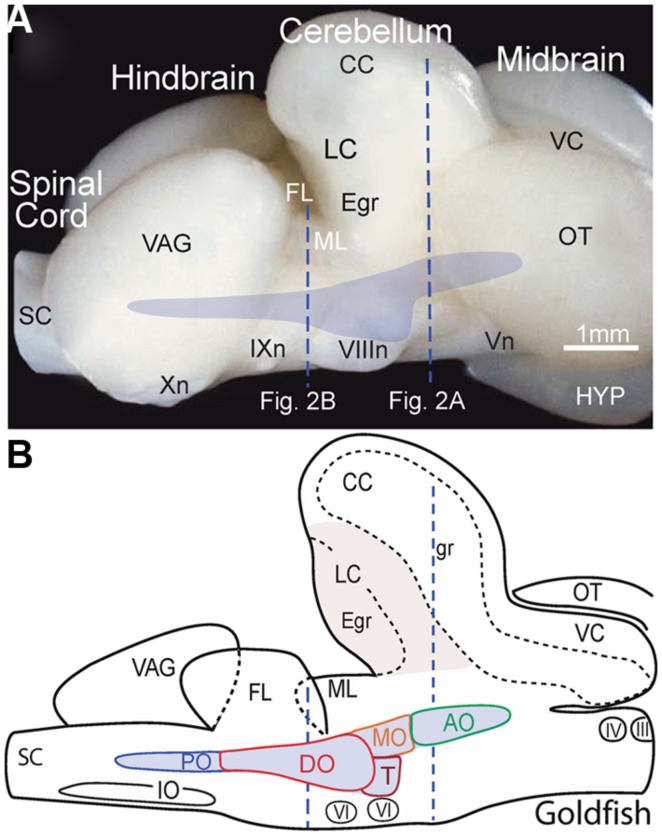
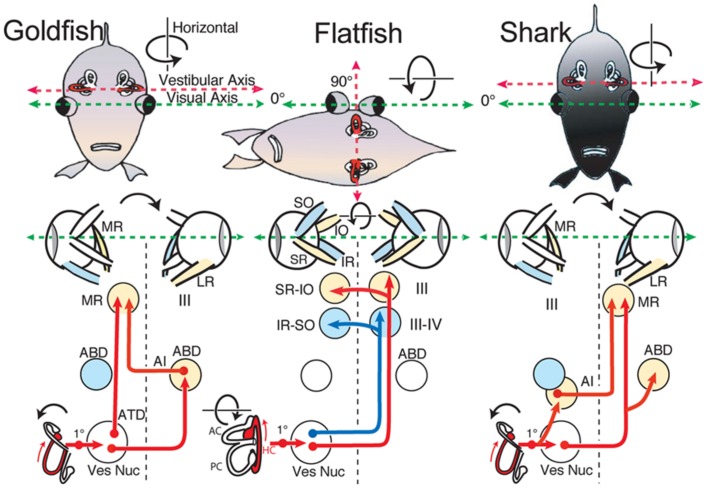
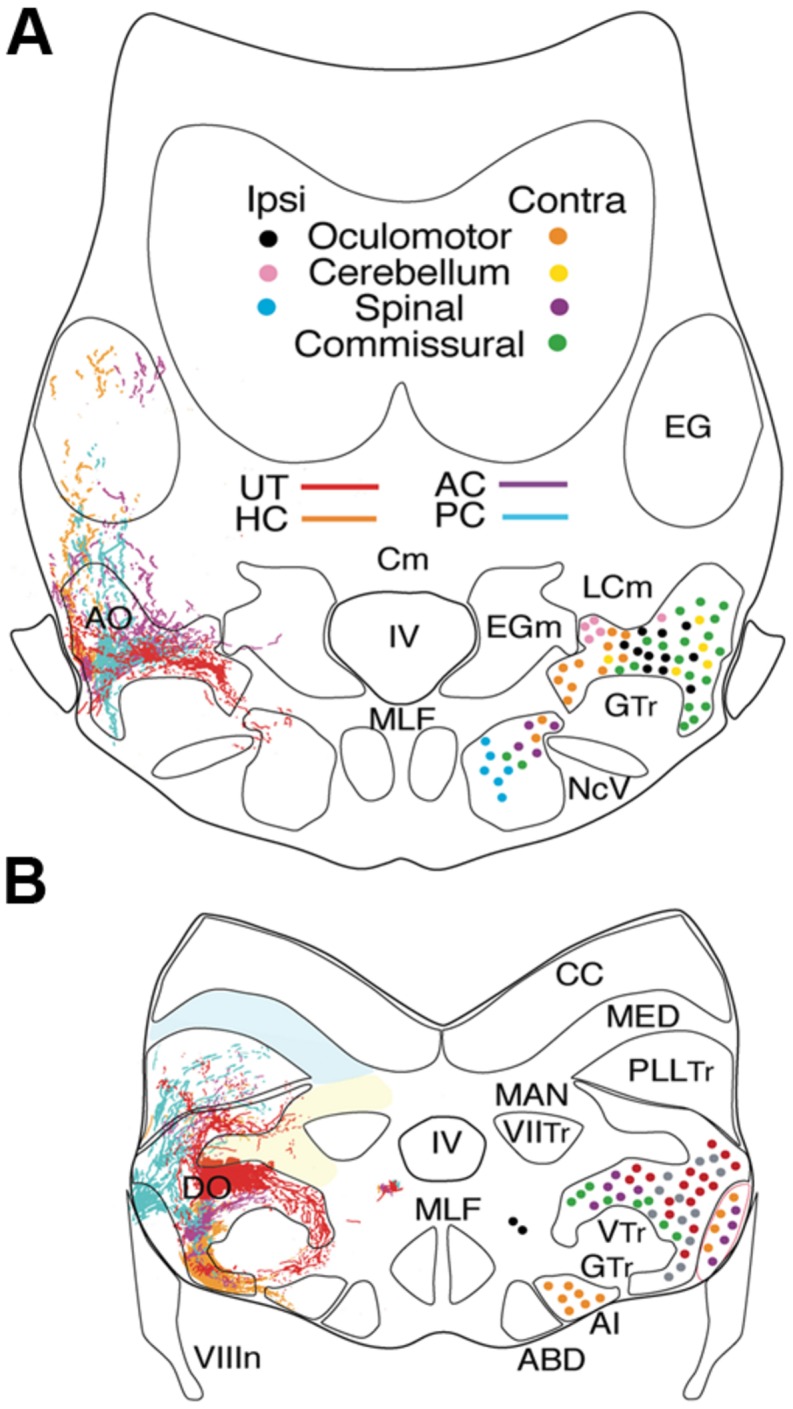
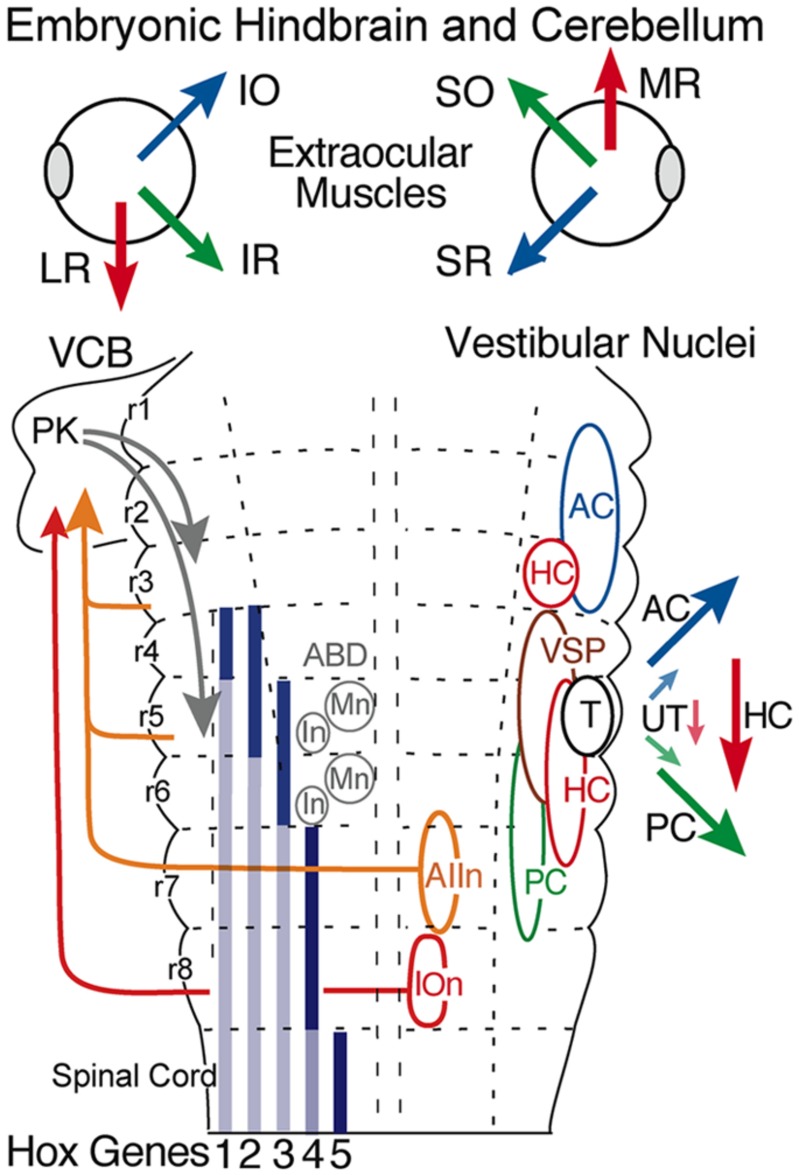
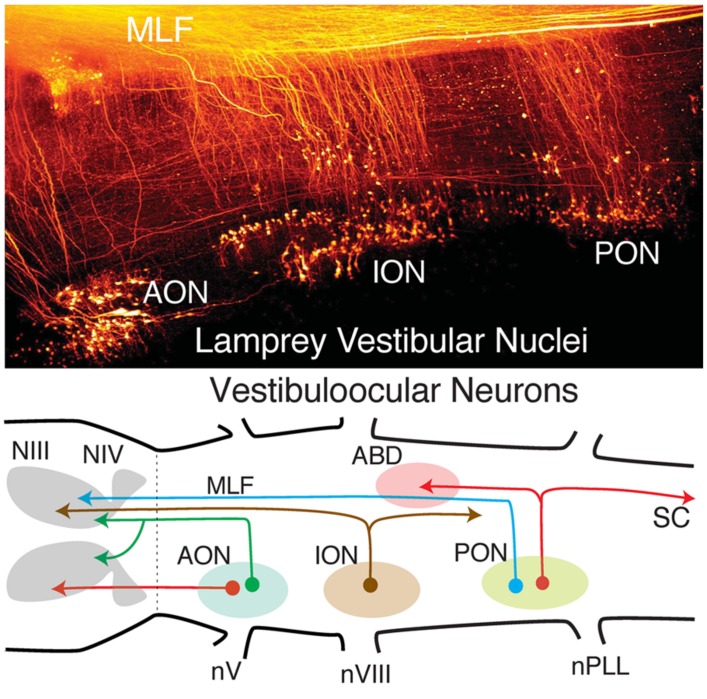
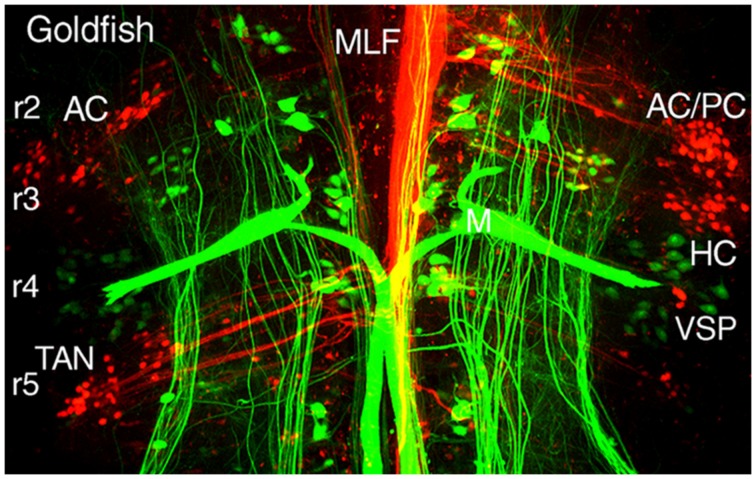
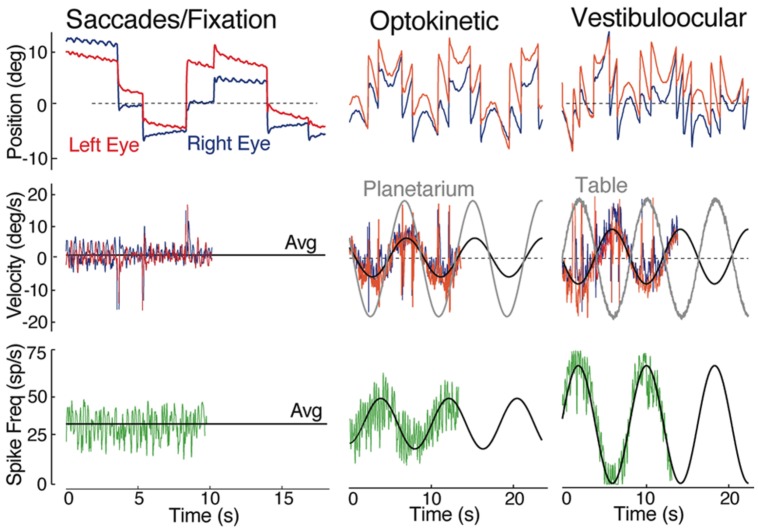
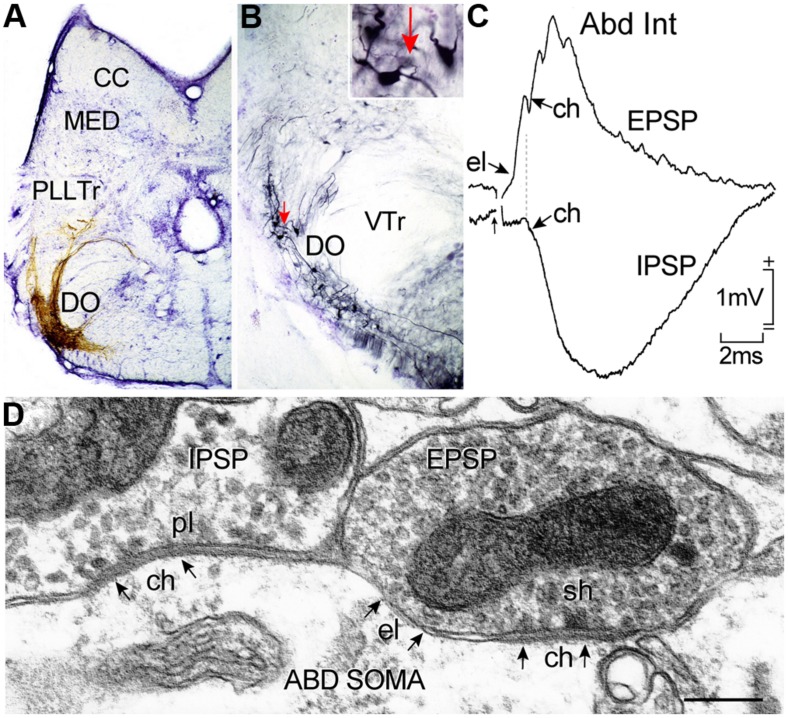
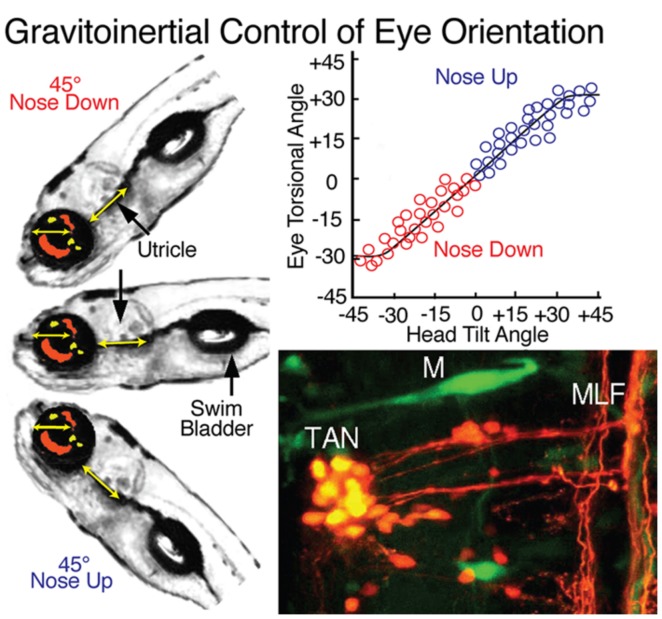
Central vestibular neurons form identifiable subgroups within the boundaries of classically outlined octavolateral nuclei in primitive vertebrates that are distinct from those processing lateral line, electrosensory, and auditory signals. Each vestibular subgroup exhibits a particular morpho-physiological property that receives origin-specific sensory inputs from semicircular canal and otolith organs. Behaviorally characterized phenotypes send discrete axonal projections to extraocular, spinal, and cerebellar targets including other ipsi- and contralateral vestibular nuclei. The anatomical locations of vestibuloocular and vestibulospinal neurons correlate with genetically defined hindbrain compartments that are well conserved throughout vertebrate evolution though some variability exists in fossil and extant vertebrate species. The different vestibular subgroups exhibit a robust sensorimotor signal processing complemented with a high degree of vestibular and visual adaptive plasticity.
中枢前庭神经元在原始脊椎动物的经典八侧核边界内形成可识别的亚群,与处理侧线、电感觉和听觉信号的亚群不同。每个前庭亚群都表现出特定的形态生理特性,从半规管和耳石器官接收特定来源的感觉输入。具有行为特征的表型将离散的轴突投射到眼球外、脊髓和小脑目标,包括其他同侧和对侧前庭核。前庭眼和前庭脊髓神经元的解剖位置与遗传定义的后脑隔室相关,尽管在化石和现存的脊椎动物物种中存在一些变异性,但这些隔室在整个脊椎动物进化过程中得到了很好的保存。不同的前庭亚群表现出强大的感觉运动信号处理能力,并具有高度的前庭和视觉适应性可塑性。