Cognitive and Behavioral Neuroscience Unit and Neuroinformatics Workgroup, D'Or Institute for Research and Education (IDOR), Rio de Janeiro, Brazil ; Center of Mathematics, Computation and Cognition, Universidade Federal do ABC, Santo André, Brazil.
PLoS One. 2013 Dec 2;8(12):e81658. doi: 10.1371/journal.pone.0081658. eCollection 2013.
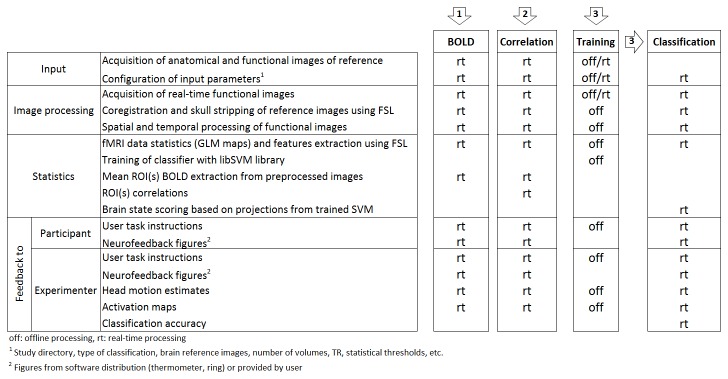
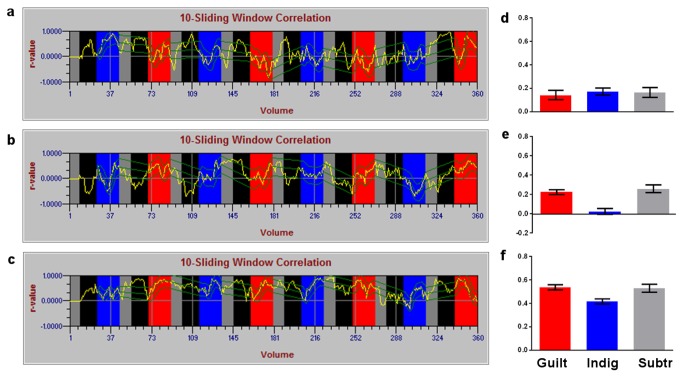
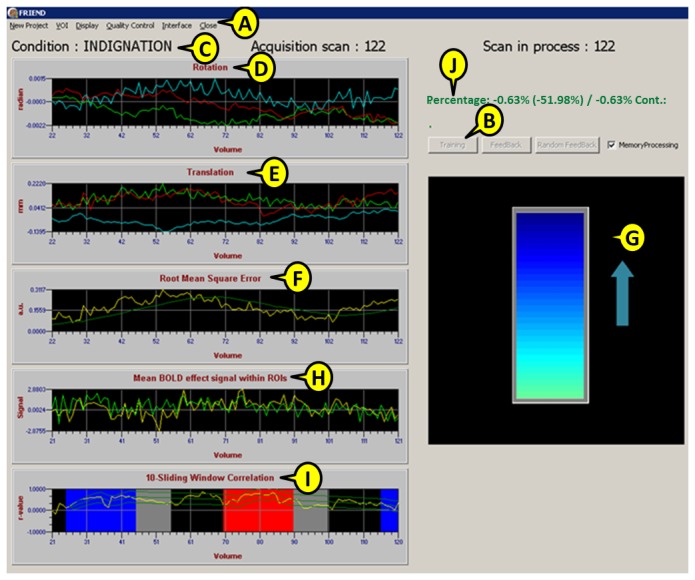
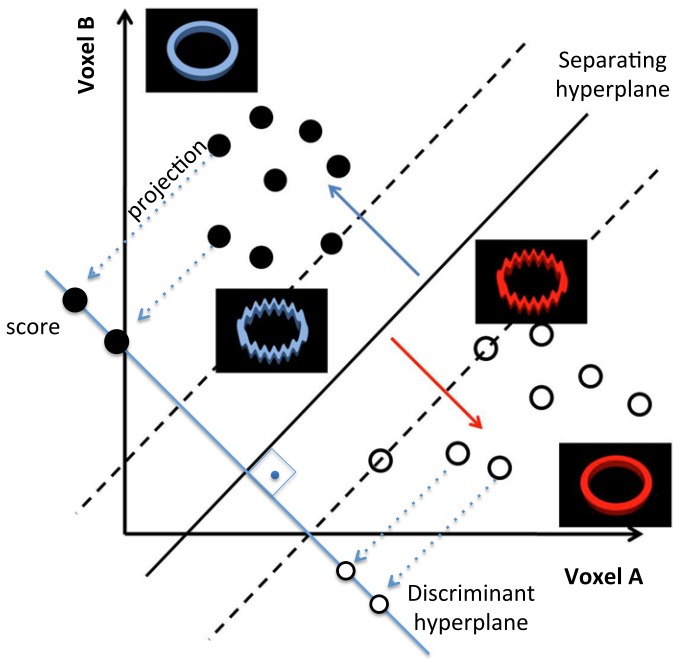
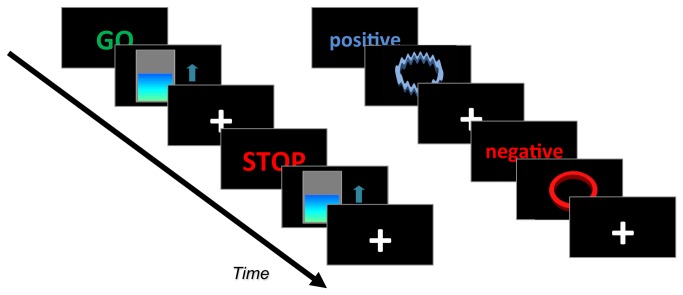
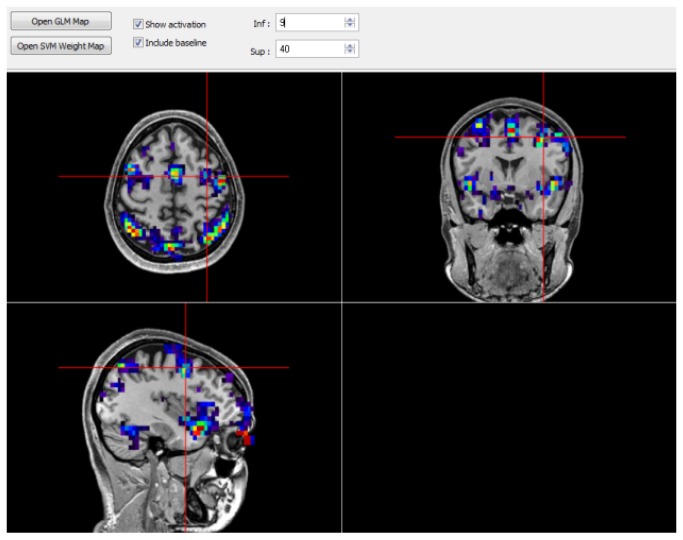
The demonstration that humans can learn to modulate their own brain activity based on feedback of neurophysiological signals opened up exciting opportunities for fundamental and applied neuroscience. Although EEG-based neurofeedback has been long employed both in experimental and clinical investigation, functional MRI (fMRI)-based neurofeedback emerged as a promising method, given its superior spatial resolution and ability to gauge deep cortical and subcortical brain regions. In combination with improved computational approaches, such as pattern recognition analysis (e.g., Support Vector Machines, SVM), fMRI neurofeedback and brain decoding represent key innovations in the field of neuromodulation and functional plasticity. Expansion in this field and its applications critically depend on the existence of freely available, integrated and user-friendly tools for the neuroimaging research community. Here, we introduce FRIEND, a graphic-oriented user-friendly interface package for fMRI neurofeedback and real-time multivoxel pattern decoding. The package integrates routines for image preprocessing in real-time, ROI-based feedback (single-ROI BOLD level and functional connectivity) and brain decoding-based feedback using SVM. FRIEND delivers an intuitive graphic interface with flexible processing pipelines involving optimized procedures embedding widely validated packages, such as FSL and libSVM. In addition, a user-defined visual neurofeedback module allows users to easily design and run fMRI neurofeedback experiments using ROI-based or multivariate classification approaches. FRIEND is open-source and free for non-commercial use. Processing tutorials and extensive documentation are available.
证明人类可以根据神经生理信号的反馈来调节自己的大脑活动,这为基础和应用神经科学开辟了令人兴奋的机会。尽管基于脑电图的神经反馈在实验和临床研究中已经使用了很长时间,但基于功能磁共振成像(fMRI)的神经反馈作为一种很有前途的方法出现了,因为它具有更高的空间分辨率和测量深层皮质和皮质下脑区的能力。结合改进的计算方法,如模式识别分析(例如支持向量机,SVM),fMRI 神经反馈和大脑解码是神经调节和功能可塑性领域的关键创新。该领域及其应用的扩展在很大程度上取决于是否存在免费、集成和用户友好的神经影像学研究工具。在这里,我们介绍了 FRIEND,这是一个面向图形的用户友好界面包,用于 fMRI 神经反馈和实时多体素模式解码。该软件包集成了实时图像预处理、基于 ROI 的反馈(单 ROI BOLD 水平和功能连接)以及基于 SVM 的大脑解码反馈的例程。FRIEND 提供了一个直观的图形界面,具有灵活的处理管道,涉及嵌入广泛验证的软件包(如 FSL 和 libSVM)的优化过程。此外,用户定义的视觉神经反馈模块允许用户使用基于 ROI 或多元分类方法轻松设计和运行 fMRI 神经反馈实验。FRIEND 是开源的,免费供非商业使用。提供了处理教程和广泛的文档。