Department of Microbiology, Immunology and Biochemistry, University of Tennessee Health Science Center, Memphis, TN 38163, USA.
Department of Microbiology, Immunology and Biochemistry, University of Tennessee Health Science Center, Memphis, TN 38163, USA.
J Mol Biol. 2014 Mar 20;426(6):1246-64. doi: 10.1016/j.jmb.2013.11.024. Epub 2013 Dec 3.
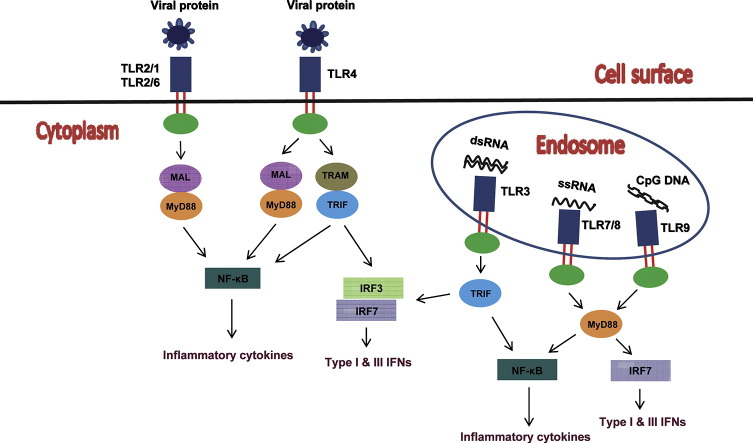
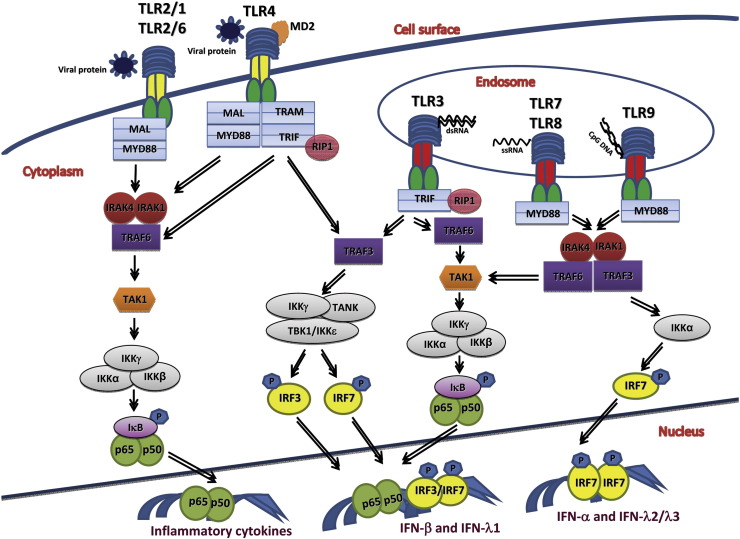
Toll-like receptors (TLRs) are fundamental sensor molecules of the host innate immune system, which detect conserved molecular signatures of a wide range of microbial pathogens and initiate innate immune responses via distinct signaling pathways. Various TLRs are implicated in the early interplay of host cells with invading viruses, which regulates viral replication and/or host responses, ultimately impacting on viral pathogenesis. To survive the host innate defense mechanisms, many viruses have developed strategies to evade or counteract signaling through the TLR pathways, creating an advantageous environment for their propagation. Here we review the current knowledge of the roles TLRs play in antiviral innate immune responses, discuss examples of TLR-mediated viral recognition, and describe strategies used by viruses to antagonize the host antiviral innate immune responses.
Toll 样受体 (TLRs) 是宿主固有免疫系统的基本感应分子,可识别多种微生物病原体的保守分子特征,并通过不同的信号通路启动固有免疫反应。各种 TLR 参与宿主细胞与入侵病毒的早期相互作用,调节病毒复制和/或宿主反应,最终影响病毒发病机制。为了逃避宿主固有防御机制,许多病毒已经开发出逃避或抵消 TLR 途径信号的策略,为其传播创造了有利环境。在这里,我们综述了 TLR 在抗病毒固有免疫反应中的作用的最新知识,讨论了 TLR 介导的病毒识别的实例,并描述了病毒用来拮抗宿主抗病毒固有免疫反应的策略。