Calarota Sandra A, Baldanti Fausto
S. S. Virologia Molecolare, S. C. Microbiologia e Virologia, Fondazione IRCCS Policlinico San Matteo, Via Taramelli 5, 27100 Pavia, Italy.
Clin Dev Immunol. 2013;2013:637649. doi: 10.1155/2013/637649. Epub 2013 Nov 11.
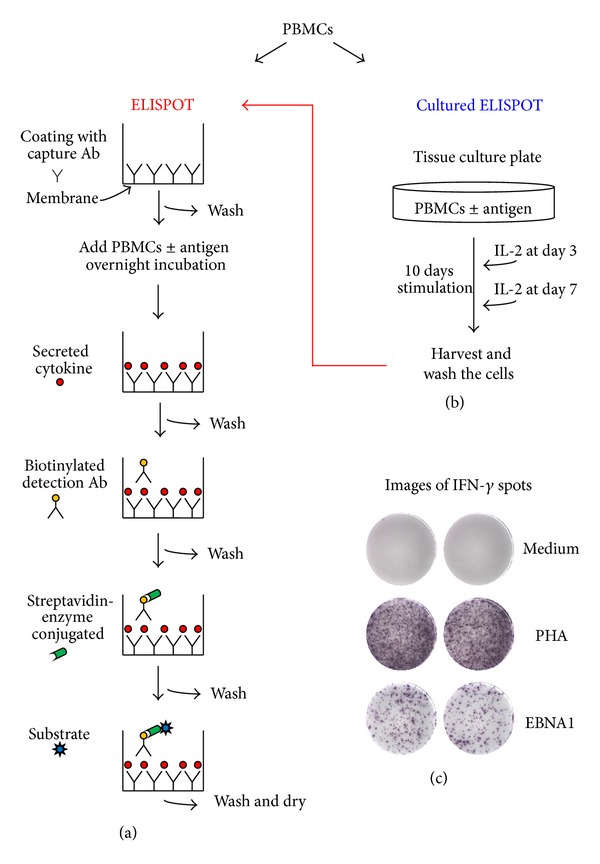
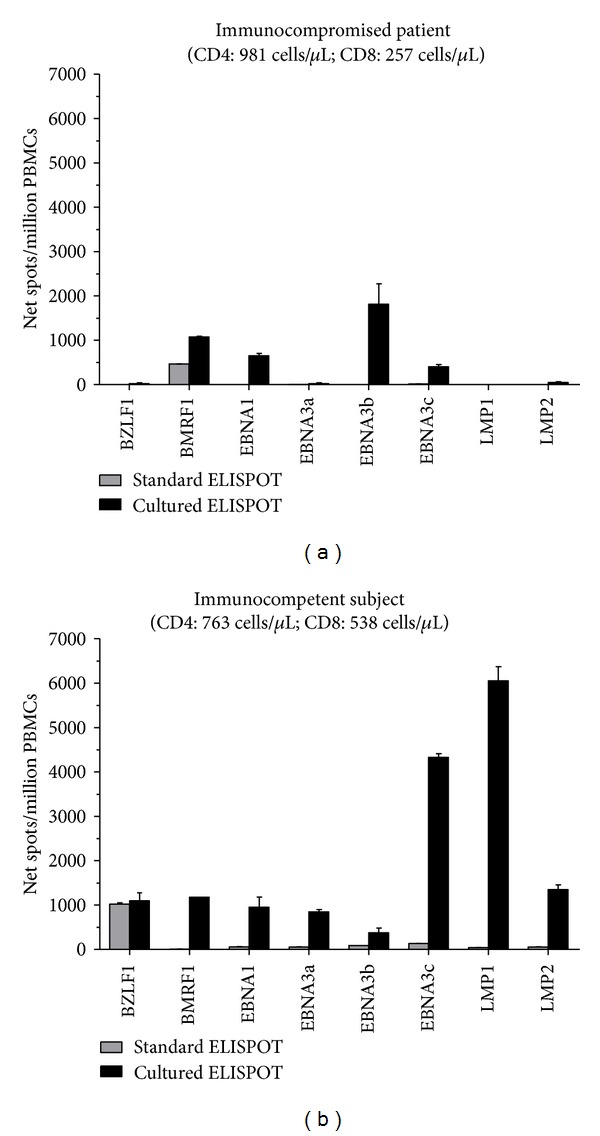
The enzyme-linked immunospot (ELISPOT) assay has advanced into a useful and widely applicable tool for the evaluation of T-cell responses in both humans and animal models of diseases and/or vaccine candidates. Using synthetic peptides (either individually or as overlapping peptide mixtures) or whole antigens, total lymphocyte or isolated T-cell subset responses can be assessed either after short-term stimulation (standard ELISPOT) or after their expansion during a 10-day culture (cultured ELISPOT). Both assays detect different antigen-specific immune responses allowing the analysis of effector memory T cells and central memory T cells. This paper describes the principle of ELISPOT assays and discusses their application in the evaluation of immune correlates of clinical interest with a focus on the vaccine field.
酶联免疫斑点(ELISPOT)检测已发展成为一种有用且广泛应用的工具,用于评估人类和疾病动物模型及/或候选疫苗中的T细胞反应。使用合成肽(单独或作为重叠肽混合物)或全抗原,可在短期刺激后(标准ELISPOT)或在10天培养期间细胞扩增后(培养ELISPOT)评估总淋巴细胞或分离的T细胞亚群反应。两种检测方法均可检测不同的抗原特异性免疫反应,从而分析效应记忆T细胞和中枢记忆T细胞。本文描述了ELISPOT检测的原理,并讨论了其在评估具有临床意义的免疫相关性方面的应用,重点是疫苗领域。