Gladstone Institute of Cardiovascular Disease, San Francisco, CA 94158, USA ; Roddenberry Center for Stem Cell Biology and Medicine at Gladstone, San Francisco, CA 94158, USA ; Department of Pediatrics, University of California, San Francisco, San Francisco, CA 94158, USA ; Department of Biochemistry and Biophysics, University of California, San Francisco, San Francisco, CA 94158, USA.
Stem Cell Reports. 2013 Aug 22;1(3):235-47. doi: 10.1016/j.stemcr.2013.07.005. eCollection 2013.
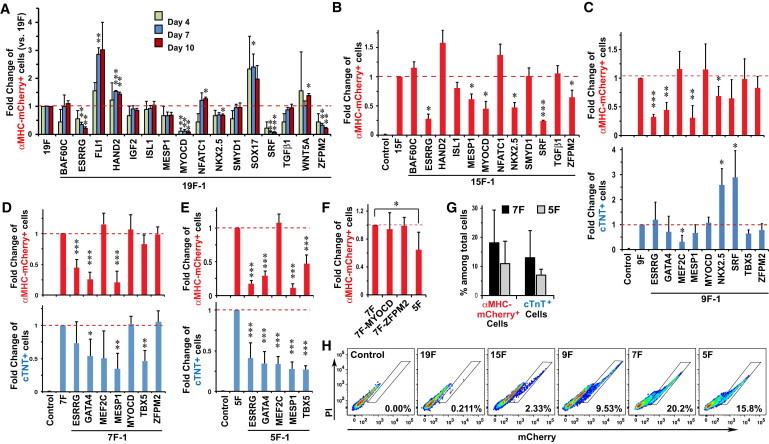
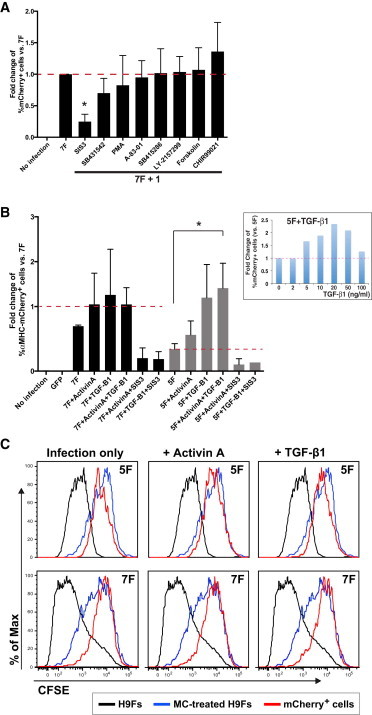
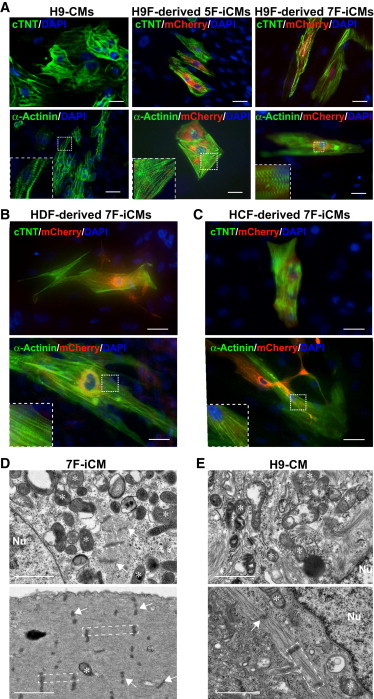
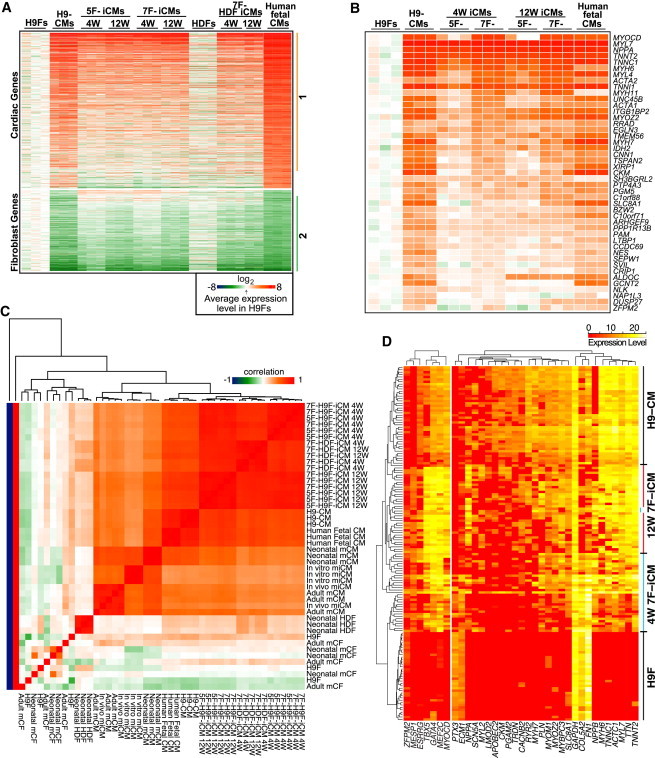
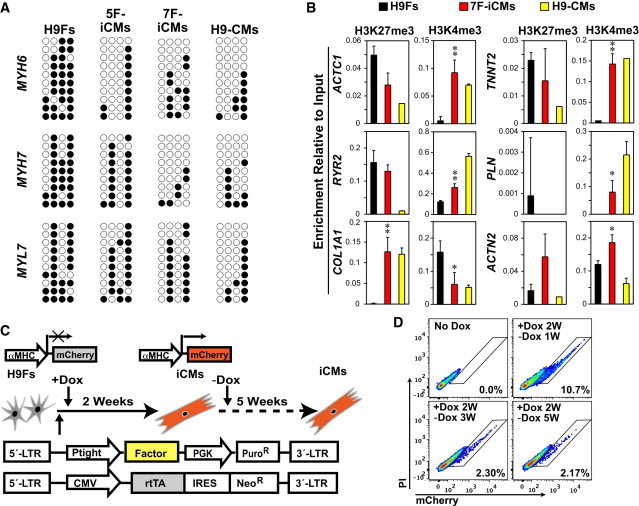
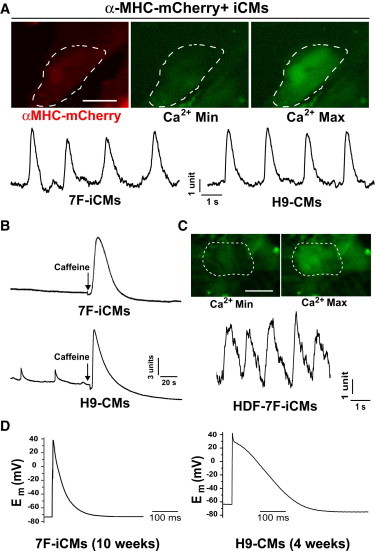
Direct reprogramming of adult somatic cells into alternative cell types has been shown for several lineages. We previously showed that GATA4, MEF2C, and TBX5 (GMT) directly reprogrammed nonmyocyte mouse heart cells into induced cardiomyocyte-like cells (iCMs) in vitro and in vivo. However, GMT alone appears insufficient in human fibroblasts, at least in vitro. Here, we show that GMT plus ESRRG and MESP1 induced global cardiac gene-expression and phenotypic shifts in human fibroblasts derived from embryonic stem cells, fetal heart, and neonatal skin. Adding Myocardin and ZFPM2 enhanced reprogramming, including sarcomere formation, calcium transients, and action potentials, although the efficiency remained low. Human iCM reprogramming was epigenetically stable. Furthermore, we found that transforming growth factor β signaling was important for, and improved the efficiency of, human iCM reprogramming. These findings demonstrate that human fibroblasts can be directly reprogrammed toward the cardiac lineage, and lay the foundation for future refinements in vitro and in vivo.
已证实,几种谱系的成体体细胞可直接重编程为其他细胞类型。我们之前证明 GATA4、MEF2C 和 TBX5(GMT)可直接将非心肌细胞的小鼠心脏细胞在体外和体内重编程为诱导性心肌细胞样细胞(iCM)。然而,GMT 在人类成纤维细胞中似乎是不够的,至少在体外是这样。在这里,我们证明 GMT 加上 ESRRG 和 MESP1 可诱导源自胚胎干细胞、胎心和新生皮肤的人类成纤维细胞的心脏基因表达和表型转变。添加 Myocardin 和 ZFPM2 可增强重编程,包括肌节形成、钙瞬变和动作电位,尽管效率仍然很低。人类 iCM 的重编程具有表观遗传稳定性。此外,我们发现转化生长因子 β 信号对人类 iCM 重编程很重要,并提高了其效率。这些发现表明,人类成纤维细胞可直接重编程为心脏谱系,并为未来的体外和体内改进奠定了基础。