Shevela Dmitriy, Messinger Johannes
Department of Chemistry, Chemistry Biology Centre, Umeå University Umeå, Sweden.
Front Plant Sci. 2013 Nov 26;4:473. doi: 10.3389/fpls.2013.00473.
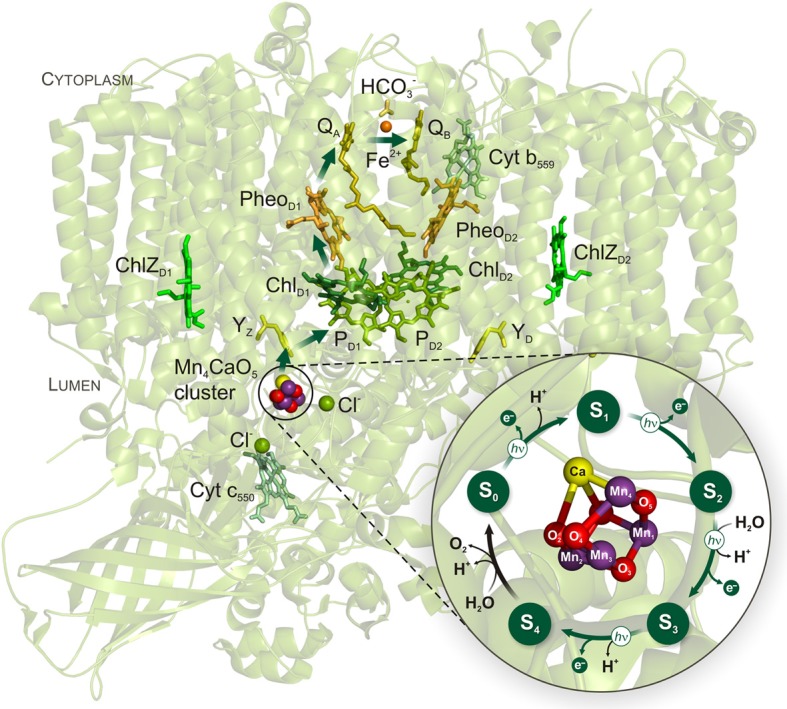
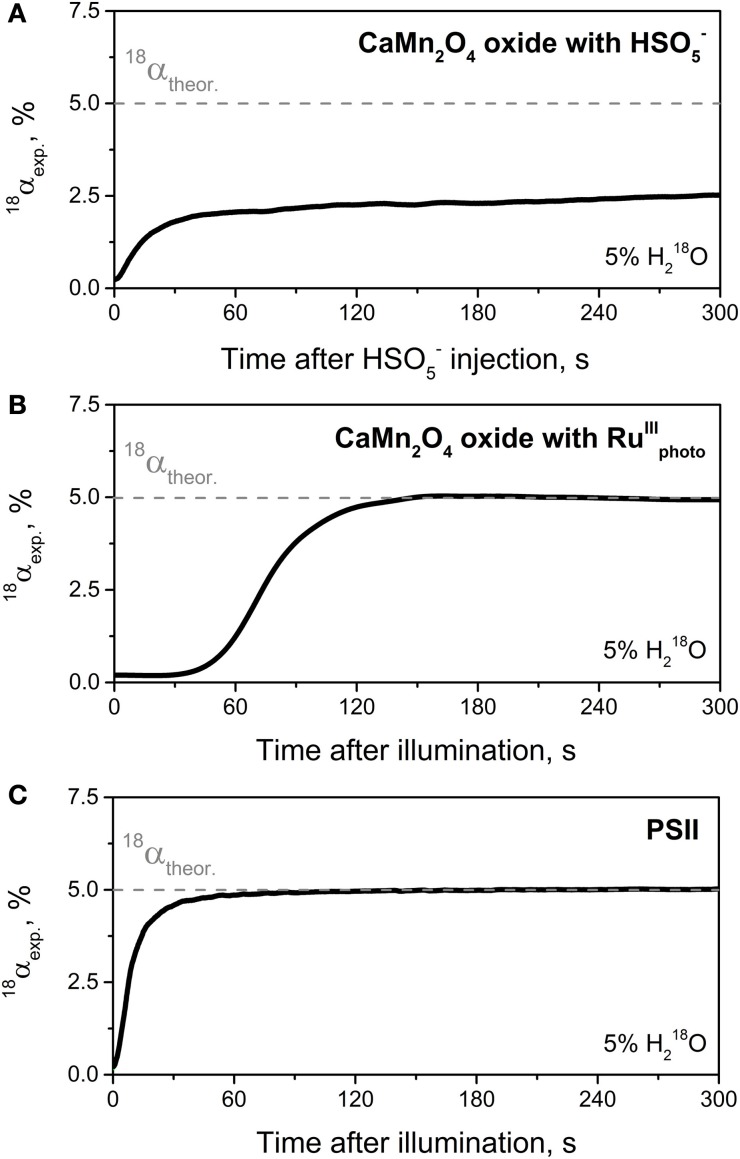
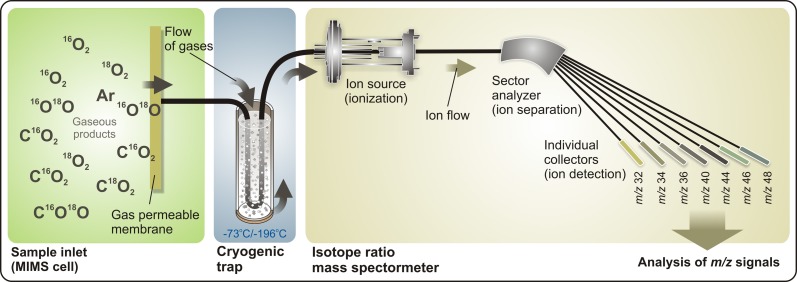
Monitoring isotopic compositions of gaseous products (e.g., H2, O2, and CO2) by time-resolved isotope-ratio membrane-inlet mass spectrometry (TR-IR-MIMS) is widely used for kinetic and functional analyses in photosynthesis research. In particular, in combination with isotopic labeling, TR-MIMS became an essential and powerful research tool for the study of the mechanism of photosynthetic water-oxidation to molecular oxygen catalyzed by the water-oxidizing complex of photosystem II. Moreover, recently, the TR-MIMS and (18)O-labeling approach was successfully applied for testing newly developed catalysts for artificial water-splitting and provided important insight about the mechanism and pathways of O2 formation. In this mini-review we summarize these results and provide a brief introduction into key aspects of the TR-MIMS technique and its perspectives for future studies of the enigmatic water-splitting chemistry.
通过时间分辨同位素比率膜进样质谱法(TR-IR-MIMS)监测气态产物(如H2、O2和CO2)的同位素组成,在光合作用研究的动力学和功能分析中被广泛应用。特别是,与同位素标记相结合,TR-MIMS成为研究光系统II水氧化复合物催化光合水氧化为分子氧机制的重要且强大的研究工具。此外,最近,TR-MIMS和(18)O标记方法成功应用于测试新开发的人工水分解催化剂,并为O2形成的机制和途径提供了重要见解。在本综述中,我们总结了这些结果,并简要介绍了TR-MIMS技术的关键方面及其对未来神秘水分解化学研究的展望。