Kim Kui-Jin, Godarova Alzbeta, Seedle Kari, Kim Min-Ho, Ince Tan A, Wells Susanne I, Driscoll James J, Godar Samuel
Department of Cancer Biology, Vontz Center for Molecular Studies, University of Cincinnati College of Medicine, Cincinnati, Ohio, United States of America.
PLoS One. 2013 Dec 4;8(12):e80590. doi: 10.1371/journal.pone.0080590. eCollection 2013.
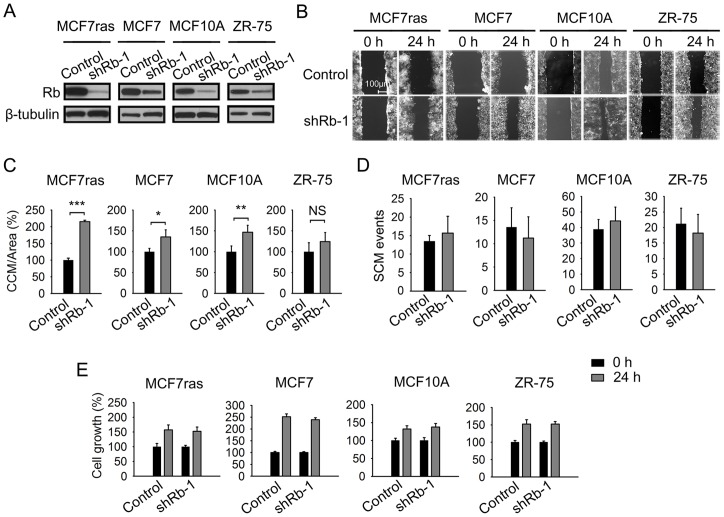
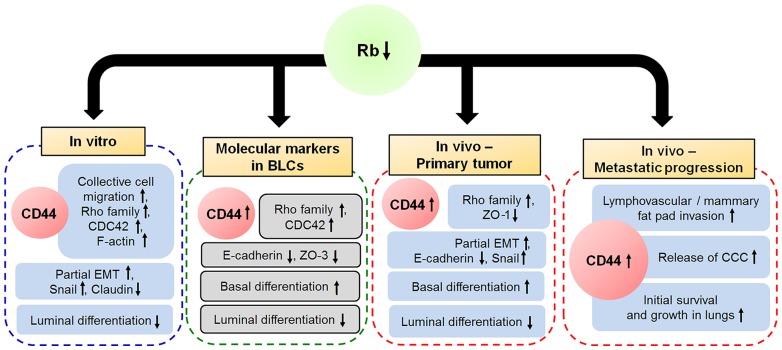
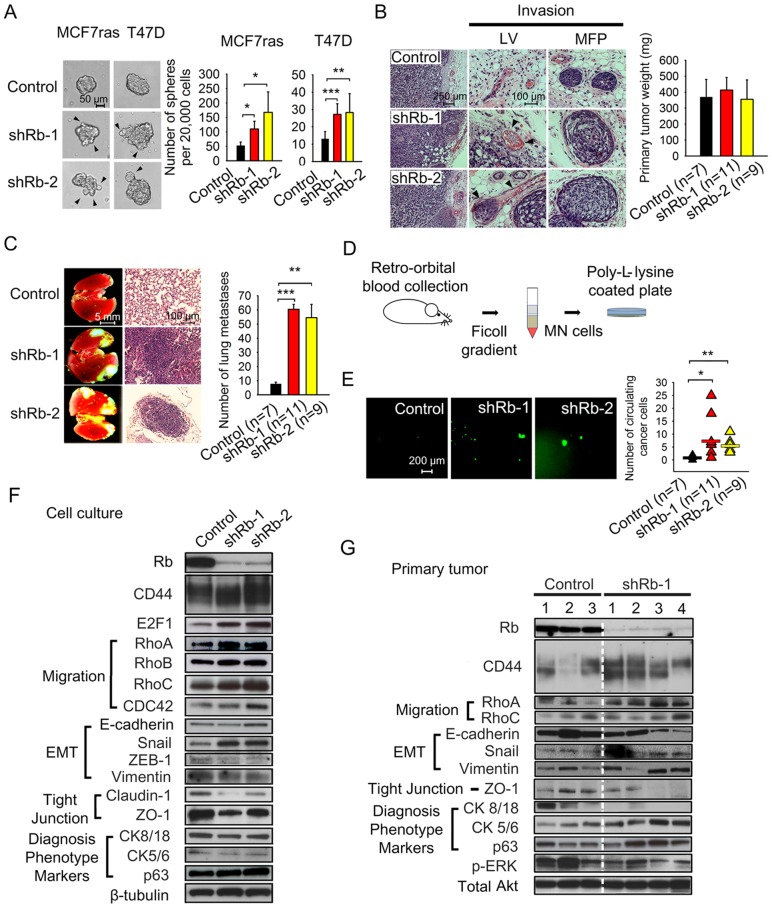
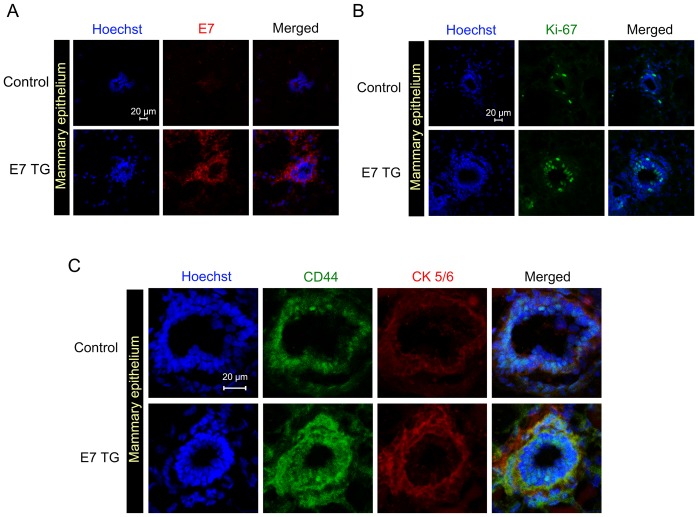
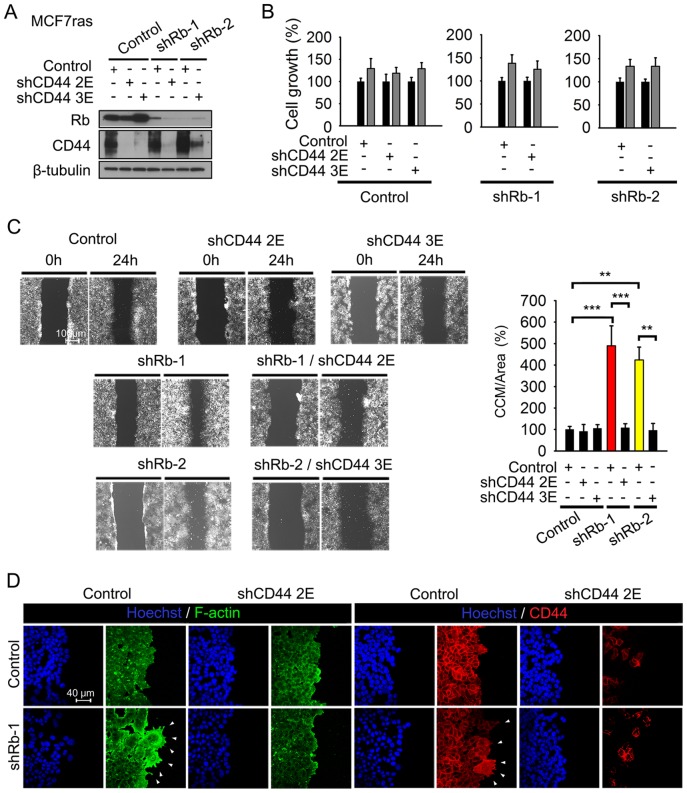
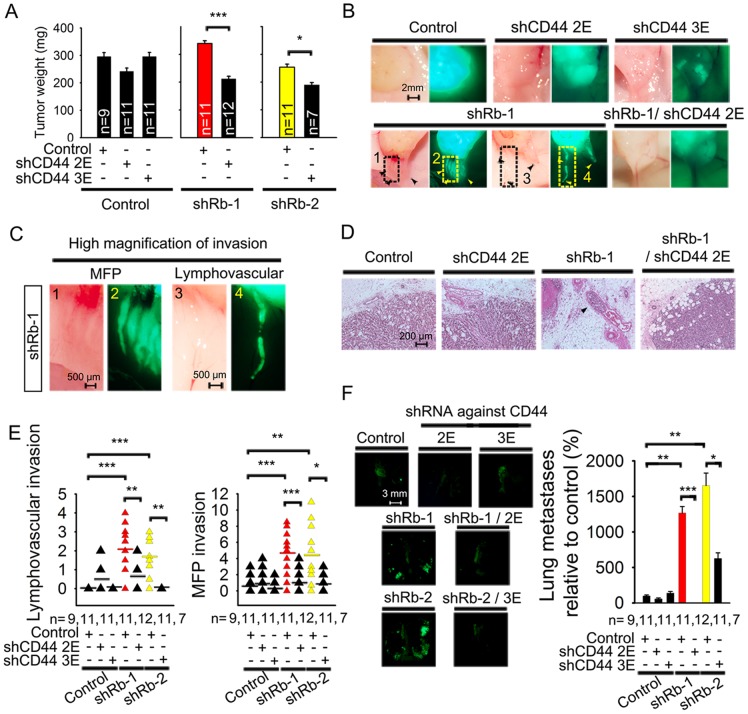
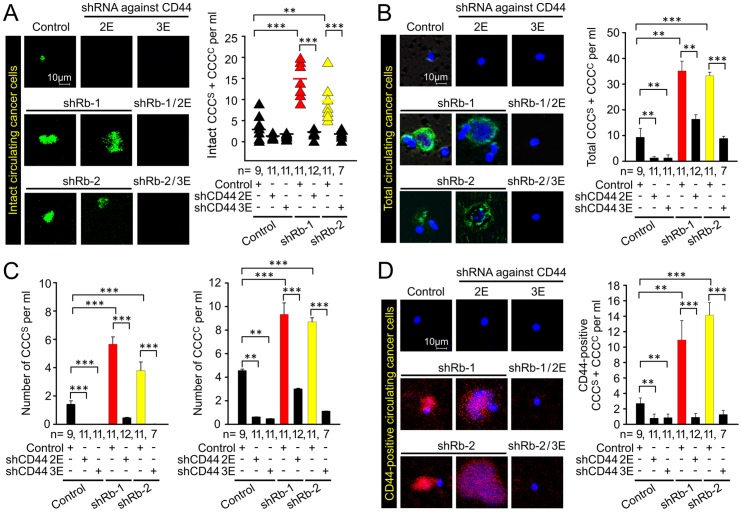
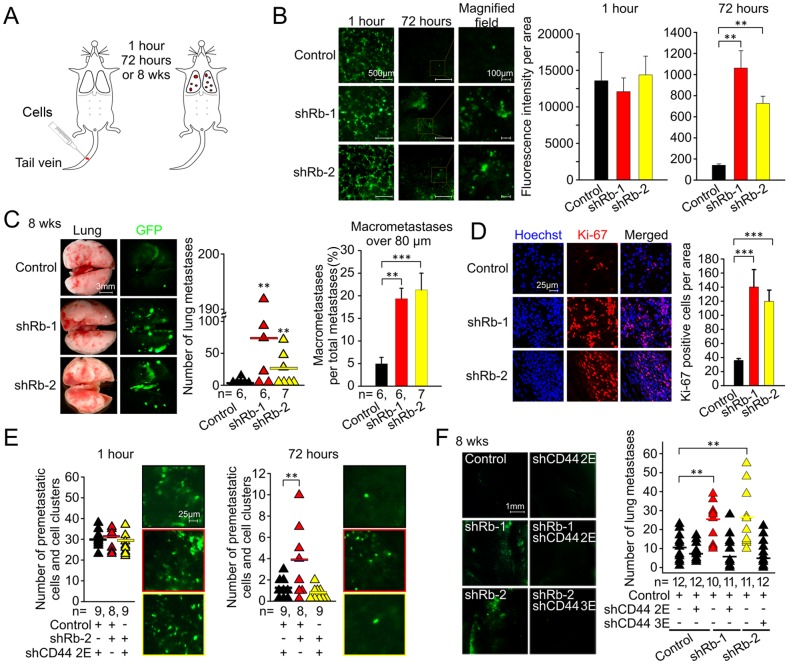
Basal-like breast carcinomas (BLCs) present with extratumoral lymphovascular invasion, are highly metastatic, presumably through a hematogenous route, have augmented expression of CD44 oncoprotein and relatively low levels of retinoblastoma (Rb) tumor suppressor. However, the causal relation among these features is not clear. Here, we show that Rb acts as a key suppressor of multiple stages of metastatic progression. Firstly, Rb suppresses collective cell migration (CCM) and CD44-dependent formation of F-actin positive protrusions in vitro and cell-cluster based lymphovascular invasion in vivo. Secondly, Rb inhibits the release of single cancer cells and cell clusters into the hematogenous circulation and subsequent metastatic growth in lungs. Finally, CD44 expression is required for collective motility and all subsequent stages of metastatic progression initiated by loss of Rb function. Altogether, our results suggest that Rb/CD44 pathway is a crucial regulator of CCM and metastatic progression of BLCs and a promising target for anti-BLCs therapy.
基底样乳腺癌(BLCs)表现出肿瘤外淋巴管浸润,具有高度转移性,推测是通过血行途径转移,其CD44癌蛋白表达增加,视网膜母细胞瘤(Rb)肿瘤抑制因子水平相对较低。然而,这些特征之间的因果关系尚不清楚。在此,我们表明Rb是转移进展多个阶段的关键抑制因子。首先,Rb在体外抑制集体细胞迁移(CCM)和CD44依赖的F-肌动蛋白阳性突起形成,在体内抑制基于细胞簇的淋巴管浸润。其次,Rb抑制单个癌细胞和细胞簇释放到血行循环以及随后在肺部的转移生长。最后,CD44表达是Rb功能丧失引发的集体运动性和转移进展所有后续阶段所必需的。总之,我们的结果表明Rb/CD44途径是BLCs的CCM和转移进展的关键调节因子,也是抗BLCs治疗的一个有前景的靶点。