Laboratory for Sleep, Cognition and Consciousness Research, Department of Psychology, University of Salzburg, Salzburg, Austria.
PLoS One. 2013 Dec 4;8(12):e82049. doi: 10.1371/journal.pone.0082049. eCollection 2013.
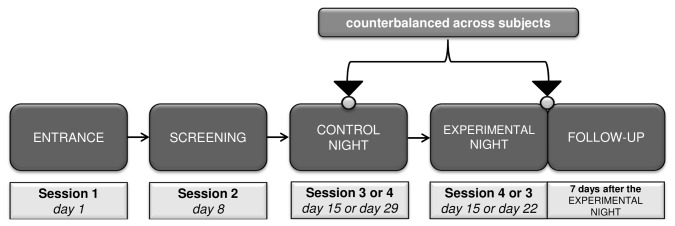
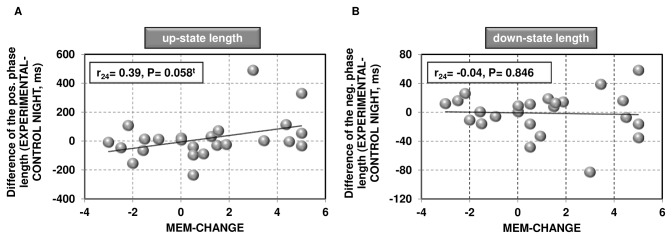
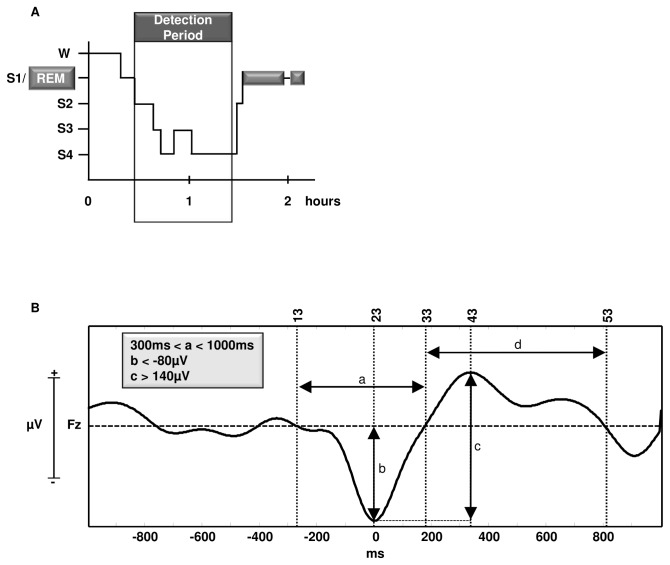
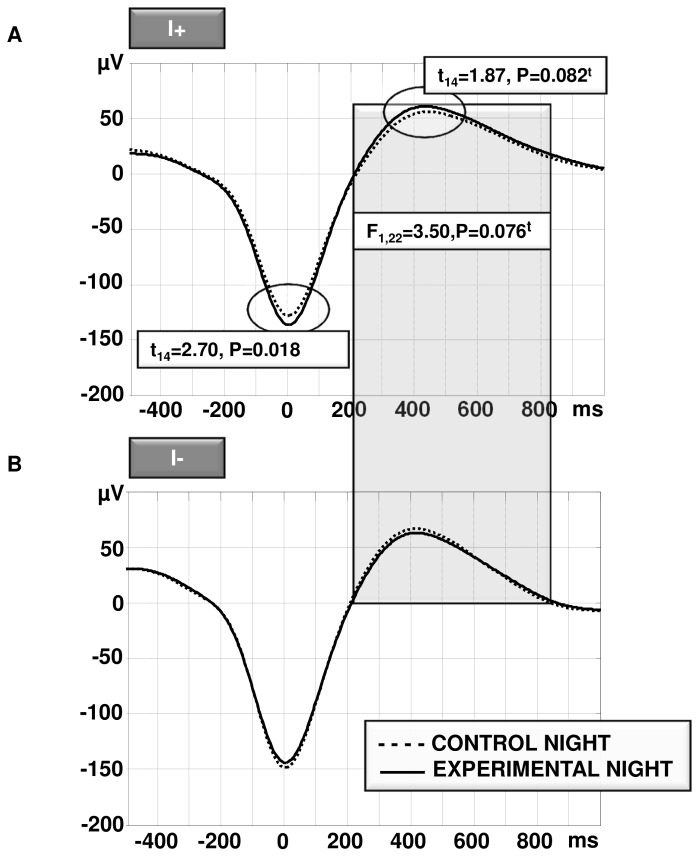
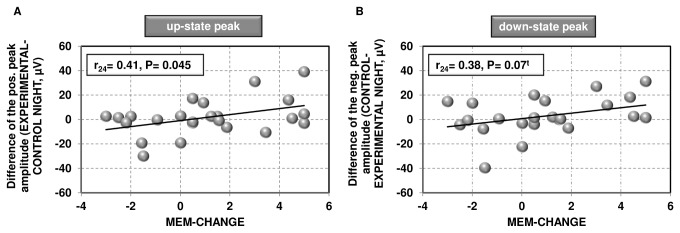
There is growing evidence of the active involvement of sleep in memory consolidation. Besides hippocampal sharp wave-ripple complexes and sleep spindles, slow oscillations appear to play a key role in the process of sleep-associated memory consolidation. Furthermore, slow oscillation amplitude and spectral power increase during the night after learning declarative and procedural memory tasks. However, it is unresolved whether learning-induced changes specifically alter characteristics of individual slow oscillations, such as the slow oscillation up-state length and amplitude, which are believed to be important for neuronal replay. 24 subjects (12 men) aged between 20 and 30 years participated in a randomized, within-subject, multicenter study. Subjects slept on three occasions for a whole night in the sleep laboratory with full polysomnography. Whereas the first night only served for adaptation purposes, the two remaining nights were preceded by a declarative word-pair task or by a non-learning control task. Slow oscillations were detected in non-rapid eye movement sleep over electrode Fz. Results indicate positive correlations between the length of the up-state as well as the amplitude of both slow oscillation phases and changes in memory performance from pre to post sleep. We speculate that the prolonged slow oscillation up-state length might extend the timeframe for the transfer of initial hippocampal to long-term cortical memory representations, whereas the increase in slow oscillation amplitudes possibly reflects changes in the net synaptic strength of cortical networks.
越来越多的证据表明,睡眠在记忆巩固中起着积极的作用。除了海马体的尖波-涟漪复合波和睡眠纺锤波外,慢波振荡似乎在睡眠相关的记忆巩固过程中起着关键作用。此外,在学习陈述性和程序性记忆任务后,夜间慢波振荡的幅度和频谱功率增加。然而,学习引起的变化是否会特异性地改变单个慢波振荡的特征,如慢波上升状态的长度和幅度,这对于神经元重放是很重要的,目前仍未解决。24 名年龄在 20 岁至 30 岁之间的受试者(12 名男性)参加了一项随机、自身对照、多中心研究。受试者在睡眠实验室中整夜进行三次全睡眠多导睡眠图检查。虽然第一个晚上只用于适应目的,但其余两个晚上之前分别进行了陈述性单词对任务或非学习对照任务。在 Fz 电极上的非快速眼动睡眠中检测到慢波振荡。结果表明,记忆表现从睡眠前到睡眠后的变化与慢波上升状态的长度以及慢波相位的幅度之间存在正相关。我们推测,慢波上升状态的延长可能会延长从海马体初始记忆到长期皮质记忆的转移时间框架,而慢波振荡幅度的增加可能反映了皮质网络净突触强度的变化。