Center for Perinatal Research, The Research Institute at Nationwide Children's Hospital, Columbus, Ohio, United States of America ; Department of Pediatrics, The Ohio State University, Columbus, Ohio, United States of America.
PLoS One. 2013 Dec 6;8(12):e82537. doi: 10.1371/journal.pone.0082537. eCollection 2013.
Soluble RAGE (sRAGE) has been associated with multiple inflammatory responses including maternal chorioamnionitis and preeclampsia. Analysis of umbilical cord blood levels have also indicated that sRAGE levels in the infant are affected by maternal inflammation. S100b is a ligand for RAGE and increases in circulating S100b levels are associated with poor neurological outcome in preterm infants. The objective of this study was to determine whether sRAGE or s100b levels in plasma samples from extremely preterm infants at the end of the first week of life were correlated with infant morbidities and whether sRAGE and s100b levels at this time point were still associated with maternal inflammation.
Plasma samples were collected from 130 preterm infants (≤28 weeks) at days of life 5, 6, or 7. sRAGE and s100b levels were measured by ELISA and data were analyzed by Pearson's correlation or Generalized Estimating Equations.
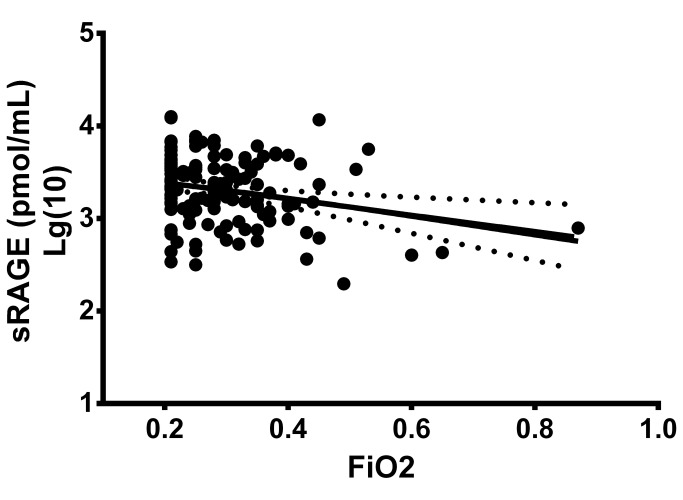
sRAGE was negatively correlated with development of sepsis (p=0.024), the FiO2 requirement of the infant at the time of sampling (p=0.030), as well as maternal preeclampsia (p=0.046), and positively correlated with maternal chorioamnionitis (p=0.006). s100b levels were positively associated with maternal chorioamnionitis (p=0.039). No correlations were observed with other infant morbidities.
These data indicate that sRAGE could potentially be a biomarker of early severe inflammatory responses in the preterm infant. However, more studies are needed to confirm the present findings.
可溶性 RAGE(sRAGE)与多种炎症反应有关,包括母体绒毛膜羊膜炎和子痫前期。对脐带血水平的分析也表明,婴儿的 sRAGE 水平受母体炎症的影响。S100b 是 RAGE 的配体,循环 S100b 水平升高与早产儿神经发育不良有关。本研究的目的是确定极早产儿在生命第一周结束时的血浆样本中 sRAGE 或 s100b 水平是否与婴儿的发病率相关,以及此时的 sRAGE 和 s100b 水平是否仍与母体炎症相关。
从 130 名早产儿(≤28 周)的生后 5、6 或 7 天采集血浆样本。通过 ELISA 测量 sRAGE 和 s100b 水平,并通过 Pearson 相关或广义估计方程进行数据分析。
sRAGE 与败血症的发生呈负相关(p=0.024),与采样时婴儿的 FiO2 需求呈负相关(p=0.030),与母体子痫前期呈正相关(p=0.046),与母体绒毛膜羊膜炎呈正相关(p=0.006)。s100b 水平与母体绒毛膜羊膜炎呈正相关(p=0.039)。与其他婴儿发病率无相关性。
这些数据表明,sRAGE 可能是早产儿早期严重炎症反应的生物标志物。然而,需要更多的研究来证实目前的发现。