Signal Transduction Unit, Section of Anatomy and Histology, Department of Morphology, Surgery and Experimental Medicine, University of Ferrara, Via Fossato di Mortara 70, 44121 Ferrara, Italy.
Mol Cancer. 2013 Dec 13;12:165. doi: 10.1186/1476-4598-12-165.
Beyond its possible correlation with stemness of tumor cells, CD133/prominin1 is considered an important marker in breast cancer, since it correlates with tumor size, metastasis and clinical stage of triple-negative breast cancers (TNBC), to date the highest risk breast neoplasia.
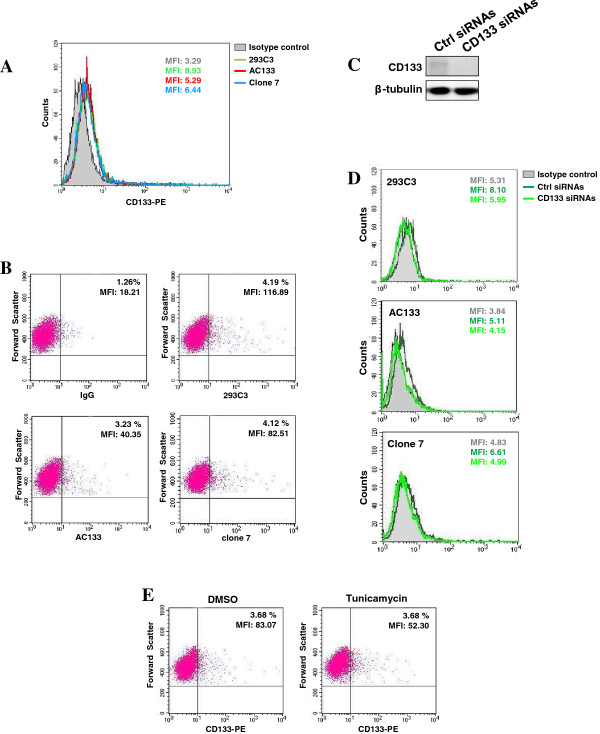
To study the correlation between the levels of CD133 expression and the biology of breast-derived cells, CD133low and CD133high cell subpopulations isolated from triple negative MDA-MB-231 cells were compared in terms of malignant properties and protein expression.
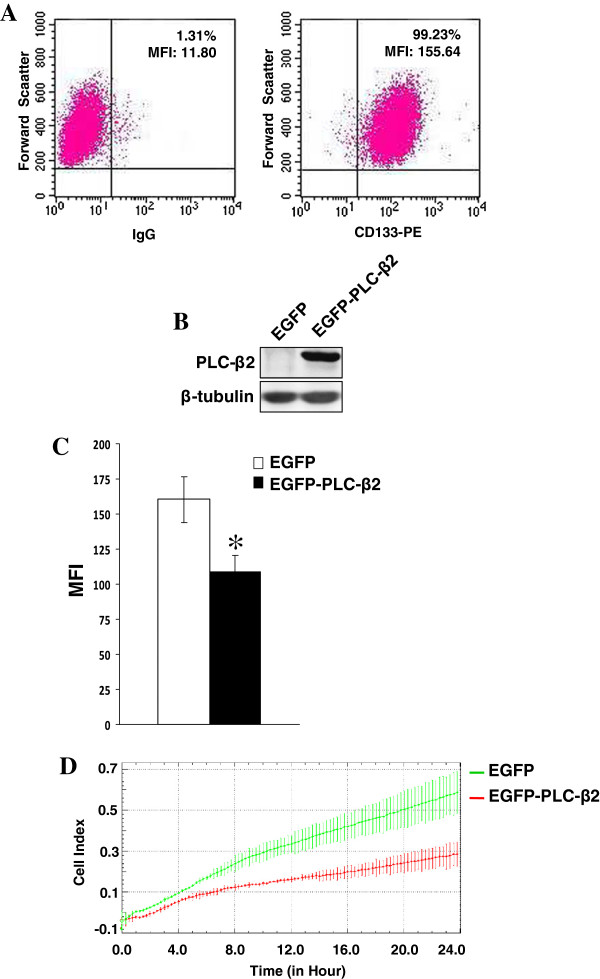
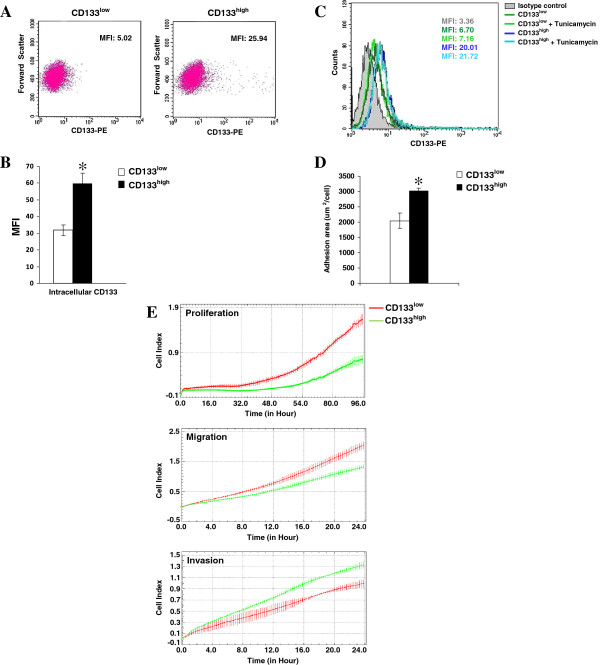
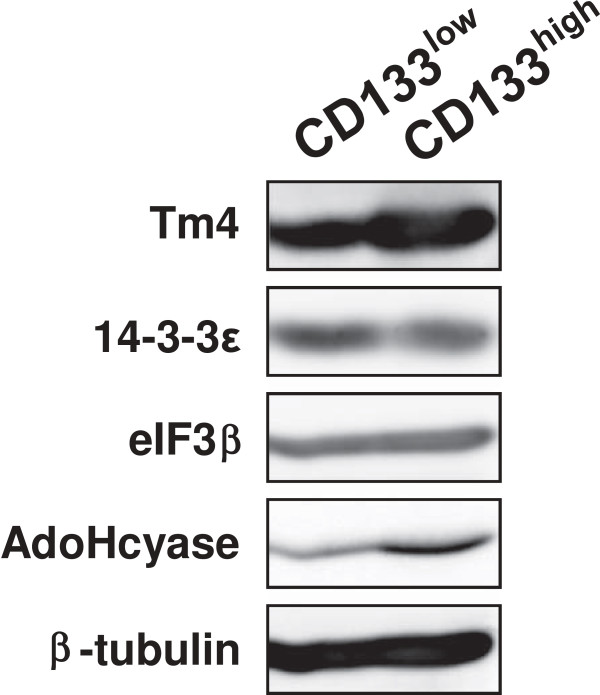
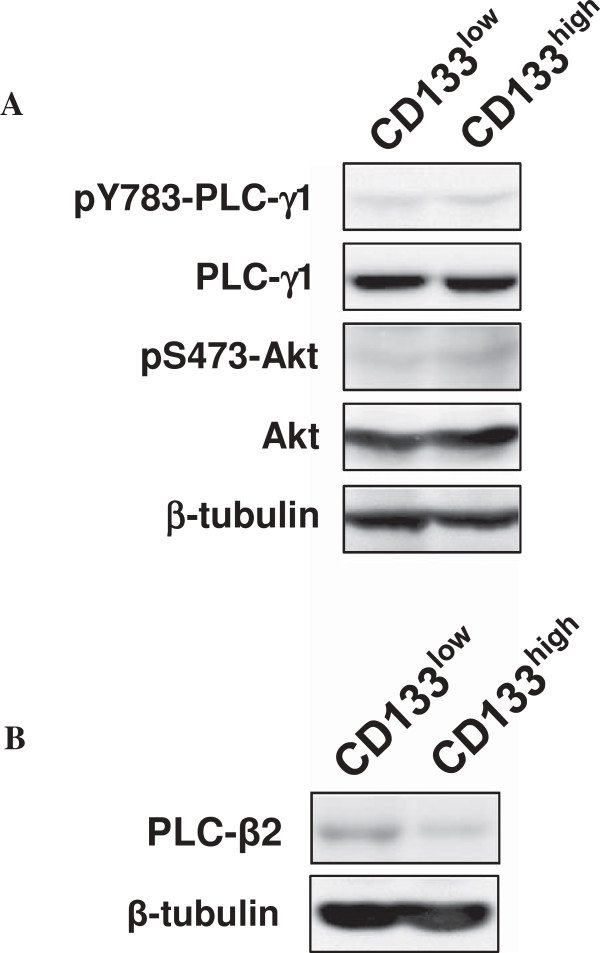
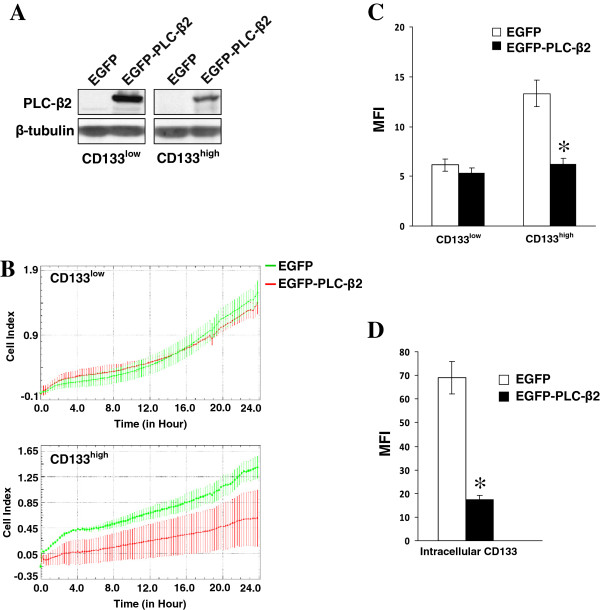
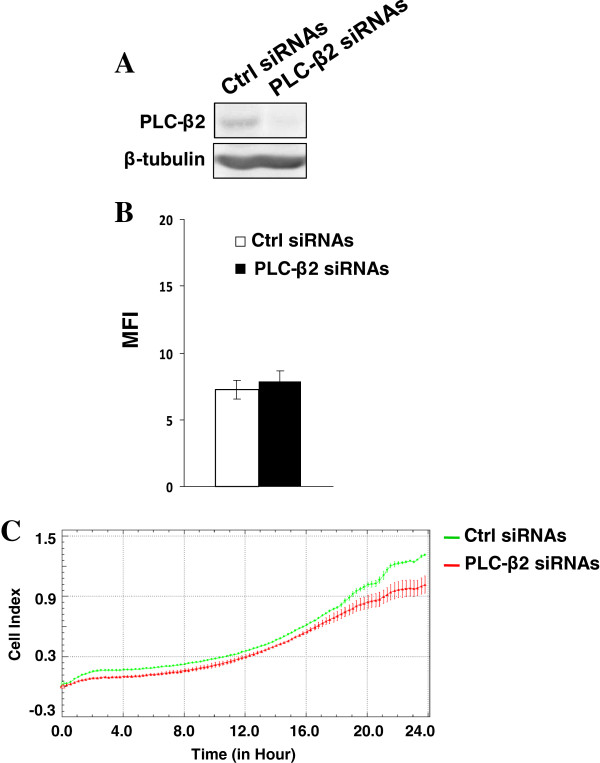
High expression of CD133 characterizes cells with larger adhesion area, lower proliferation rate and reduced migration speed, indicative of a less undifferentiated phenotype. Conversely, when compared with CD133low cells, CD133high cells show higher invasive capability and increased expression of proteins involved in metastasis and drug-resistance of breast tumors. Among the signalling proteins examined, PLC-β2 expression inversely correlates with the levels of CD133 and has a role in inducing the CD133high cells to CD133low cells conversion, suggesting that, in TNBC cells, the de-regulation of this PLC isoform is responsible of the switch from an early to a mature tumoral phenotype also by reducing the expression of CD133.
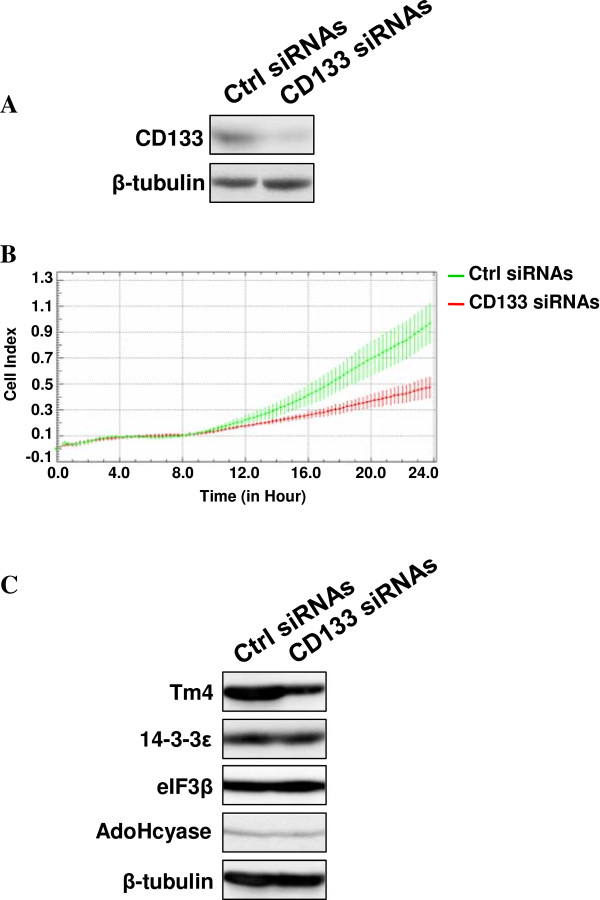
Since CD133 plays a role in determining the invasiveness of CD133high cells, it may constitute an attractive target to reduce the metastatic potential of TNBC. In addition, our data showing that the forced up-regulation of PLC-β2 counteracts the invasiveness of CD133-positive MDA-MB-231 cells might contribute to identify unexplored key steps responsible for the TNBC high malignancy, to be considered for potential therapeutic strategies.
除了与肿瘤细胞的干性可能相关外,CD133/prominin1 被认为是乳腺癌的一个重要标志物,因为它与三阴性乳腺癌(TNBC)的肿瘤大小、转移和临床分期相关,是迄今为止风险最高的乳腺肿瘤。
为了研究 CD133 表达水平与乳腺来源细胞生物学的相关性,我们比较了从三阴性 MDA-MB-231 细胞中分离出的 CD133low 和 CD133high 细胞亚群在恶性特性和蛋白表达方面的差异。
高表达 CD133 特征是细胞具有更大的黏附面积、更低的增殖率和更慢的迁移速度,提示其分化程度较低。相反,与 CD133low 细胞相比,CD133high 细胞具有更高的侵袭能力和参与乳腺癌转移和耐药的蛋白表达增加。在检查的信号蛋白中,PLC-β2 的表达与 CD133 的水平呈负相关,并且在诱导 CD133high 细胞向 CD133low 细胞转化中起作用,表明在 TNBC 细胞中,该 PLC 同工型的失调负责从早期到成熟肿瘤表型的转变,同时通过降低 CD133 的表达来实现。
由于 CD133 在决定 CD133high 细胞的侵袭性方面发挥作用,因此它可能成为降低 TNBC 转移潜力的有吸引力的靶点。此外,我们的数据表明,强制上调 PLC-β2 可拮抗 CD133 阳性 MDA-MB-231 细胞的侵袭性,这可能有助于确定负责 TNBC 高恶性度的未探索关键步骤,以便考虑用于潜在的治疗策略。