Signal Transduction Unit, Division of Anatomy and Histology, Department of Morphology, Surgery and Experimental Medicine, University of Ferrara, Via Fossato di Mortara, 70, 44121, Ferrara, Italy.
Department of Medicine and Aging Science, "G. d'Annunzio" University of Chieti-Pescara, Chieti, Italy.
BMC Cancer. 2017 Sep 4;17(1):617. doi: 10.1186/s12885-017-3592-y.
The malignant potential of triple negative breast cancer (TNBC) is also dependent on a sub-population of cells with a stem-like phenotype. Among the cancer stem cell markers, CD133 and EpCAM strongly correlate with breast tumor aggressiveness, suggesting that simultaneous targeting of the two surface antigens may be beneficial in treatment of TNBC. Since in TNBC-derived cells we demonstrated that PLC-β2 induces the conversion of CD133 to CD133 cells, here we explored its possible role in down-modulating the expression of both CD133 and EpCAM and, ultimately, in reducing the number of TNBC cells with a stem-like phenotype.
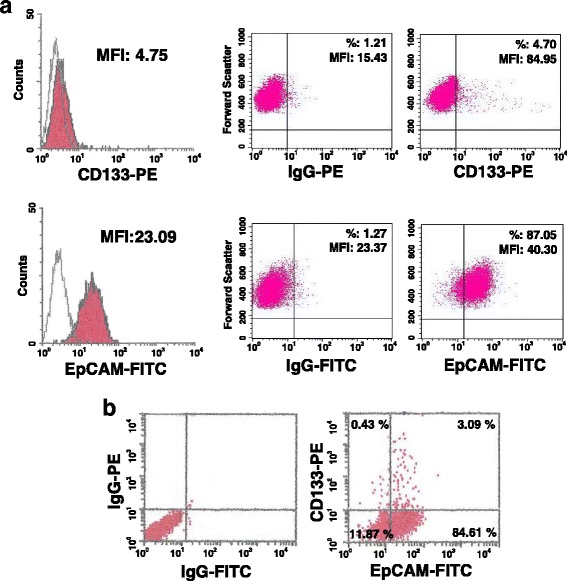
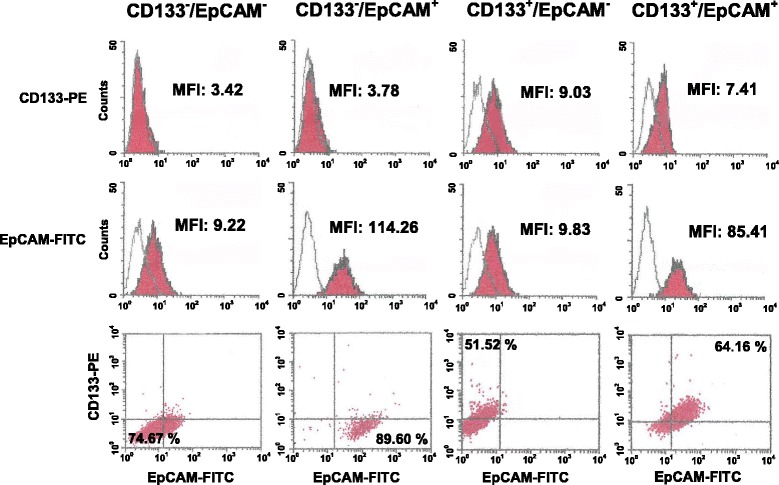
A magnetic step-by-step cell isolation with antibodies directed against CD133 and/or EpCAM was performed on the TNBC-derived MDA-MB-231 cell line. In the same cell model, PLC-β2 was over-expressed or down-modulated and cell proliferation and invasion capability were evaluated by Real-time cell assays. The surface expression of CD133, EpCAM and CD44 in the different experimental conditions were measured by multi-color flow cytometry immunophenotyping.
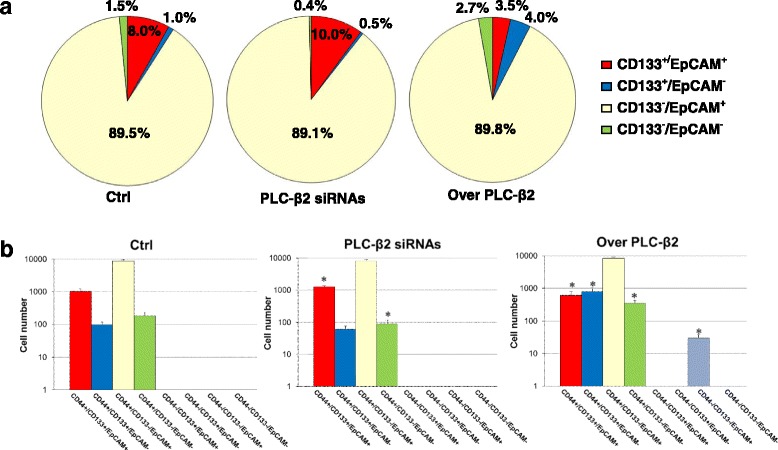
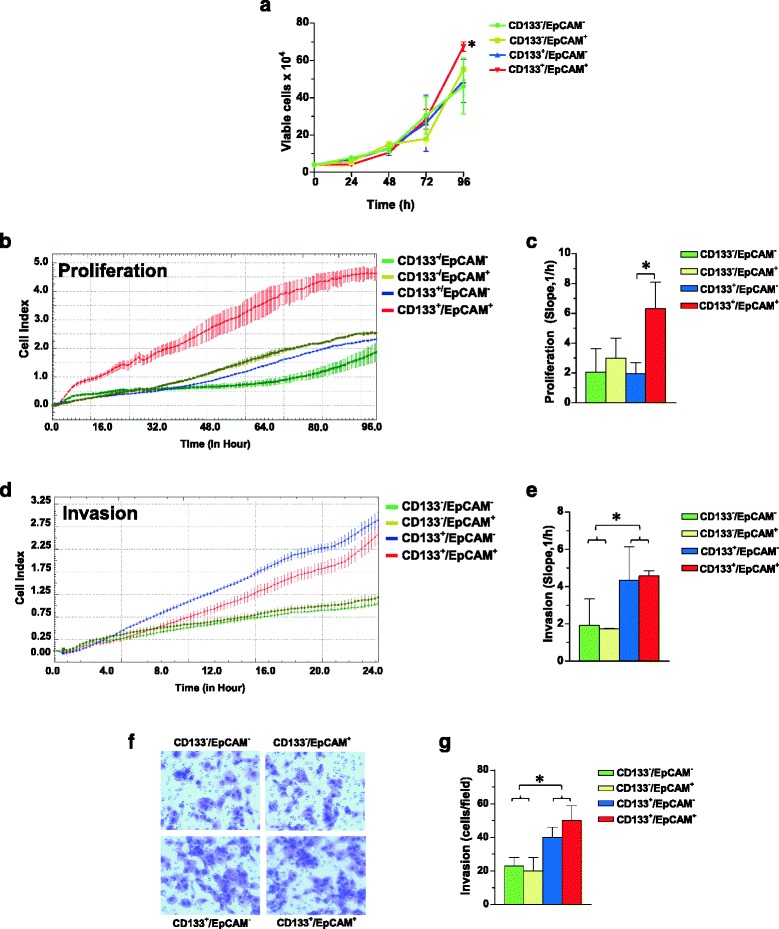
A CD133/EpCAM sub-population with high proliferation rate and invasion capability is present in the MDA-MB-231 cell line. Over-expression of PLC-β2 in CD133/EpCAM cells reduced the surface expression of both CD133 and EpCAM, as well as proliferation and invasion capability of this cellular subset. On the other hand, the up-modulation of PLC-β2 in the whole MDA-MB-231 cell population reduced the number of cells with a CD44/CD133/EpCAM stem-like phenotype.
Since selective targeting of the cells with the highest aggressive potential may have a great clinical importance for TNBC, the up-modulation of PLC-β2, reducing the number of cells with a stem-like phenotype, may be a promising goal for novel therapies aimed to prevent the progression of aggressive breast tumors.
三阴性乳腺癌(TNBC)的恶性潜能也依赖于具有干细胞样表型的亚群细胞。在癌症干细胞标志物中,CD133 和 EpCAM 与乳腺癌侵袭性强烈相关,这表明同时靶向这两种表面抗原可能有益于 TNBC 的治疗。由于我们在 TNBC 衍生的细胞中证明 PLC-β2 诱导 CD133 向 CD133+细胞的转化,因此我们在这里探讨其下调 CD133 和 EpCAM 表达的可能作用,并最终减少具有干细胞样表型的 TNBC 细胞数量。
使用针对 CD133 和/或 EpCAM 的抗体对 TNBC 衍生的 MDA-MB-231 细胞系进行磁分离。在同一细胞模型中,过表达或下调 PLC-β2,并通过实时细胞分析评估细胞增殖和侵袭能力。通过多色流式细胞术免疫表型分析测量不同实验条件下 CD133、EpCAM 和 CD44 的表面表达。
在 MDA-MB-231 细胞系中存在具有高增殖率和侵袭能力的 CD133/EpCAM 亚群。在 CD133/EpCAM 细胞中过表达 PLC-β2 会降低两种表面标志物的表达,以及该细胞亚群的增殖和侵袭能力。另一方面,在整个 MDA-MB-231 细胞群体中上调 PLC-β2 会减少具有 CD44/CD133/EpCAM 干细胞样表型的细胞数量。
由于针对具有最高侵袭潜能的细胞进行选择性靶向可能对 TNBC 具有重要的临床意义,上调 PLC-β2 降低具有干细胞样表型的细胞数量可能是预防侵袭性乳腺癌进展的新疗法的一个有前途的目标。