The Gurdon Institute and the Department of Genetics, University of Cambridge, Tennis Court Road, Cambridge CB2 1QN, UK.
Biol Open. 2013 Dec 15;2(12):1313-20. doi: 10.1242/bio.20134671.
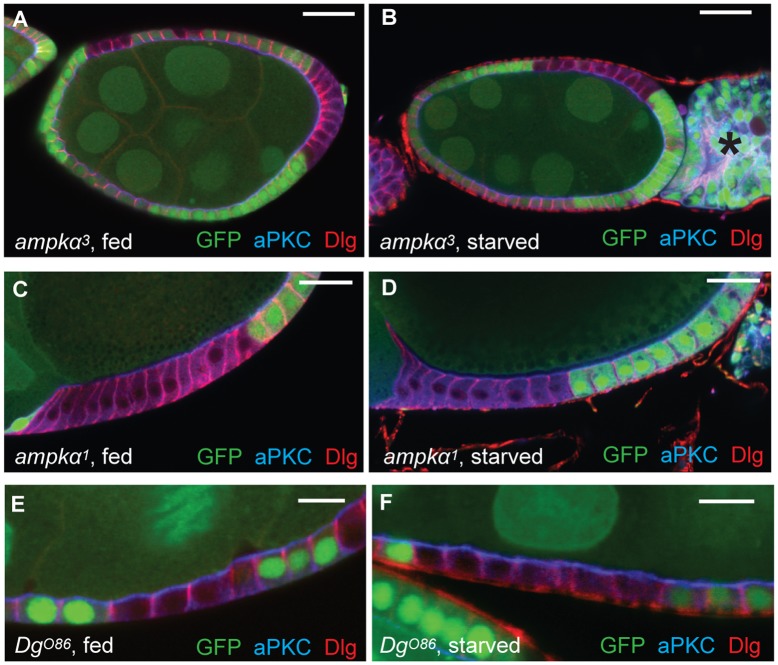
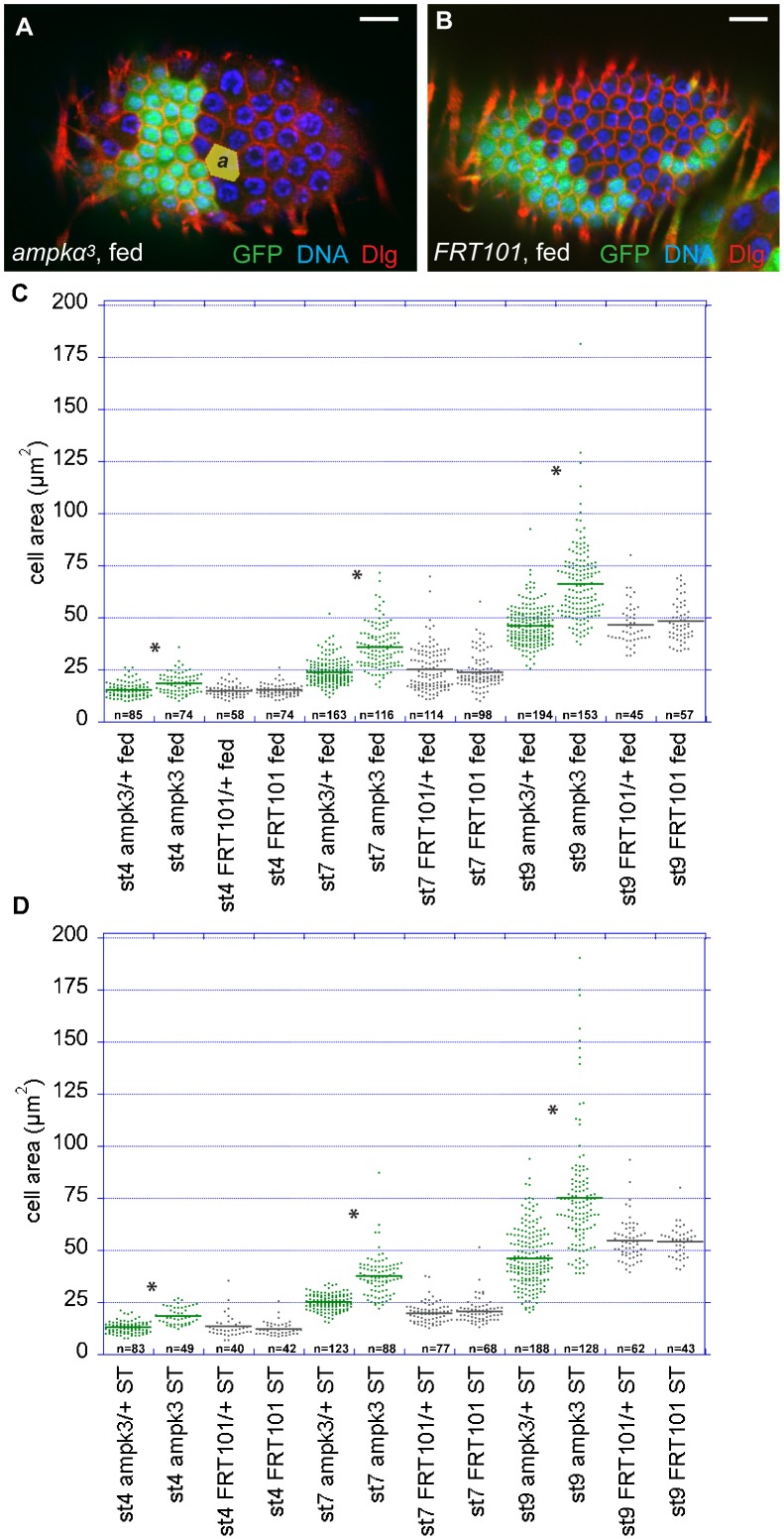
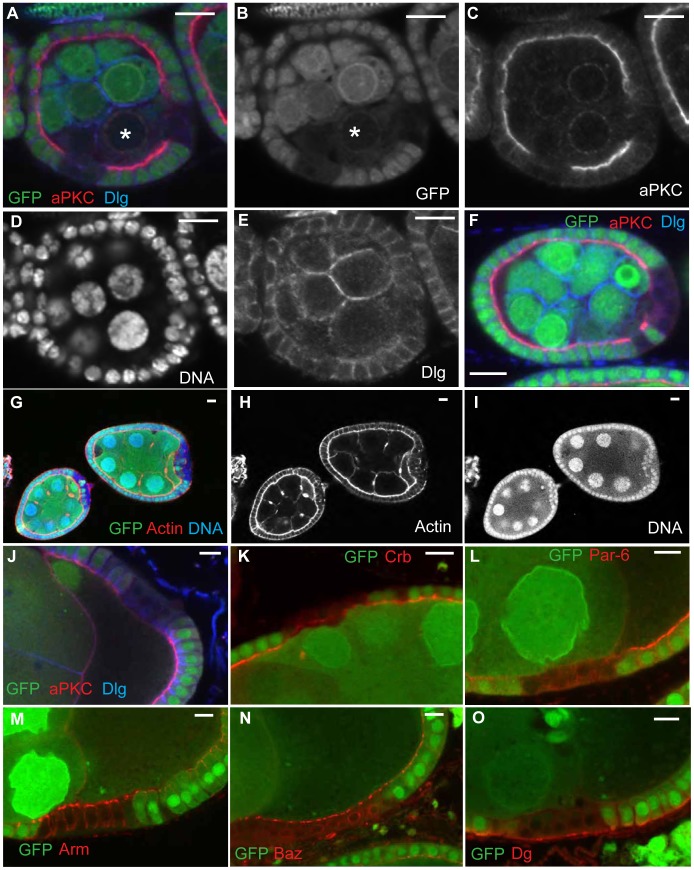
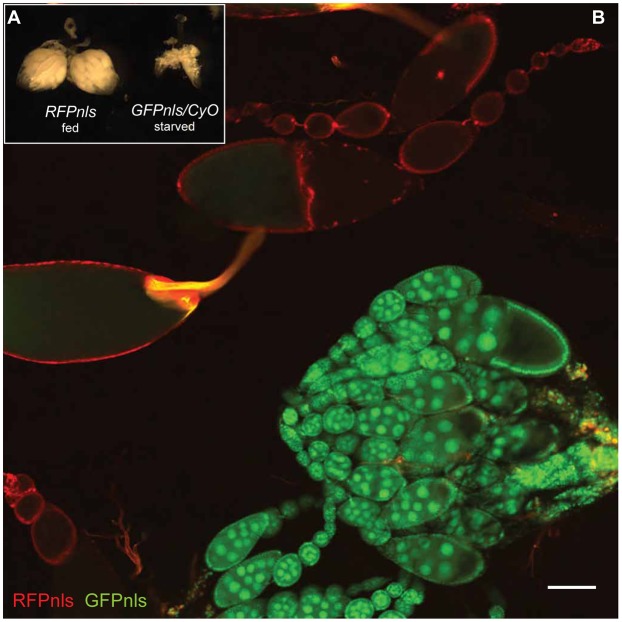
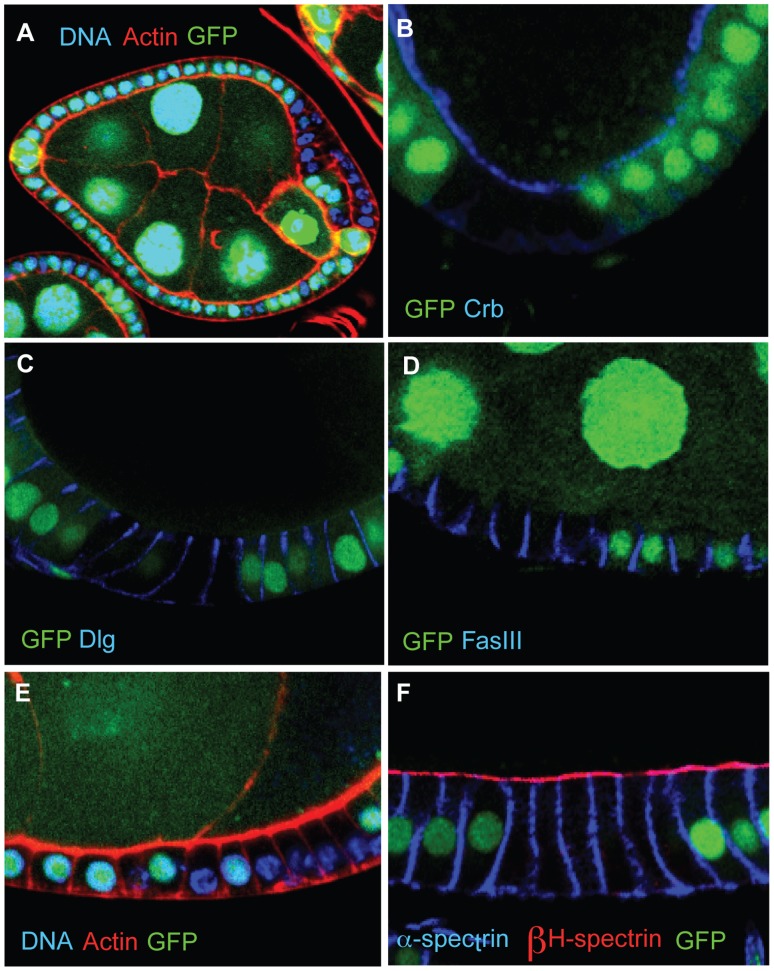
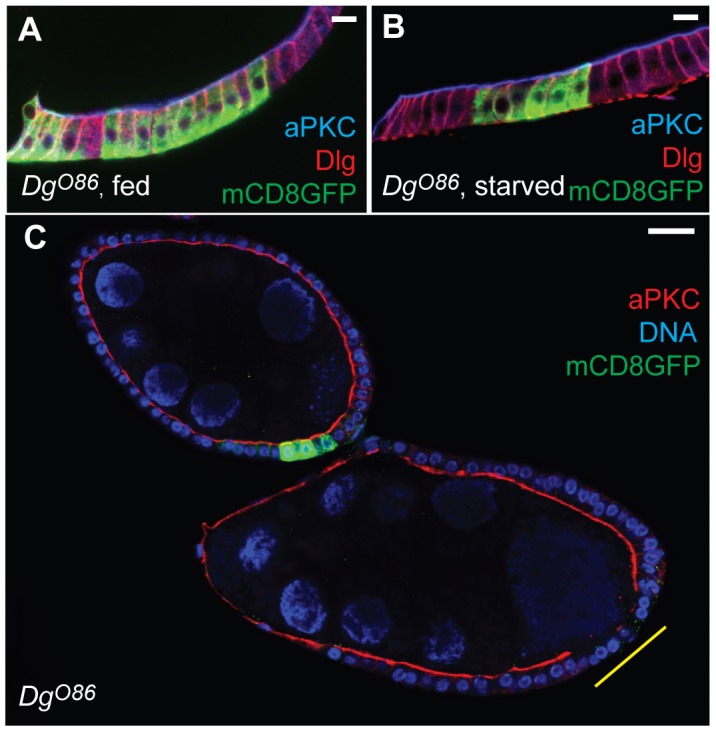
The Drosophila follicular epithelium, which surrounds developing egg chambers, is a well-established model for studying epithelial polarity because it is continuously generated from adult stem cells, making it easy to generate homozygous mutant clones in a heterozygous background. Mutant clones are usually marked by the loss of Green Fluorescent Protein (GFP) expression, which distinguishes them from their green, wild-type neighbours. Here we report that damage to the epithelium during dissection can produce groups of GFP-negative cells that resemble mutant clones. Furthermore, several polarity factors, such as aPKC and Discs large, are not localised in these damage-induced false clones. This phenotype is identical to that reported for several mutants, including ampk and Dystroglycan mutant clones under conditions of energetic stress. Using more reliable systems to mark ampk and Dystroglycan null clones such as the MARCM system, we found that neither protein is required for epithelial polarity under low energy conditions. Thus, our previous report of a specific low energy polarity pathway is an artefact of the increased damage caused by dissecting the small ovaries of starved flies. However, ampk mutant cells are larger than normal under both starvation and well-fed conditions, indicating that AMPK restricts follicle cell growth even when dietary sugar is not limiting. We suspect that several other reports of mutants that disrupt follicle cell polarity may also be based on the phenotype of damage-induced false clones, and recommend the use of positively marked clones to avoid this potential artefact.
果蝇滤泡上皮细胞环绕着正在发育的卵室,是研究上皮极性的成熟模型,因为它可以从成年干细胞中不断产生,这使得在杂合背景下很容易生成纯合突变克隆。突变克隆通常通过失去绿色荧光蛋白 (GFP) 的表达来标记,这使它们与绿色的野生型相邻细胞区分开来。在这里,我们报告说,在解剖过程中对上皮的损伤会产生类似于突变克隆的一群 GFP 阴性细胞。此外,几个极性因子,如 aPKC 和 Discs large,在这些损伤诱导的假克隆中没有定位。这种表型与几种突变体的报告相同,包括在能量应激条件下的 ampk 和 Dystroglycan 突变克隆。使用更可靠的系统来标记 ampk 和 Dystroglycan 缺失克隆,如 MARCM 系统,我们发现这两种蛋白质在低能量条件下都不是上皮极性所必需的。因此,我们之前报道的特定低能量极性途径是由饥饿果蝇小卵巢解剖引起的损伤增加所导致的假象。然而,ampk 突变细胞在饥饿和营养充足的情况下都比正常细胞大,这表明 AMPK 即使在饮食糖分不限制的情况下也限制了滤泡细胞的生长。我们怀疑,其他几个破坏滤泡细胞极性的突变体的报告也可能基于损伤诱导的假克隆的表型,因此建议使用阳性标记的克隆来避免这种潜在的假象。