Stecker Mona, Epstein Nancy, Stecker Mark M
Department of Patient Care Services, Winthrop University Hospital, 222 Station Plaza North, Suite 408, Mineola, NY 11501, USA.
Surg Neurol Int. 2013 Oct 29;4(Suppl 5):S375-82. doi: 10.4103/2152-7806.120781. eCollection 2013.
Patient safety is a top priority of healthcare organizations. The Joint Commission (TJC) is now requiring that healthcare organizations promulgate polices to investigate and resolve disruptive behavior among employees.
OUR AIMS IN THIS INVESTIGATION UTILIZING THE PROVIDER CONFLICT QUESTIONNAIRE (PCQ: Appendix A) included; determining what conflicts exist among a large sample of healthcare providers, how to assess the extent and frequency of disruptive behaviors, and what types of consequences result from these conflicts. The PCQ was distributed utilizing electronic postings, and predetermined e-mail lists to nurses and physicians across the US.
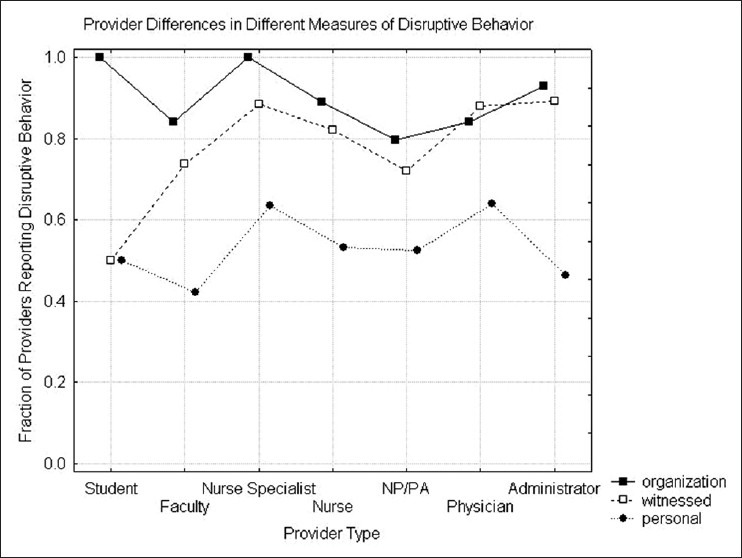
The convenience sample included 617 respondents to the questionnaire. All incomplete responses (failure to answer all 17 items on the questionnaire) were excluded from data analysis. Our major finding was that disruptive behavior was the greatest problem observed in 82% of organizations; 74% personally witnessed these behaviors, while 5% personally experienced these behaviors. Friedman analysis of variance (ANOVA) analyses demonstrated that the difference between these three estimates were significant (χ(2) = 207.8 df = 2, P < 0.0001).
Healthcare organizations in the US are bound by TJC regulations to develop leadership standards that address disruptive behavior. These organizations can no longer stand by and ignore behaviors that threaten not only the bottom line of the institution, but also most critically, patient safety. As more attention is being paid to recommendations and mandates from the TJC and the Institute of Medicine (IOM), we will need more data, like those provided from this study, to better document how to address, resolve, and prevent future "misbehaviors".
患者安全是医疗机构的首要任务。联合委员会(TJC)现要求医疗机构颁布政策,以调查和解决员工之间的破坏性行为。
我们使用提供者冲突问卷(PCQ:附录A)进行此次调查的目的包括:确定大量医疗服务提供者之间存在哪些冲突,如何评估破坏性行为的程度和频率,以及这些冲突会导致何种后果。PCQ通过电子公告以及预定的电子邮件列表分发给美国各地的护士和医生。
便利样本包括617名问卷受访者。所有不完整的回答(未回答问卷上的所有17个项目)均被排除在数据分析之外。我们的主要发现是,82%的机构中破坏性行为是观察到的最大问题;74%的人亲眼目睹过这些行为,而5%的人亲身经历过这些行为。弗里德曼方差分析(ANOVA)表明,这三个估计值之间的差异具有统计学意义(χ(2)=207.8,自由度=2,P<0.0001)。
美国的医疗机构受TJC法规约束,需制定应对破坏性行为的领导标准。这些机构不能再袖手旁观,忽视那些不仅威胁机构底线,更严重威胁患者安全的行为。随着人们越来越关注TJC和医学研究所(IOM)的建议和要求,我们将需要更多像本研究提供的数据,以更好地记录如何应对、解决和预防未来的“不当行为”。