Intercollege Graduate Degree Program in Plant Biology, The Pennsylvania State University, University Park, PA 16802, USA.
J Biol Eng. 2013 Dec 16;7(1):31. doi: 10.1186/1754-1611-7-31.
Polylactic acid (PLA) is considered to be a sustainable alternative to petroleum-based polymers for many applications. Using cellulose fiber to reinforce PLA is of great interest recently due to its complete biodegradability and potential improvement of the mechanical performance. However, the dispersion of hydrophilic cellulose fibers in the hydrophobic polymer matrix is usually poor without using hazardous surfactants. The goal of this study was to develop homogenously dispersed cellulose nanowhisker (CNW) reinforced PLA composites using whole milk casein protein, which is an environmentally compatible dispersant.
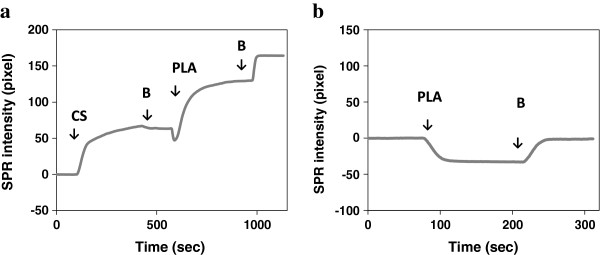
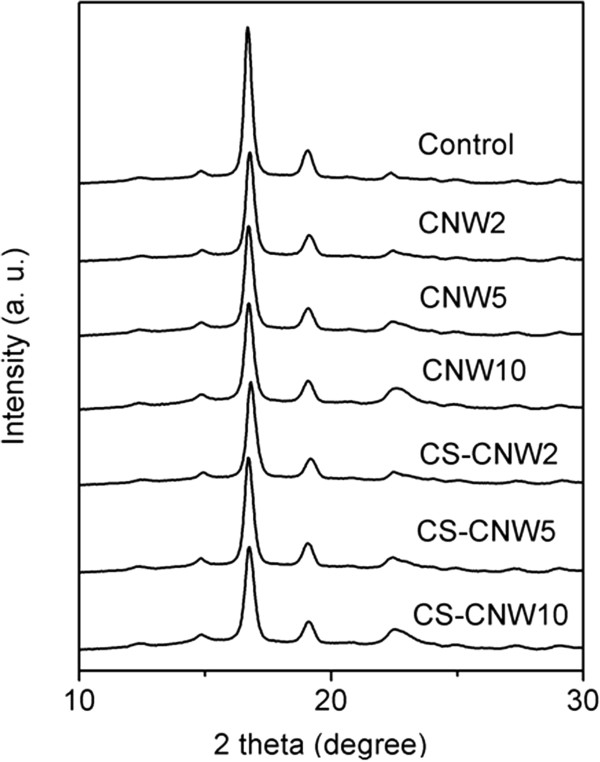
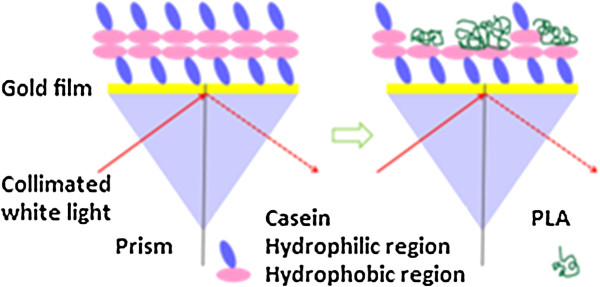
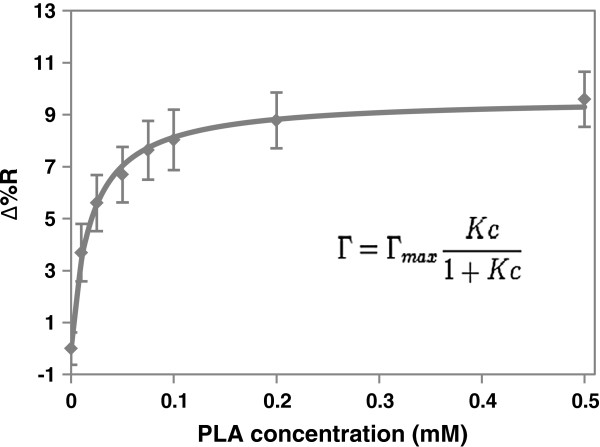
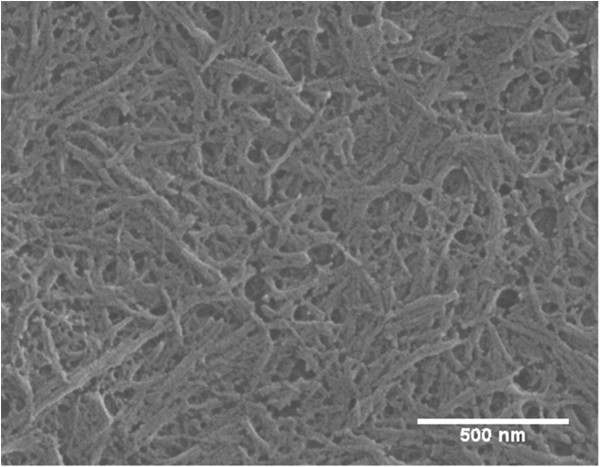
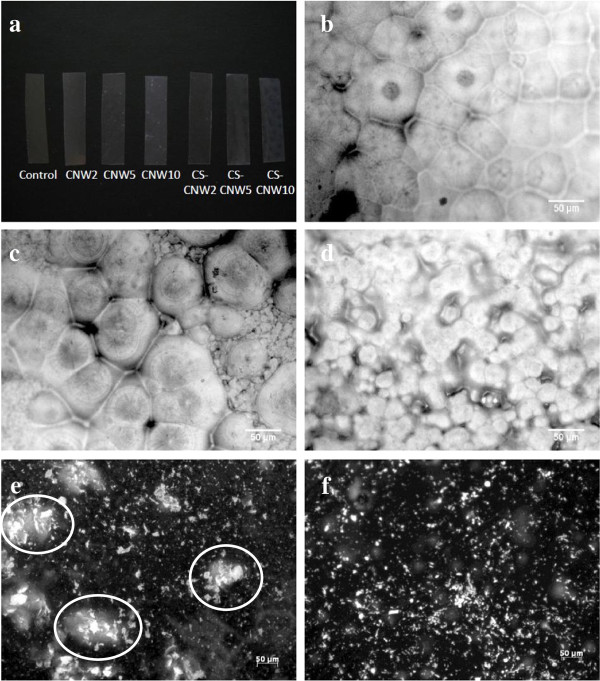
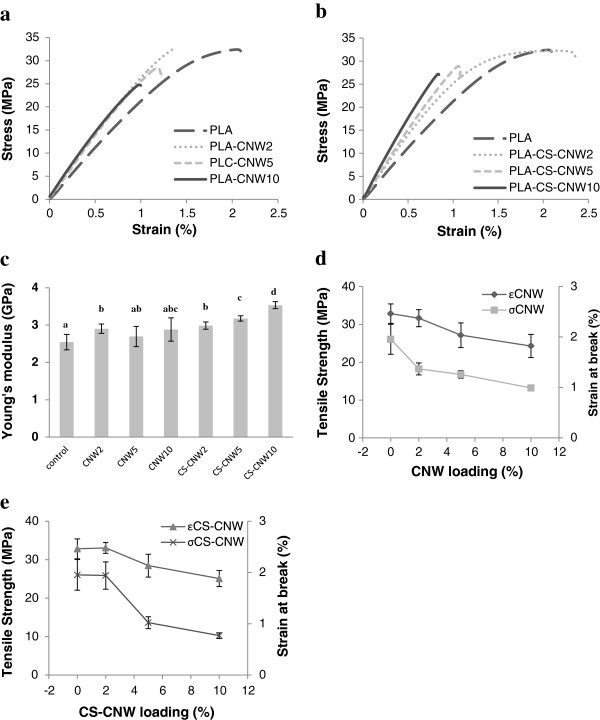
In this study, whole milk casein was chosen as a dispersant in the PLA-CNW system because of its potential to interact with the PLA matrix and cellulose. The affinity of casein to PLA was studied by surface plasmon resonance (SPR) imaging. CNWs were functionalized with casein and used as reinforcements to make PLA composites. Fluorescent staining of CNWs in the PLA matrix was implemented as a novel and simple way to analyze the dispersion of the reinforcements. The dispersion of CNWs in PLA was improved when casein was present. The mechanical properties of the composites were studied experimentally. Compared to pure PLA, the PLA composites had higher Young's modulus. Casein (CS) functionalized CNW reinforced PLA (PLA-CS-CNW) at 2 wt% filler content maintained higher strain at break compared to normal CNW reinforced PLA (PLA-CNW). The Young's modulus of PLA-CS-CNW composites was also higher than that of PLA-CNW composites at higher filler content. However, all composites exhibited lower strain at break and tensile strength at high filler content.
The presence of whole milk casein improved the dispersion of CNWs in the PLA matrix. The improved dispersion of CNWs provided higher modulus of the PLA composites at higher reinforcement loading and maintained the strain and stress at break of the composites at relatively low reinforcement loading. The affinity of the dispersant to PLA is important for the ultimate strength and stiffness of the composites.
聚乳酸(PLA)被认为是许多应用中可持续替代石油基聚合物的材料。由于纤维素纤维具有完全的生物降解性和潜在的机械性能改善,因此最近用纤维素纤维增强 PLA 引起了极大的关注。然而,如果不使用危险的表面活性剂,亲水性纤维素纤维在疏水性聚合物基体中的分散通常很差。本研究的目的是使用全脂牛奶酪蛋白开发均匀分散的纤维素纳米晶须(CNW)增强 PLA 复合材料,全脂牛奶酪蛋白是一种环境友好型分散剂。
在这项研究中,由于全脂牛奶酪蛋白有可能与 PLA 基质和纤维素相互作用,因此选择全脂牛奶酪蛋白作为 PLA-CNW 体系中的分散剂。通过表面等离子体共振(SPR)成像研究了酪蛋白与 PLA 的亲和力。对 CNWs 进行了酪蛋白功能化,并将其用作增强材料来制备 PLA 复合材料。在 PLA 基体中对 CNWs 进行荧光染色是一种分析增强材料分散性的新颖而简单的方法。当存在酪蛋白时,CNWs 在 PLA 中的分散性得到了改善。通过实验研究了复合材料的力学性能。与纯 PLA 相比,复合材料的杨氏模量更高。与普通 CNW 增强 PLA(PLA-CNW)相比,在 2wt%填充量下,含有酪蛋白(CS)的 CNW 增强 PLA(PLA-CS-CNW)保持更高的断裂伸长率。在更高的填充量下,PLA-CS-CNW 复合材料的杨氏模量也高于 PLA-CNW 复合材料。然而,在高填充量下,所有复合材料的断裂伸长率和拉伸强度都较低。
全脂牛奶酪蛋白的存在改善了 CNWs 在 PLA 基体中的分散性。CNWs 分散性的提高在更高的增强负载下提高了 PLA 复合材料的模量,并在相对较低的增强负载下保持了复合材料的应变和断裂应力。分散剂对 PLA 的亲和力对复合材料的最终强度和刚度很重要。