Jackson Daniel J, Wörheide Gert
Courant Research Centre Geobiology; Georg-August-University of Göttingen; Göttingen, Germany.
Department of Earth and Environmental Sciences and GeoBioCenter LMU; Ludwig-Maximilians-Universität München; München, Germany; Bavarian State Collections of Palaeontology and Geology; München, Germany.
Autophagy. 2014 Mar;10(3):408-15. doi: 10.4161/auto.27319. Epub 2013 Dec 12.
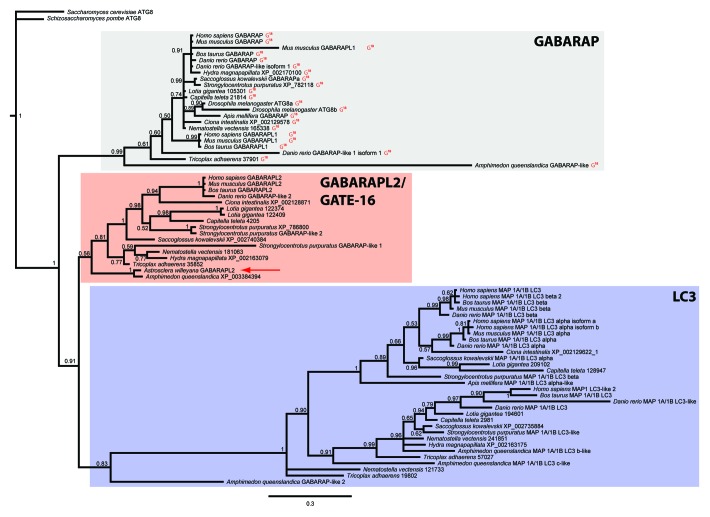
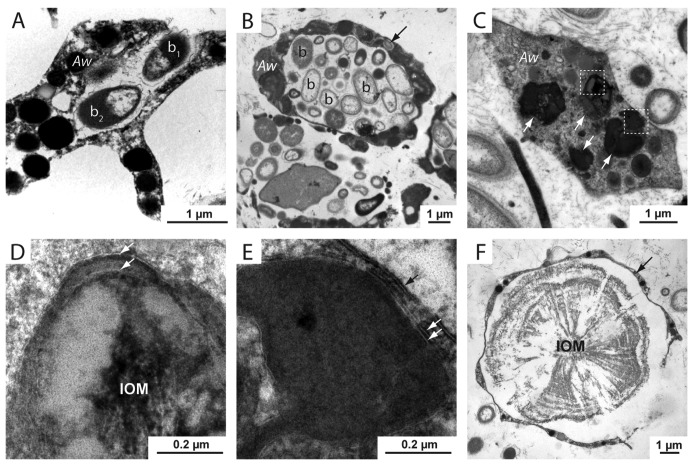
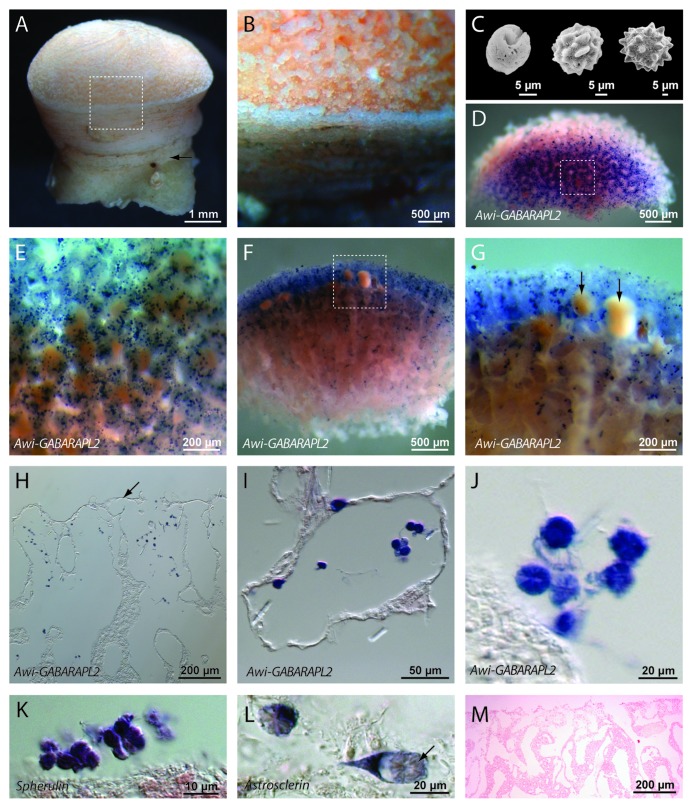
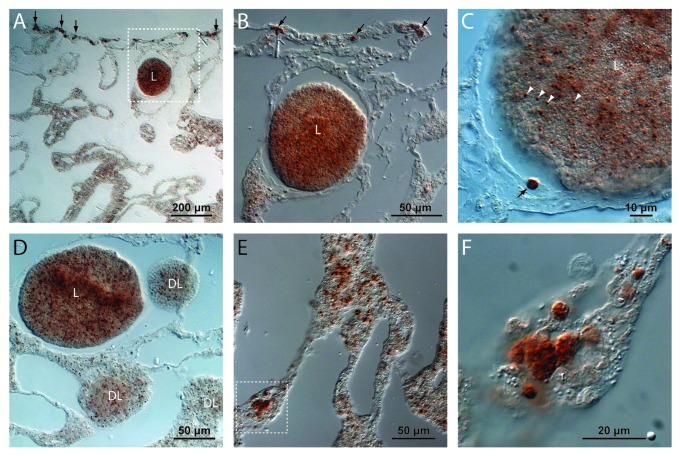
Representatives of all major metazoan lineages form biominerals. The molecular mechanisms that underlie this widespread and evolutionarily ancient ability are gradually being revealed for some lineages. However, until a wider range of metazoan biomineralization strategies are understood, the true diversity, and therefore the evolutionary origins of this process, will remain unknown. We have previously shown that the coralline demosponge, Astrosclera willeyana, in some way employs its endobiotic bacterial community to form its highly calcified skeleton. Here, using in situ hybridization and immunohistochemistry, we show that an ortholog of ATG8 (most likely a GABARAPL2/GATE-16 ortholog) is expressed in cells that construct the individual skeletal elements of the sponge. In TEM sections sponge cells can be observed to contain extensive populations of bacteria, and frequently possesses double-membrane structures which we interpret to be autophagosomes. In combination with our previous work, these findings support the hypothesis that the host sponge actively degrades a proportion of its bacterial community using an autophagy pathway, and uses the prokaryotic organic remains as a framework upon which calcification of the sponge skeleton is initiated.
所有主要后生动物谱系的代表都会形成生物矿物。对于某些谱系而言,构成这种广泛且在进化上古老的能力基础的分子机制正逐渐被揭示。然而,在了解更广泛的后生动物生物矿化策略之前,这个过程的真正多样性以及其进化起源仍将不为人知。我们之前已经表明,珊瑚钙质海绵Astrosclera willeyana以某种方式利用其内生细菌群落来形成其高度钙化的骨架。在这里,我们使用原位杂交和免疫组织化学方法表明,ATG8的一个直系同源物(很可能是GABARAPL2/GATE - 16的直系同源物)在构建海绵个体骨骼元素的细胞中表达。在透射电镜切片中,可以观察到海绵细胞含有大量细菌群体,并且经常具有我们认为是自噬体的双膜结构。结合我们之前的工作,这些发现支持了这样一种假设,即宿主海绵利用自噬途径主动降解其一部分细菌群落,并利用原核生物的有机残骸作为启动海绵骨骼钙化的框架。