Sette Angelica, Spadavecchia Jolanda, Landoulsi Jessem, Casale Sandra, Haye Bernard, Crociani Olivia, Arcangeli Annarosa
Section of Internal Medicine, Department of Experimental and Clinical Medicine, University of Florence, Viale GB Morgagni 50, 50134 Florence, Italy.
Laboratoire de Réactivité de Surface, UMR CNRS 7197, Université Pierre & Marie Curie-Paris VI, Site d'Ivry-Le Raphaël, 94200 Ivry-sur-Seine, France.
J Nanopart Res. 2013;15(12):2111. doi: 10.1007/s11051-013-2111-6. Epub 2013 Nov 16.
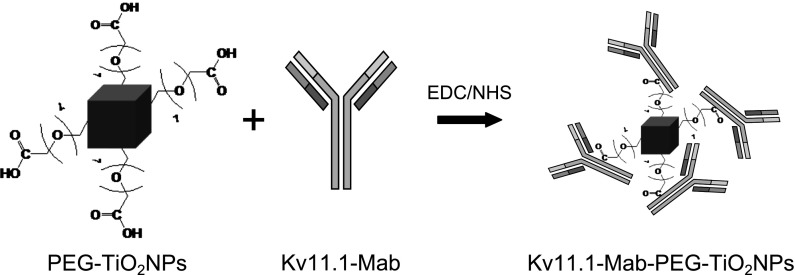
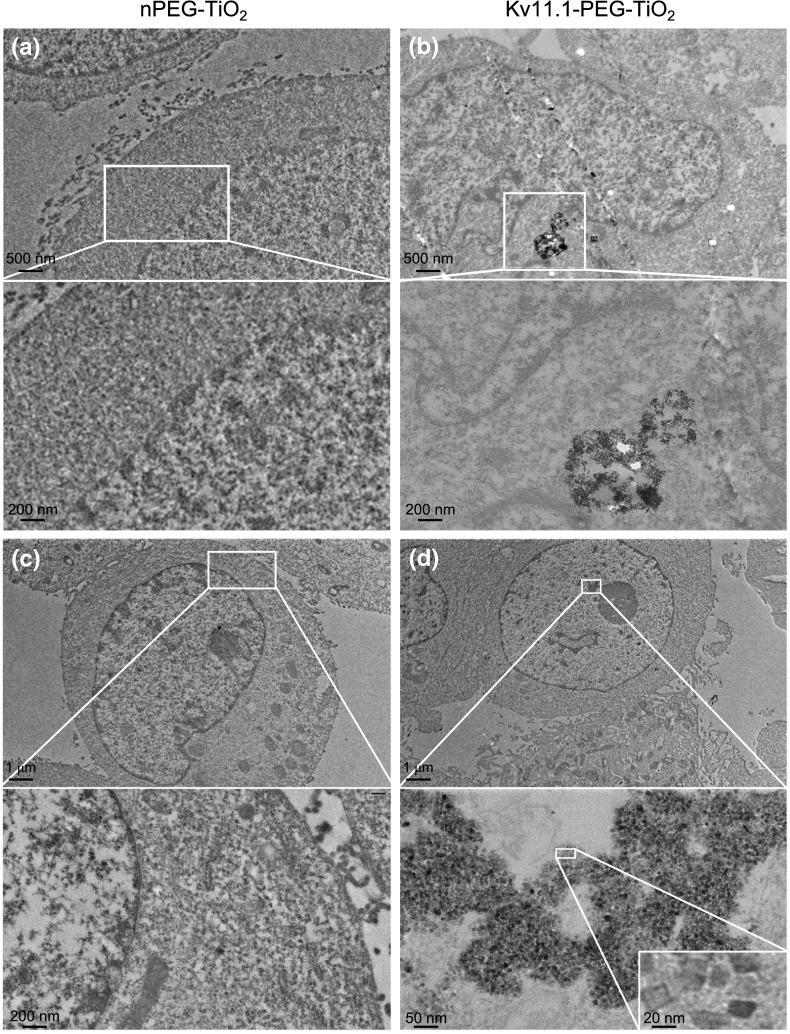
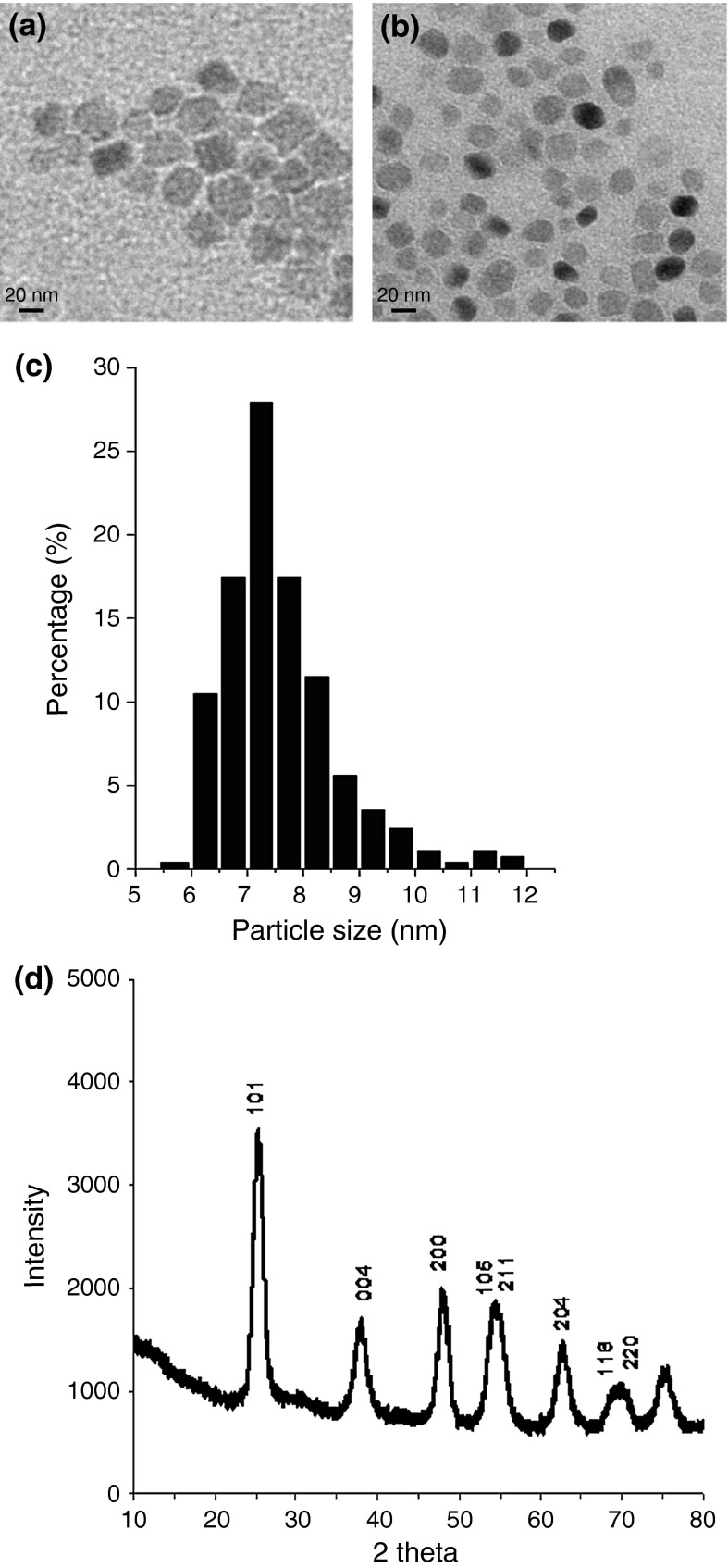
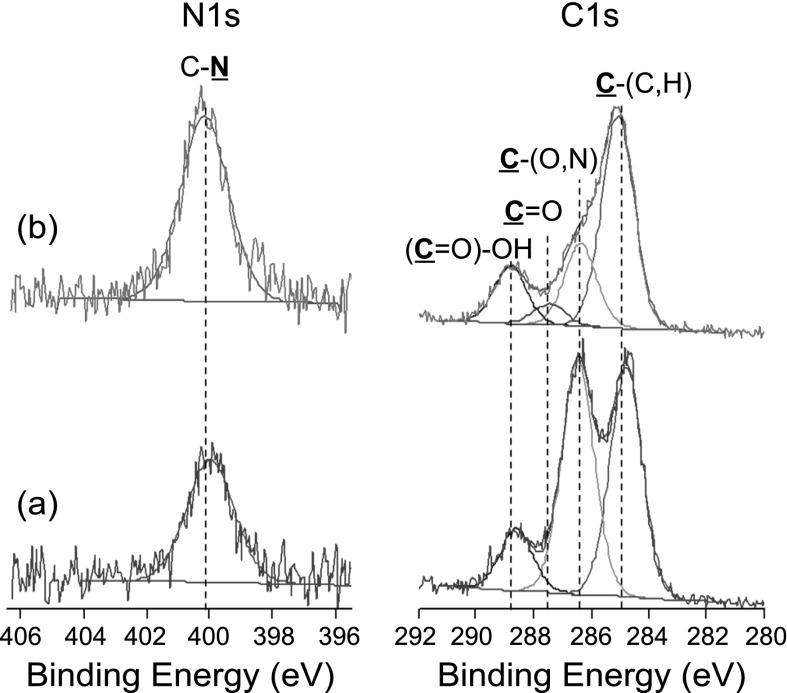
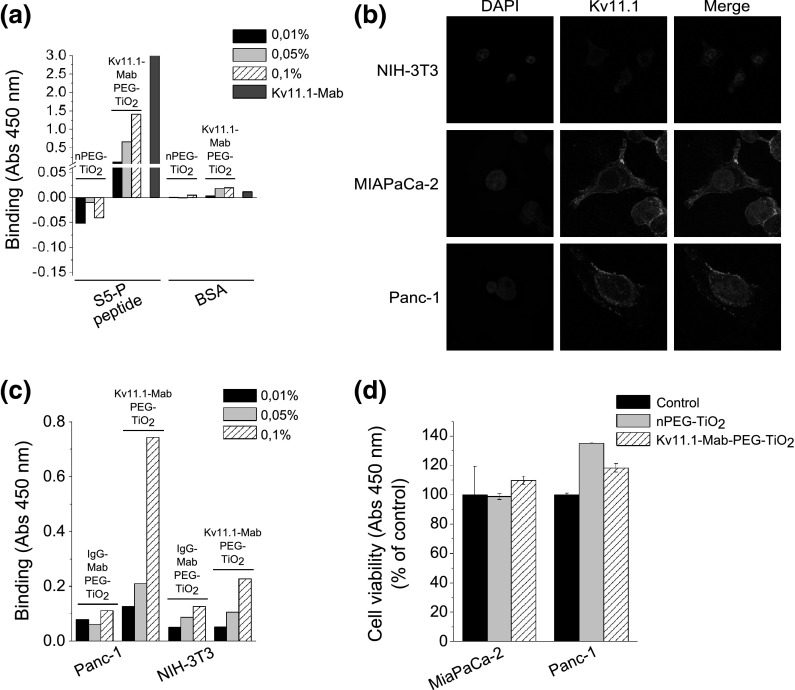
Titanium dioxide (TiO) has been widely used in many nanotechnology areas including nanomedicine, where it could be proposed for the photodynamic and sonodynamic cancer therapies. However, TiO nanoformulations have been shown to be toxic for living cells. In this article, we report the development of a new delivery system, based on nontoxic TiO nanoparticles, further conjugated with a monoclonal antibody against a novel and easily accessible tumor marker, e.g., the Kv 11.1 potassium channel. We synthesized, by simple solvothermal method, dicarboxylic acid-terminated PEG TiO nanocrystals (PEG-TiO NPs). Anti-Kv 11.1 monoclonal antibodies (Kv 11.1-Mab) were further linked to the terminal carboxylic acid groups. Proper conjugation was confirmed by X-ray photoelectron spectroscopy analysis. Kv 11.1-Mab-PEG-TiO NPs efficiently recognized the specific Kv 11.1 antigen, both in vitro and in pancreatic ductal adenocarcinoma (PDAC) cells, which express the Kv 11.1 channel onto the plasma membrane. Both PEG TiO and Kv 11.1-Mab-PEG-TiO NPs were not cytotoxic, but only Kv 11.1-Mab-PEG-TiO NPs were efficiently internalized into PDAC cells. Data gathered from this study may have further applications for the chemical design of nanostructures to be applied for therapeutic purposes in pancreatic cancer.
二氧化钛(TiO₂)已广泛应用于包括纳米医学在内的许多纳米技术领域,在纳米医学中它可用于光动力和超声动力癌症治疗。然而,TiO₂纳米制剂已被证明对活细胞有毒性。在本文中,我们报告了一种基于无毒TiO₂纳米颗粒的新型递送系统的开发,该纳米颗粒进一步与针对一种新型且易于获取的肿瘤标志物(例如Kv 11.1钾通道)的单克隆抗体偶联。我们通过简单的溶剂热法合成了二羧酸封端的聚乙二醇TiO₂纳米晶体(PEG-TiO₂ NPs)。抗Kv 11.1单克隆抗体(Kv 11.1-Mab)进一步与末端羧酸基团相连。通过X射线光电子能谱分析证实了正确的偶联。Kv 11.1-Mab-PEG-TiO₂ NPs在体外和表达Kv 11.1通道于质膜上的胰腺导管腺癌(PDAC)细胞中均能有效识别特异性Kv 11.1抗原。PEG-TiO₂ NPs和Kv 11.1-Mab-PEG-TiO₂ NPs均无细胞毒性,但只有Kv 11.1-Mab-PEG-TiO₂ NPs能有效内化到PDAC细胞中。本研究收集的数据可能对用于胰腺癌治疗目的的纳米结构的化学设计有进一步的应用。