Guangdong Provincial Institute of Public Health, Guangdong Provincial Center for Disease Control and Prevention, Guangzhou, Guangdong, China ; Institute of HIV/AIDS Control and Prevention, Guangdong Provincial Center for Disease Control and Prevention, Guangzhou, Guangdong, China.
Institute of HIV/AIDS Control and Prevention, Guangdong Provincial Center for Disease Control and Prevention, Guangzhou, Guangdong, China.
PLoS One. 2013 Dec 3;8(12):e82304. doi: 10.1371/journal.pone.0082304. eCollection 2013.
From November 2011 to January 2012, a number of clustering cases of HCV infection were reported in Zijin County, Heyuan City, Guangdong, China. Most patients in the clustering cases suspected that they could be infected due to inappropriate medical care in the clinic located at the Xiangshui road. However, the molecular epidemiology of the clustering cases remains unknown.
The residents, living at Xiangshui Road, with HCV antibody positive reported from 2011 and 2012 were recruited. A survey of the HCV infected individuals from the clustering cases was conducted. Each participant underwent a questionnaire defining demographic characteristics and health care history. HCV serological test and viral load test were performed to confirm the infection status. Molecular phylogenetic analysis and Bayesian coalescence analysis were conducted to further confirm the HCV subtype distribution and to reconstruct the associated demographic history and time-scaled phylogeny among the clustering cases.
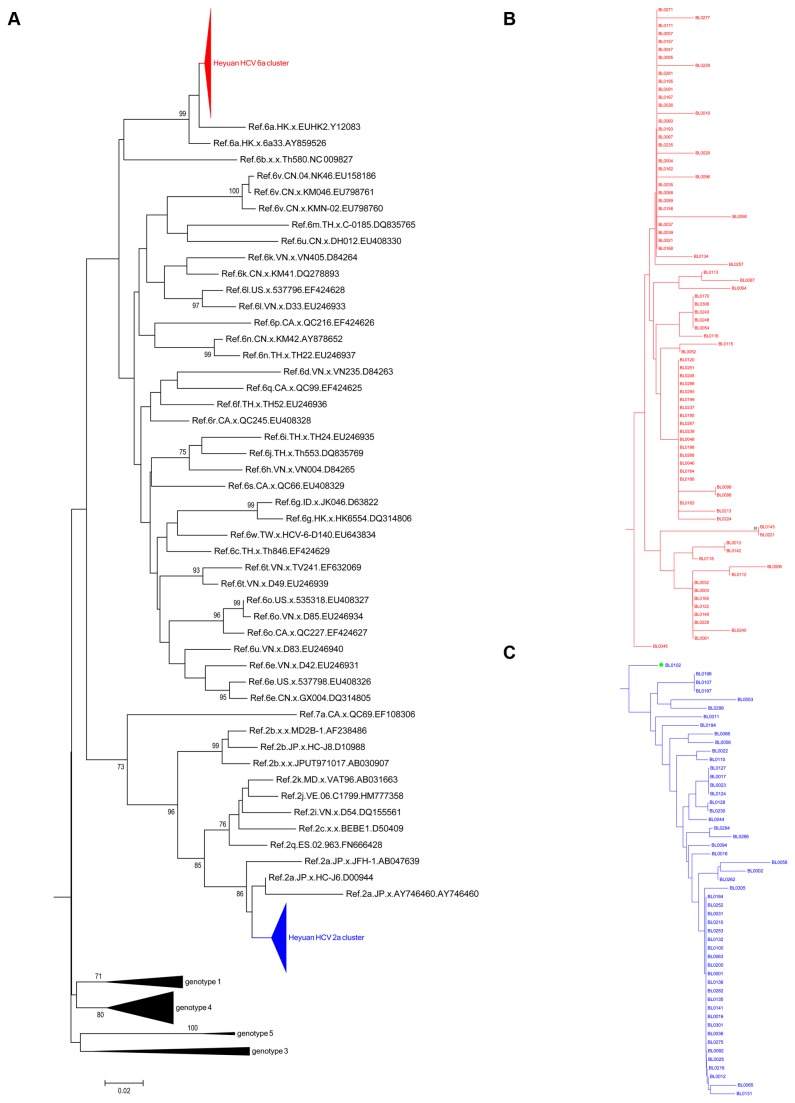
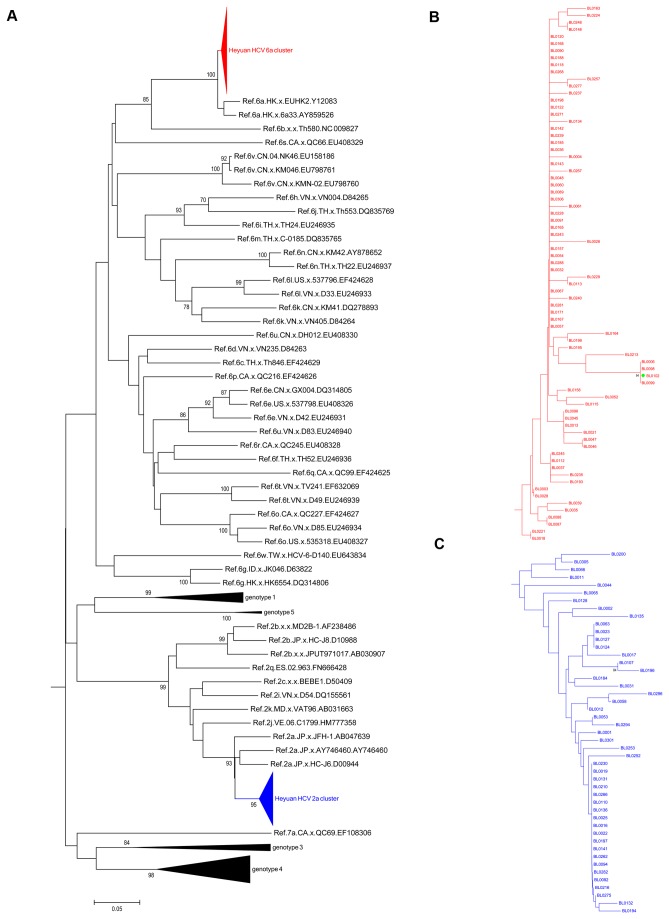
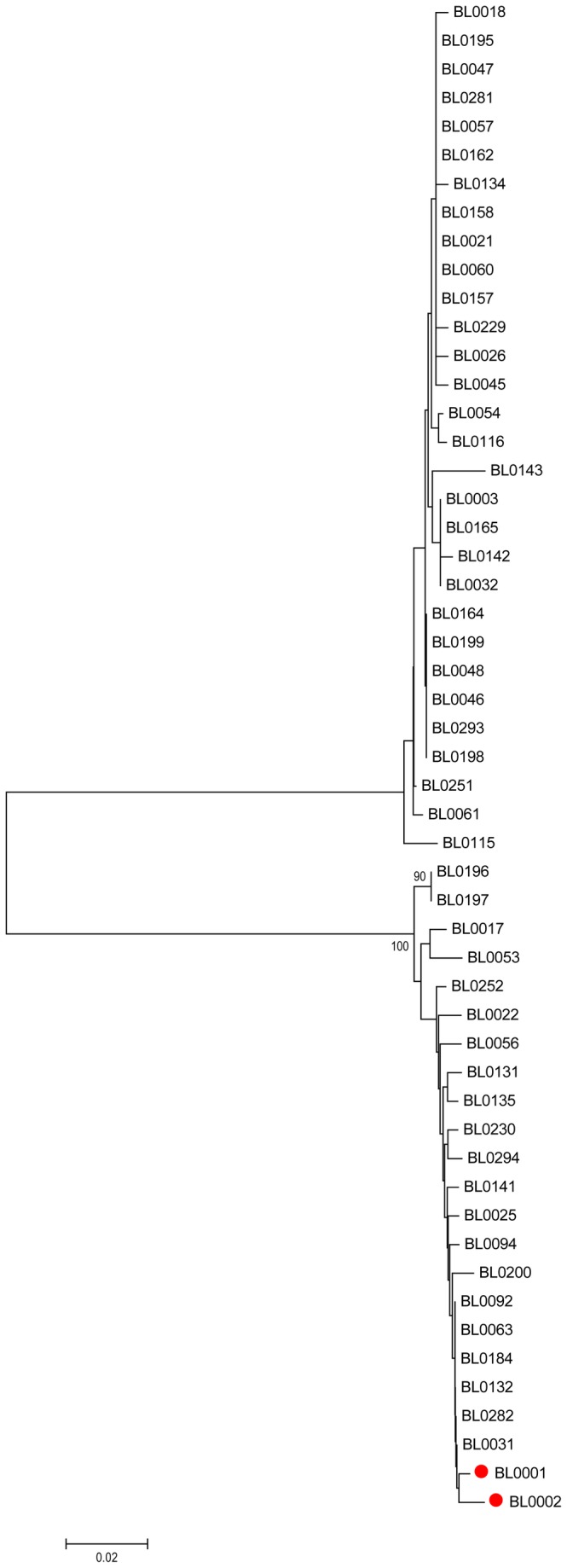
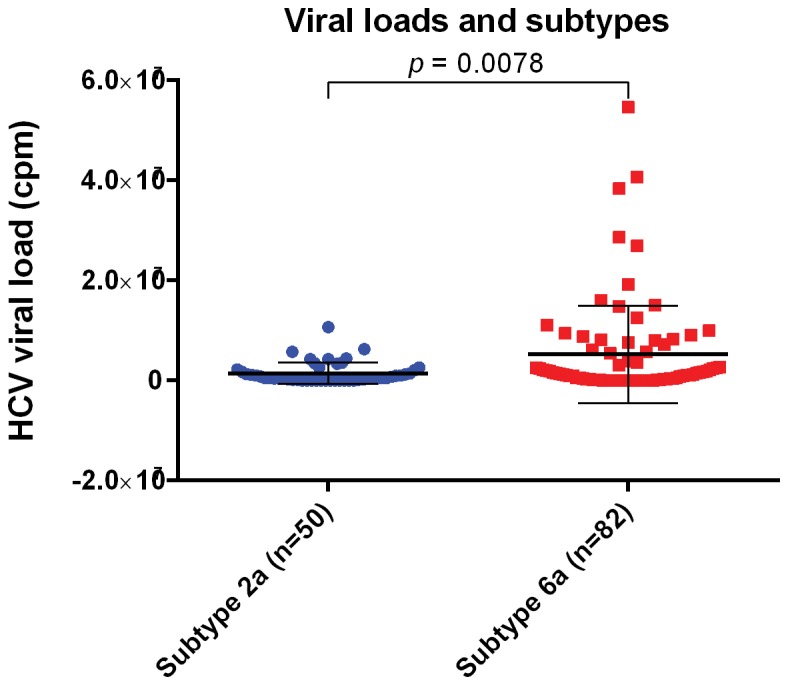
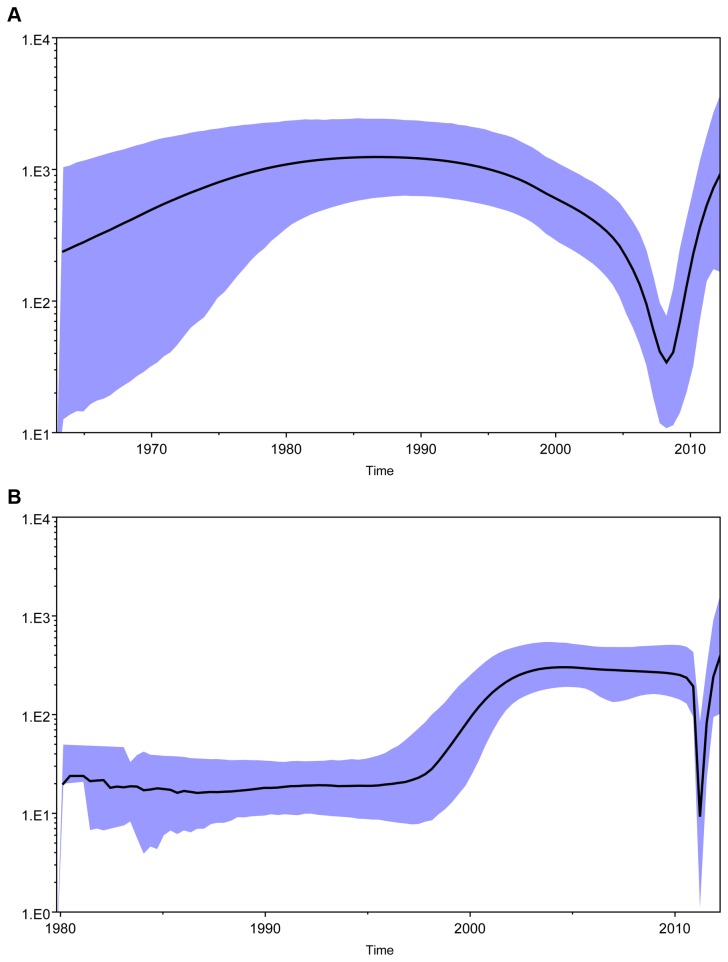
The molecular phylogenetic analysis revealed that only two HCV subtypes, 2a and 6a, were found among the clustering cases. There was no close HCV subtype evolutionary relation was observed among patients from the same family. The 6a cluster showed higher viral loads than the 2a cluster. In addition, the Bayesian skyline plot analysis showed that both the HCV 2a and 6a subtype infections among the Heyuan cases experienced an "expansion-diminishment-expansion" featured dissemination. The 2a clustering infection occurred in 2004, and the 6a clustering cases originated in 2006.
The molecular epidemiological characters imply that the inappropriate medical practices were possibly associated with the clustering HCV cases in Heyuan City during 2011, 2012. Latent HCV subtypes 2a and 6a infection may cause the prevalence and become a new public health issue in Guangdong, China.
2011 年 11 月至 2012 年 1 月,中国广东省河源市紫金县报告了多例丙型肝炎病毒(HCV)感染聚集性病例。聚集性病例中的大多数患者怀疑因在位于香水路的诊所接受不适当的医疗护理而感染,但聚集性病例的分子流行病学情况尚不清楚。
招募了来自香水路的居民,这些居民在 2011 年和 2012 年报告 HCV 抗体阳性。对聚集性病例中的 HCV 感染者进行了调查。每位参与者填写了一份调查问卷,内容包括人口统计学特征和医疗保健史。对 HCV 血清学检测和病毒载量检测阳性的个体进行了确认感染状态的检测。对 HCV 亚型分布进行了分子系统进化分析和贝叶斯凝聚分析,以进一步确认并重建聚集性病例的相关人口统计学历史和时间尺度进化关系。
分子系统进化分析表明,聚集性病例中仅发现两种 HCV 亚型,即 2a 和 6a。同一家庭的患者之间没有密切的 HCV 亚型进化关系。6a 聚类的病毒载量高于 2a 聚类。此外,贝叶斯天空线图分析表明,河源市 HCV 2a 和 6a 亚型感染均经历了“扩张-减少-扩张”特征的传播。2a 聚类感染发生在 2004 年,而 6a 聚类感染则起源于 2006 年。
分子流行病学特征表明,河源市 2011 年、2012 年的这些不适当的医疗行为可能与聚集性 HCV 病例有关。潜伏的 HCV 亚型 2a 和 6a 感染可能导致广东地区的流行,并成为中国的一个新的公共卫生问题。