Shen Hui, Yamashita Atsuya, Nakakoshi Masamichi, Yokoe Hiromasa, Sudo Masashi, Kasai Hirotake, Tanaka Tomohisa, Fujimoto Yuusuke, Ikeda Masanori, Kato Nobuyuki, Sakamoto Naoya, Shindo Hiroko, Maekawa Shinya, Enomoto Nobuyuki, Tsubuki Masayoshi, Moriishi Kohji
Department of Microbiology, Division of Medicine, Graduate School of Medicine and Engineering, University of Yamanashi, Yamanashi, Japan.
Faculty of Pharmaceutical Sciences, Toho University, Chiba, Japan.
PLoS One. 2013 Dec 17;8(12):e82299. doi: 10.1371/journal.pone.0082299. eCollection 2013.
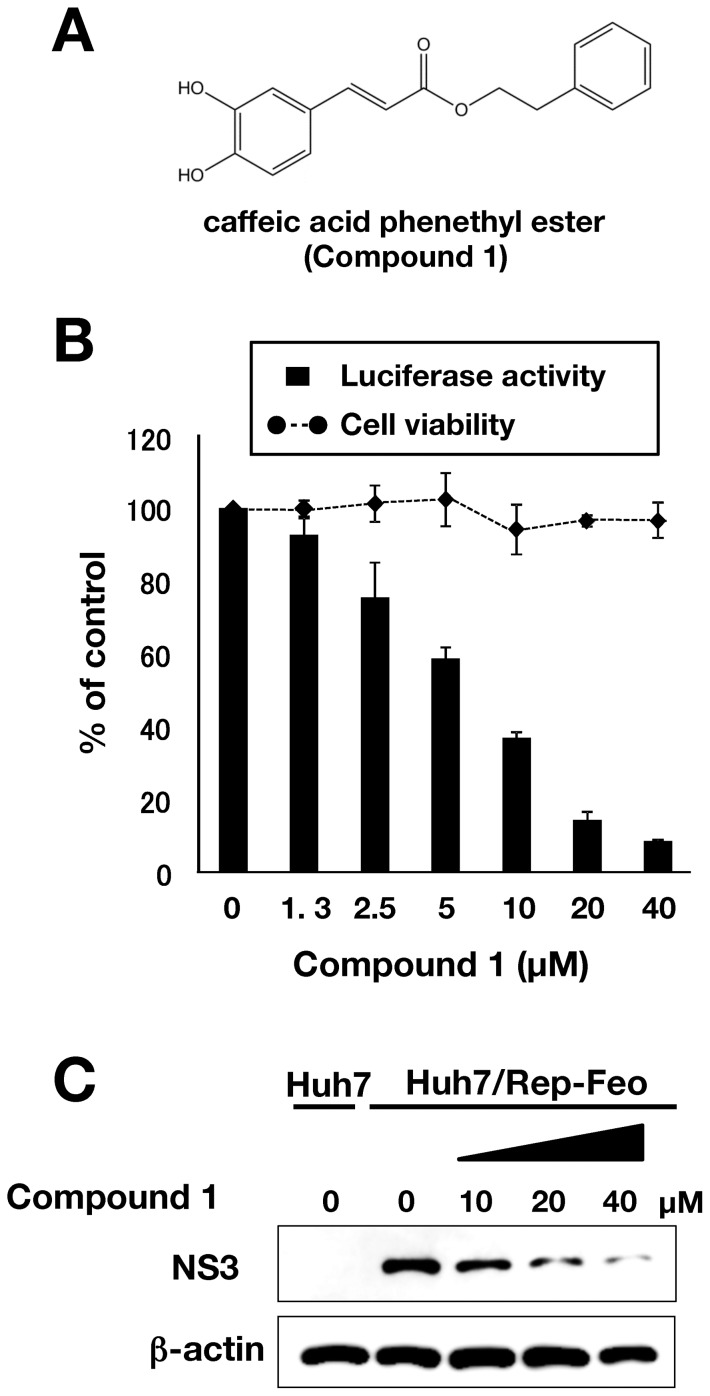
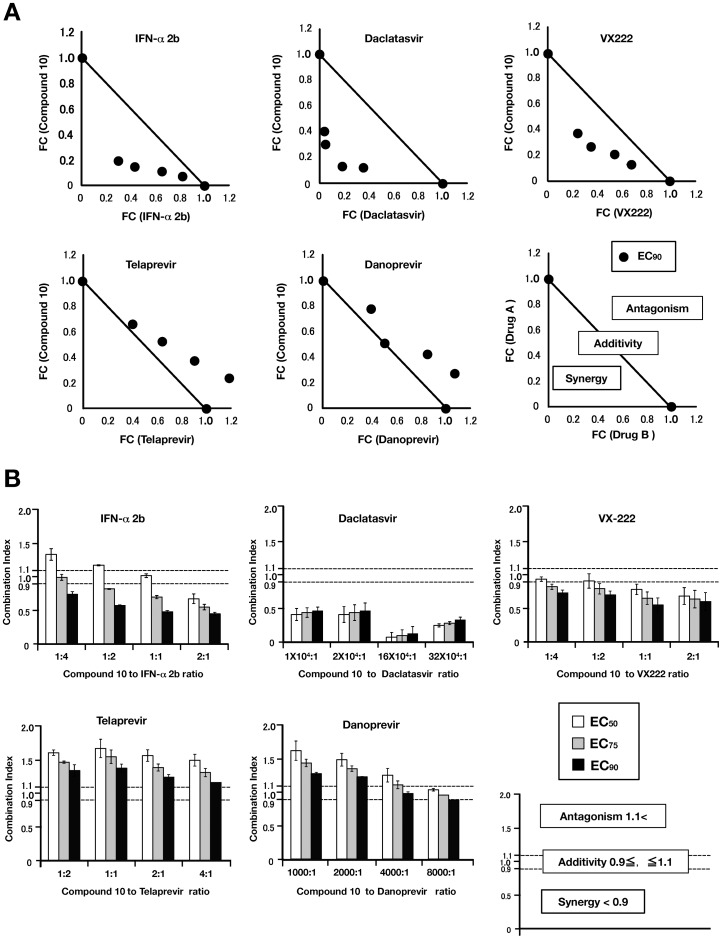
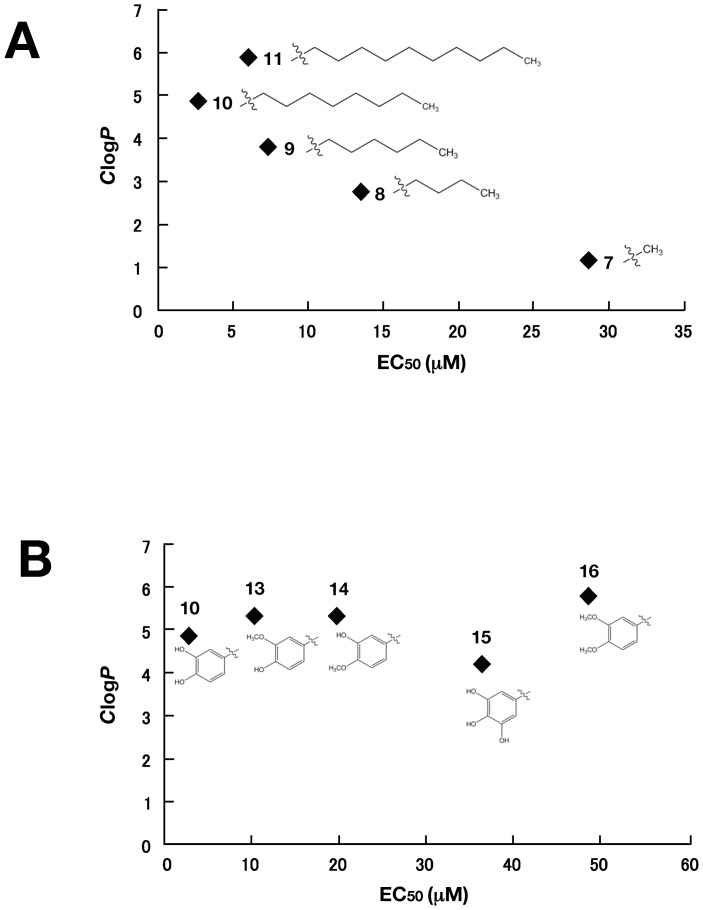
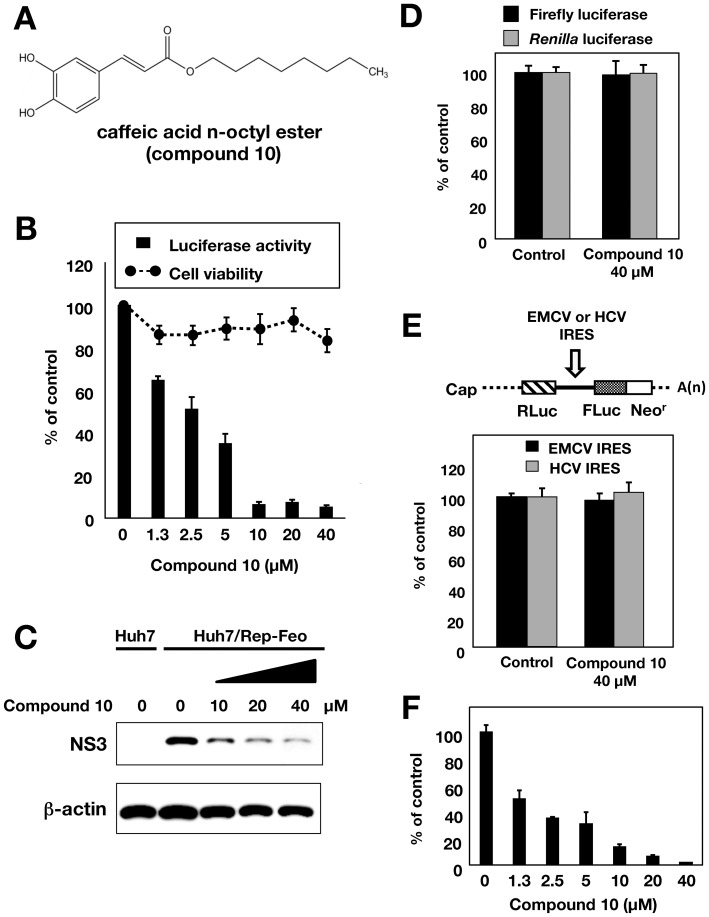
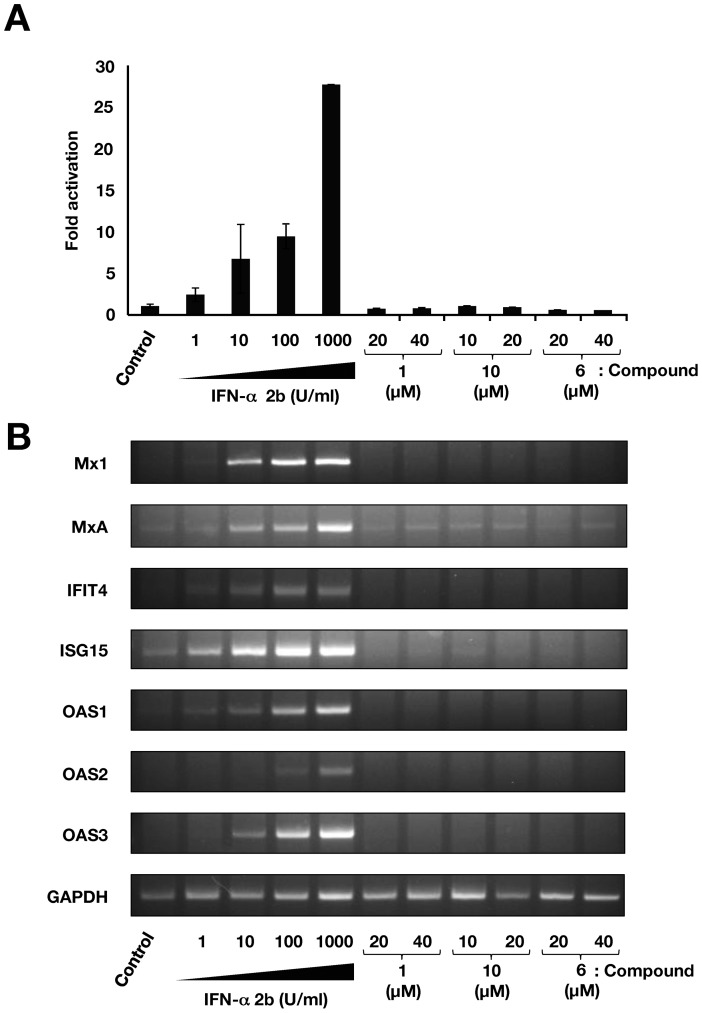
Caffeic acid phenethyl ester (CAPE) has been reported as a multifunctional compound. In this report, we tested the effect of CAPE and its derivatives on hepatitis C virus (HCV) replication in order to develop an effective anti-HCV compound. CAPE and CAPE derivatives exhibited anti-HCV activity against an HCV replicon cell line of genotype 1b with EC50 values in a range from 1.0 to 109.6 µM. Analyses of chemical structure and antiviral activity suggested that the length of the n-alkyl side chain and catechol moiety are responsible for the anti-HCV activity of these compounds. Caffeic acid n-octyl ester exhibited the highest anti-HCV activity among the tested derivatives with an EC50 value of 1.0 µM and an SI value of 63.1 by using the replicon cell line derived from genotype 1b strain Con1. Treatment with caffeic acid n-octyl ester inhibited HCV replication of genotype 2a at a similar level to that of genotype 1b irrespectively of interferon signaling. Caffeic acid n-octyl ester could synergistically enhance the anti-HCV activities of interferon-alpha 2b, daclatasvir, and VX-222, but neither telaprevir nor danoprevir. These results suggest that caffeic acid n-octyl ester is a potential candidate for novel anti-HCV chemotherapy drugs.
咖啡酸苯乙酯(CAPE)已被报道为一种多功能化合物。在本报告中,我们测试了CAPE及其衍生物对丙型肝炎病毒(HCV)复制的影响,以开发一种有效的抗HCV化合物。CAPE和CAPE衍生物对1b基因型的HCV复制子细胞系表现出抗HCV活性,其半数有效浓度(EC50)值在1.0至109.6 μM范围内。化学结构和抗病毒活性分析表明,正烷基侧链和儿茶酚部分的长度决定了这些化合物的抗HCV活性。通过使用源自1b基因型Con1株的复制子细胞系,正辛基咖啡酸酯在测试的衍生物中表现出最高的抗HCV活性,其EC50值为1.0 μM,选择性指数(SI)值为63.1。用正辛基咖啡酸酯处理对2a基因型HCV复制的抑制水平与1b基因型相似,且与干扰素信号无关。正辛基咖啡酸酯可协同增强干扰素-α 2b、达卡他韦和VX-222的抗HCV活性,但对替拉普韦和达诺普韦无此作用。这些结果表明,正辛基咖啡酸酯是新型抗HCV化疗药物的潜在候选物。