Department of Anesthesiology, Pain and Palliative Medicine. RUNMC, Nijmegen, The Netherlands.
Department of Intensive Care Medicine, RUNMC, Nijmegen, The Netherlands ; The Nijmegen Institute for Infection, inflammation and Immunity. RUNMC, Nijmegen, The Netherlands.
PLoS One. 2013 Dec 17;8(12):e84159. doi: 10.1371/journal.pone.0084159. eCollection 2013.
Hyperalgesia is a well recognized hallmark of disease. Pro-inflammatory cytokines have been suggested to be mainly responsible, but human data are scarce. Changes in pain threshold during systemic inflammation evoked by human endotoxemia, were evaluated with three quantitative sensory testing methods.
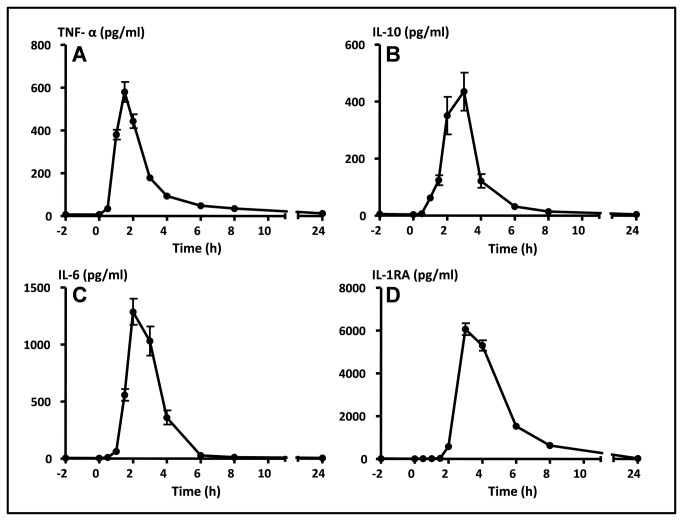
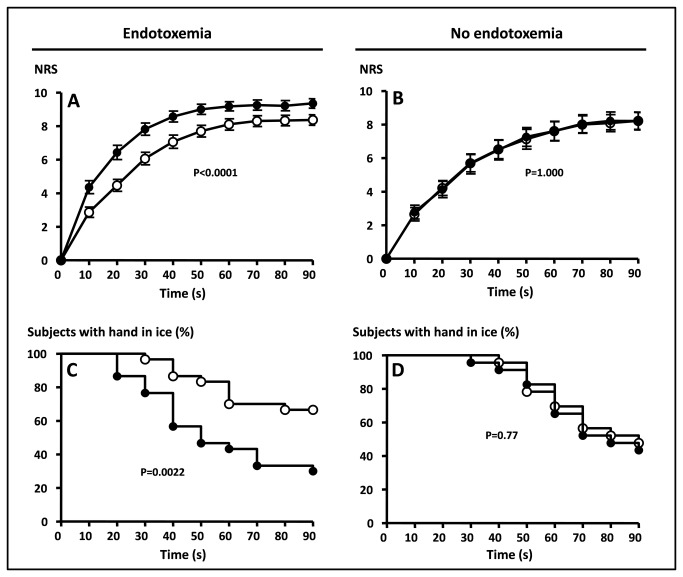
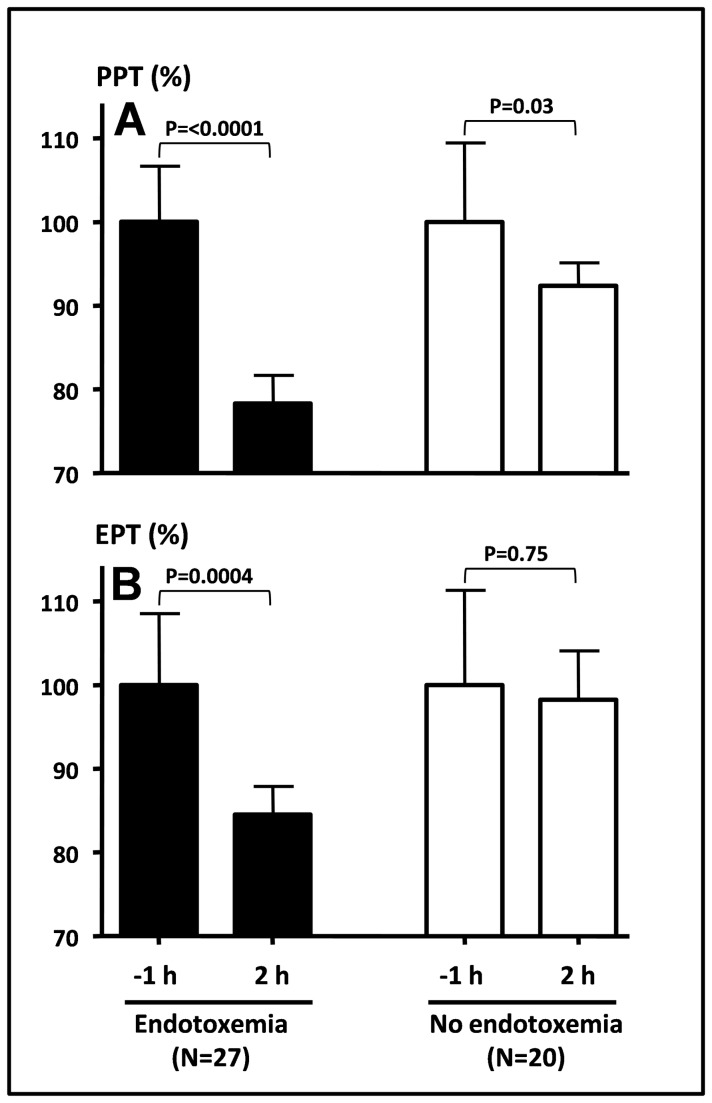
Pressure pain thresholds, electrical pain thresholds and tolerance to the cold pressor test were measured before and 2 hours after the intravenous administration of 2 ng/kg purified E. coli endotoxin in 27 healthy volunteers. Another 20 subjects not exposed to endotoxemia served as controls. Endotoxemia led to a rise in body temperature and inflammatory symptom scores and a rise in plasma TNF-α, IL-6, IL-10 and IL-1RA. During endotoxemia, pressure pain thresholds and electrical pain thresholds were reduced with 20 ± 4 % and 13 ± 3 %, respectively. In controls only a minor decrease in pressure pain thresholds (7 ± 3 %) and no change in electrical pain thresholds occurred. Endotoxin-treated subjects experienced more pain during the cold pressor test, and fewer subjects were able to complete the cold pressor test measurement, while in controls the cold pressor test results were not altered. Peak levels and area under curves of each individual cytokine did not correlate to a change in pain threshold measured by one of the applied quantitative sensory testing techniques.
In conclusion, this study shows that systemic inflammation elicited by the administration of endotoxin to humans, results in lowering of the pain threshold measured by 3 quantitative sensory testing techniques. The current work provides additional evidence that systemic inflammation is accompanied by changes in pain perception.
痛觉过敏是疾病的一个公认特征。促炎细胞因子被认为是主要原因,但人类数据很少。通过三种定量感觉测试方法评估内毒素血症引起的全身炎症期间疼痛阈值的变化。
在 27 名健康志愿者静脉注射 2ng/kg 纯化大肠杆菌内毒素 2 小时前后,测量了压力疼痛阈值、电疼痛阈值和冷压测试耐受度。另外 20 名未接触内毒素血症的受试者作为对照。内毒素血症导致体温和炎症症状评分升高以及血浆 TNF-α、IL-6、IL-10 和 IL-1RA 升高。在内毒素血症期间,压力疼痛阈值和电疼痛阈值分别降低了 20±4%和 13±3%。在对照组中,压力疼痛阈值仅略有下降(7±3%),电疼痛阈值没有变化。接受内毒素治疗的受试者在冷压测试中感到更多疼痛,并且能够完成冷压测试测量的受试者较少,而在对照组中,冷压测试结果没有改变。每种个体细胞因子的峰值水平和曲线下面积与应用的一种定量感觉测试技术测量的疼痛阈值变化无关。
总之,这项研究表明,内毒素给药引起的全身炎症会导致通过三种定量感觉测试技术测量的疼痛阈值降低。目前的工作提供了额外的证据,表明全身炎症伴随着疼痛感知的变化。