Instituto Superior Técnico, University of Lisbon, Lisbon, Portugal.
BMC Health Serv Res. 2013 Dec 21;13:529. doi: 10.1186/1472-6963-13-529.
Bearing in mind the increasing health expenses and their weight in the Portuguese gross domestic product, it is of the utmost importance to evaluate the performance of Primary Health Care providers taking into account both efficiency, quality and equity. This paper aims to contribute to a better understanding of the performance of Primary Health Care by measuring it in a Portuguese region (Lisbon and Tagus Valley) and identifying best practices. It also intends to evaluate the quality and equity provided.
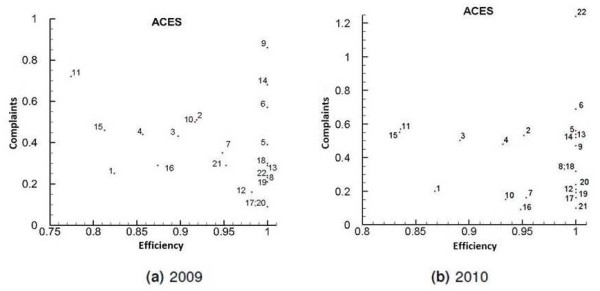
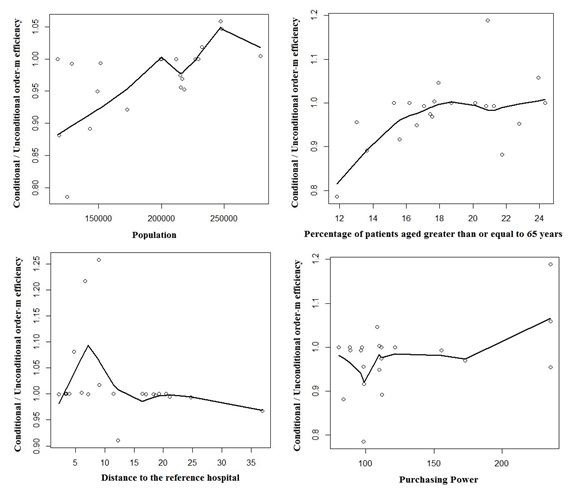
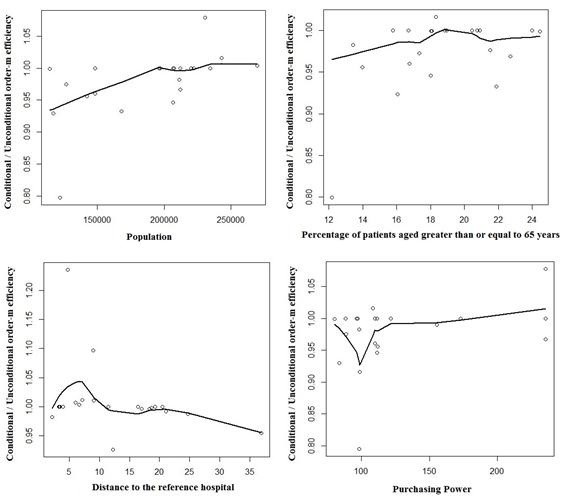
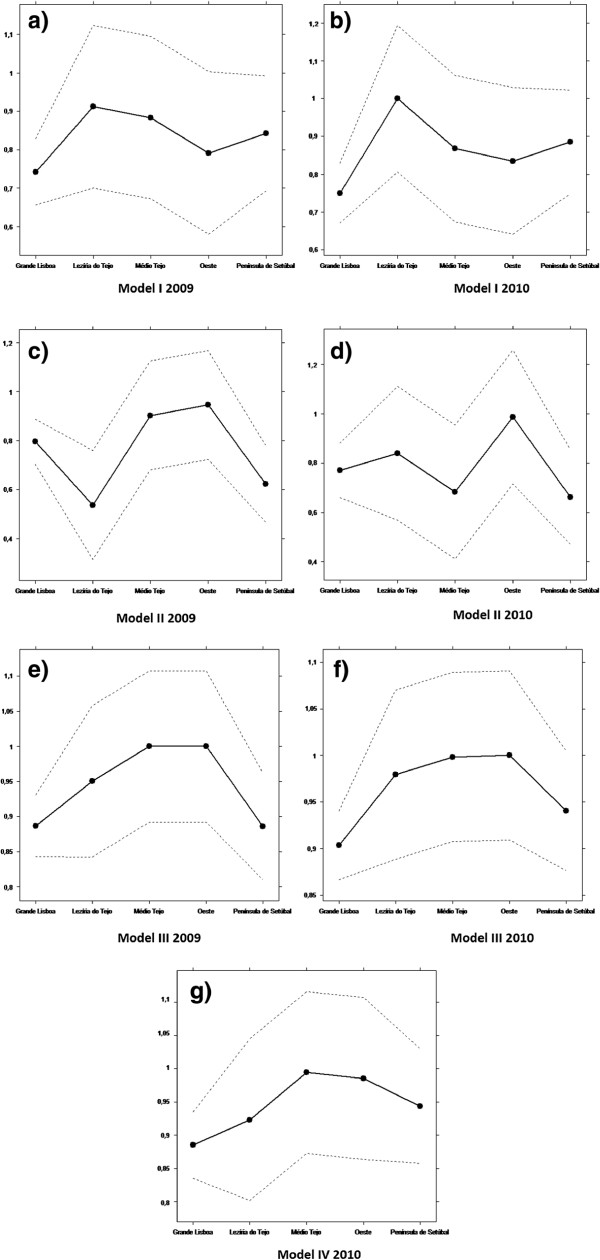
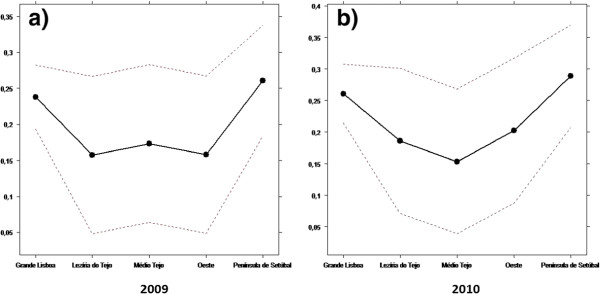
For the purpose of measuring the efficiency of the health care centers (ACES) the non-parametric full frontier technique of data envelopment analysis (DEA) was adopted. The recent partial frontier method of order-m was also used to estimate the influence of exogenous variables on the efficiency of the ACES. The horizontal equity was investigated by applying the non-parametric Kruskal-Wallis test with multiple comparisons. Moreover, the quality of service was analyzed by using the ratio between the complaints and the total activity of the ACES.
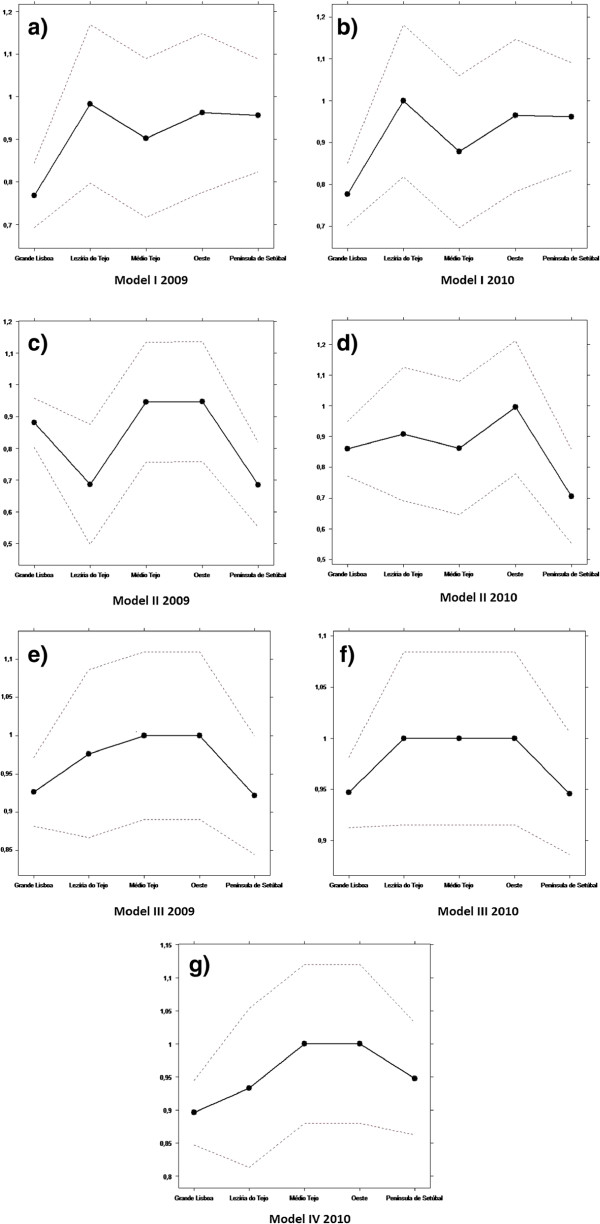
On the whole, a significant level of inefficiency was observed, although there was a general improvement in efficiency between 2009 and 2010. It was found that nursing was the service with the lowest scores. Concerning the horizontal equity, the analysis showed that there is no evidence of relevant disparities between the different subregions(NUTS III). Concerning the exogenous variables, the purchasing power, the percentage of patients aged 65 years old or older and the population size affect the efficiency negatively.
This research shows that better usage of the available resources and the creation of a learning network and dissemination of best practices will contribute to improvements in the efficiency of the ACES while maintaining or even improving quality and equity. It was also proved that the market structure does matter when efficiency measurement is addressed.
考虑到医疗费用的不断增加及其在葡萄牙国内生产总值中的比重,评估初级保健提供者的绩效至关重要,要综合考虑效率、质量和公平。本文旨在通过测量葡萄牙一个地区(里斯本和塔古斯河谷)的初级保健绩效,并确定最佳实践,为更好地理解初级保健绩效做出贡献。它还旨在评估提供的质量和公平性。
为了衡量医疗保健中心(ACES)的效率,采用了非参数全前沿数据包络分析(DEA)技术。最近还采用了订单 m 的部分前沿方法来估计外生变量对 ACES 效率的影响。通过应用具有多次比较的非参数 Kruskal-Wallis 检验来研究横向公平性。此外,还通过使用投诉与 ACES 总活动量的比值来分析服务质量。
总的来说,观察到了显著的低效率水平,尽管 2009 年至 2010 年间效率普遍有所提高。发现护理是得分最低的服务。关于横向公平性,分析表明不同次区域(NUTS III)之间没有明显的差异。关于外生变量,购买力、65 岁及以上患者的比例和人口规模对效率产生负面影响。
这项研究表明,更好地利用现有资源,建立学习网络并传播最佳实践,将有助于提高 ACES 的效率,同时保持甚至提高质量和公平性。还证明了在进行效率衡量时市场结构确实很重要。