Umezawa Masakazu, Sekita Keisuke, Suzuki Ken-Ichiro, Kubo-Irie Miyoko, Niki Rikio, Ihara Tomomi, Sugamata Masao, Takeda Ken
Department of Hygienic Chemistry, Faculty of Pharmaceutical Sciences, Tokyo University of Science, 2641 Yamazaki, Noda, Chiba 278-8510, Japan.
Part Fibre Toxicol. 2013 Dec 21;10(1):64. doi: 10.1186/1743-8977-10-64.
Ultrasonic humidifiers silently generate water droplets as a cool fog and produce most of the dissolved minerals in the fog in the form of an aerosolized "white dust." However, the health effect of these airborne particles is largely unknown. This study aimed to characterize the aerosol particles generated by ultrasonic humidifiers and to investigate their effect on the lung tissue of mice.
An ultrasonic humidifier was operated with tap water, high-silica water, ultrapure water, or other water types. In a chamber (0.765 m3, ventilation ratio 11.5 m3/hr), male ICR mice (10-week-old) were exposed by inhalation to an aerosol-containing vapor generated by the humidifier. After exposure for 7 or 14 days, lung tissues and bronchoalveolar lavage fluid (BALF) were collected from each mouse and examined by microarray, quantitative reverse transcription-polymerase chain reaction, and light and electron microscopy.
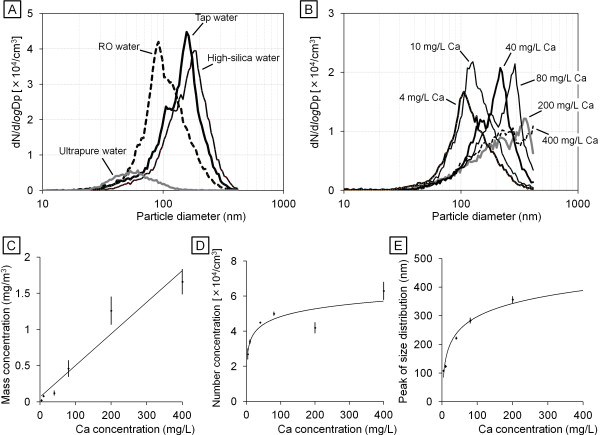
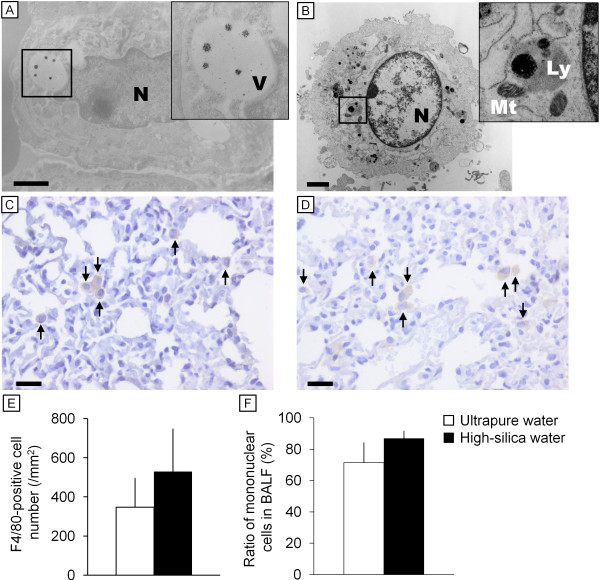
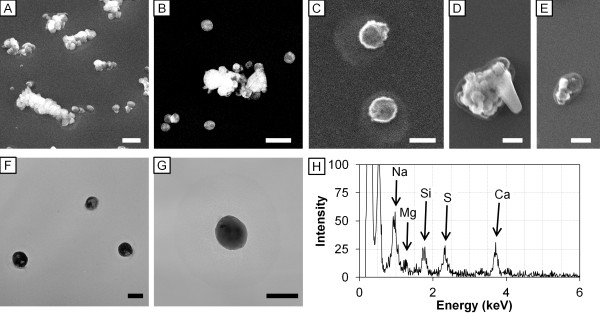
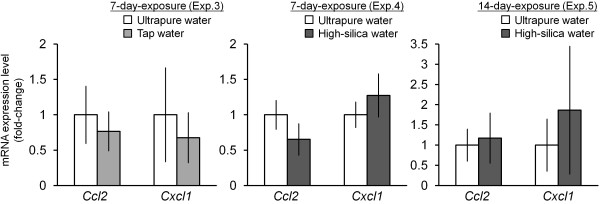
Particles generated from the humidifier operated with tap water had a mass concentration of 0.46 ± 0.03 mg/m3, number concentration of (5.0 ± 1.1) × 10(4)/cm3, and peak size distribution of 183 nm. The particles were phagocytosed by alveolar macrophages in the lung of mice. Inhalation of particles caused dysregulation of genes related to mitosis, cell adhesion molecules, MHC molecules and endocytosis, but did not induce any signs of inflammation or tissue injury in the lung.
These results indicate that aerosol particles released from ultrasonic humidifiers operated with tap water initiated a cellular response but did not cause severe acute inflammation in pulmonary tissue. Additionally, high mineral content tap water is not recommended and de-mineralized water should be recommended in order to exclude any adverse effects.
超声加湿器能无声地产生水滴形成冷雾,并以气溶胶状“白色尘埃”的形式产生雾中大部分溶解矿物质。然而,这些空气中颗粒对健康的影响很大程度上尚不清楚。本研究旨在表征超声加湿器产生的气溶胶颗粒,并研究其对小鼠肺组织的影响。
使用自来水、高硅水、超纯水或其他类型的水运行超声加湿器。在一个腔室(0.765立方米,通风率11.5立方米/小时)中,将10周龄的雄性ICR小鼠通过吸入暴露于加湿器产生的含气溶胶蒸汽中。暴露7天或14天后,从每只小鼠收集肺组织和支气管肺泡灌洗液(BALF),并通过微阵列、定量逆转录聚合酶链反应以及光学和电子显微镜进行检查。
用自来水运行的加湿器产生的颗粒质量浓度为0.46±0.03毫克/立方米,数量浓度为(5.0±1.1)×10⁴/立方厘米,峰值粒径分布为183纳米。这些颗粒被小鼠肺中的肺泡巨噬细胞吞噬。吸入颗粒导致与有丝分裂、细胞粘附分子、MHC分子和内吞作用相关的基因失调,但未在肺中诱导任何炎症或组织损伤迹象。
这些结果表明,用自来水运行的超声加湿器释放的气溶胶颗粒引发了细胞反应,但未在肺组织中引起严重的急性炎症。此外,不建议使用矿物质含量高的自来水,为排除任何不利影响,应推荐使用去矿质水。