Genomics and Immunity, NIAMS, National Institutes of Health, Bethesda, MD 20892, USA.
The Jackson Laboratory for Genomic Medicine, and Department of Genetic and Development Biology, University of Connecticut, 400 Farmington, CT 06030, USA.
Cell. 2013 Dec 19;155(7):1507-20. doi: 10.1016/j.cell.2013.11.039.
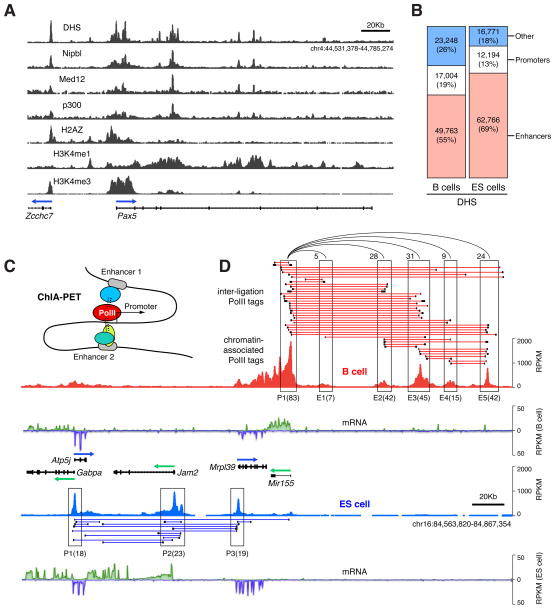
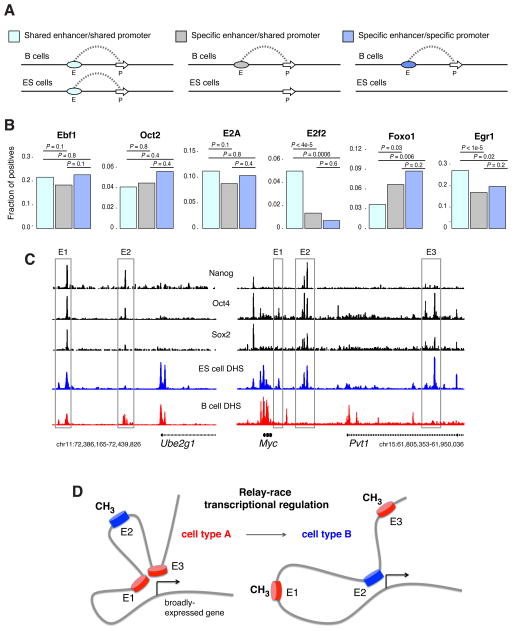
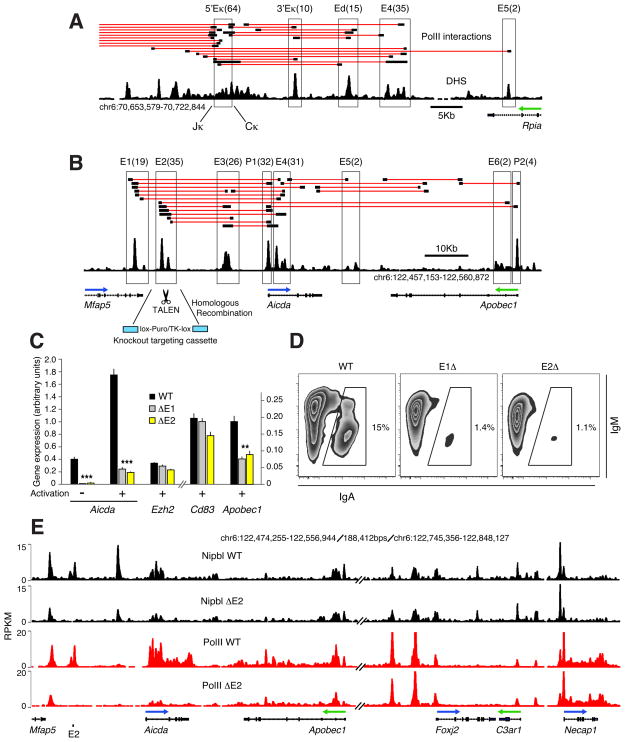
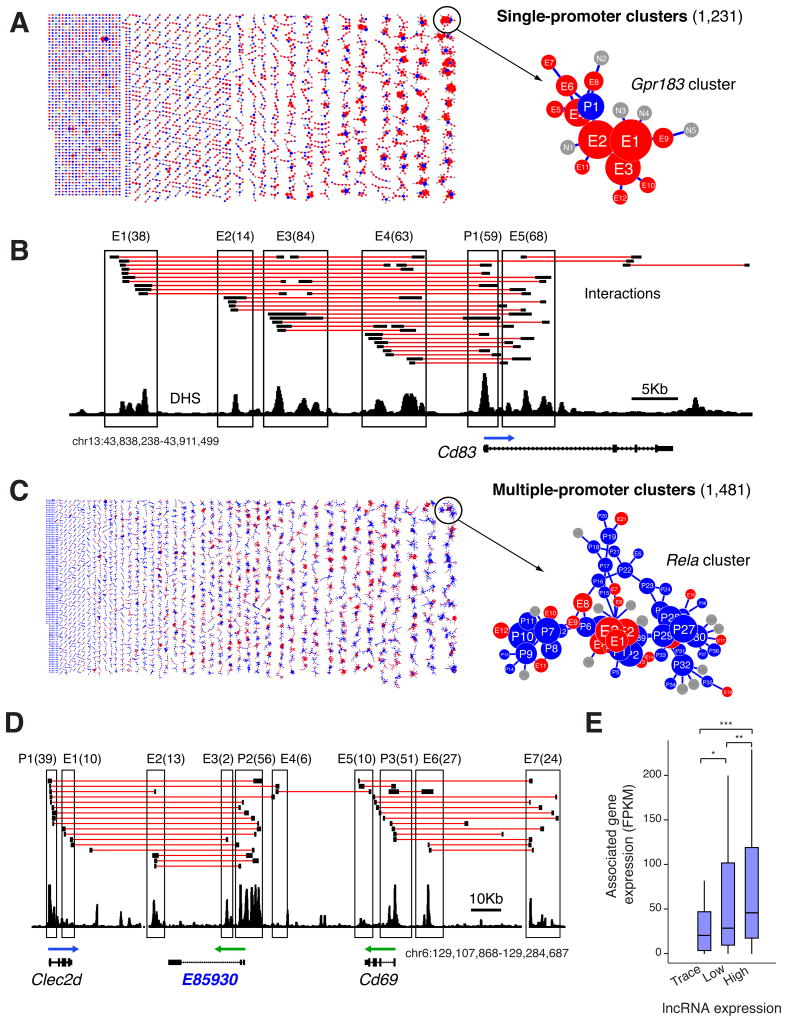
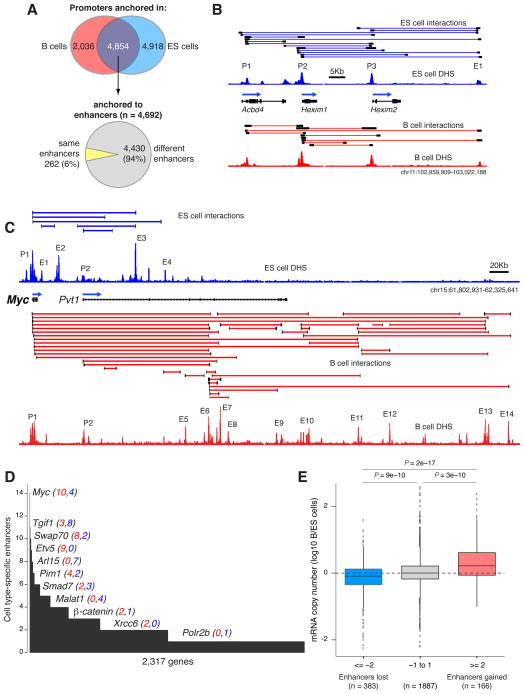
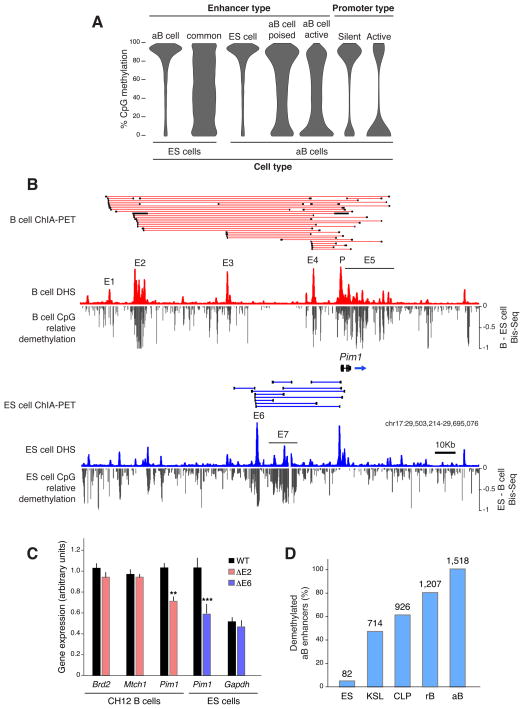
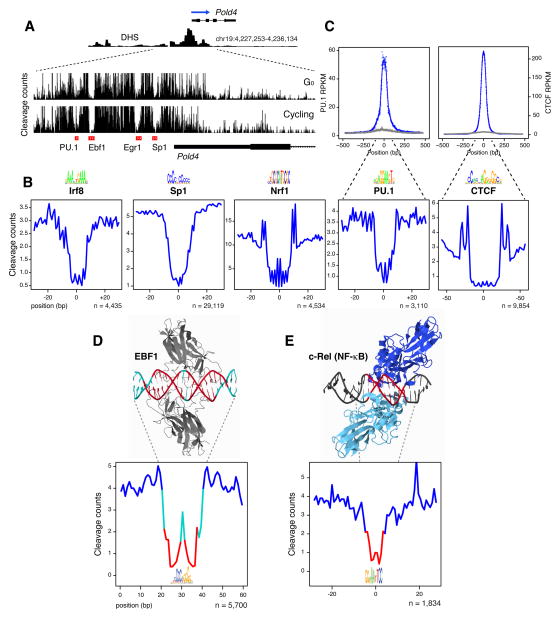
A key finding of the ENCODE project is that the enhancer landscape of mammalian cells undergoes marked alterations during ontogeny. However, the nature and extent of these changes are unclear. As part of the NIH Mouse Regulome Project, we here combined DNaseI hypersensitivity, ChIP-seq, and ChIA-PET technologies to map the promoter-enhancer interactomes of pluripotent ES cells and differentiated B lymphocytes. We confirm that enhancer usage varies widely across tissues. Unexpectedly, we find that this feature extends to broadly transcribed genes, including Myc and Pim1 cell-cycle regulators, which associate with an entirely different set of enhancers in ES and B cells. By means of high-resolution CpG methylomes, genome editing, and digital footprinting, we show that these enhancers recruit lineage-determining factors. Furthermore, we demonstrate that the turning on and off of enhancers during development correlates with promoter activity. We propose that organisms rely on a dynamic enhancer landscape to control basic cellular functions in a tissue-specific manner.
ENCODE 项目的一个重要发现是,哺乳动物细胞的增强子景观在个体发生过程中发生明显改变。然而,这些变化的性质和程度尚不清楚。作为 NIH 小鼠调控组计划的一部分,我们在这里结合了 DNaseI 超敏反应、ChIP-seq 和 ChIA-PET 技术,绘制了多能 ES 细胞和分化 B 淋巴细胞的启动子-增强子互作组图谱。我们证实,增强子的使用在组织间存在广泛差异。出乎意料的是,我们发现这一特征扩展到广泛转录的基因,包括 Myc 和 Pim1 细胞周期调节剂,它们在 ES 和 B 细胞中与完全不同的增强子结合。通过高分辨率 CpG 甲基组、基因组编辑和数字足迹分析,我们表明这些增强子招募了谱系决定因素。此外,我们证明了发育过程中增强子的开启和关闭与启动子活性相关。我们提出,生物体依赖于动态的增强子景观,以组织特异性的方式控制基本的细胞功能。