Sarayani Amir, Jahangard-Rafsanjani Zahra, Hadjibabaie Molouk, Ahmadvand Alireza, Javadi Mohammadreza, Gholami Kheirollah
Research Center for Rational Use of Drugs, Tehran University of Medical Sciences, Tehran, Iran.
J Diabetes Metab Disord. 2013 Dec 20;12(1):57. doi: 10.1186/2251-6581-12-57.
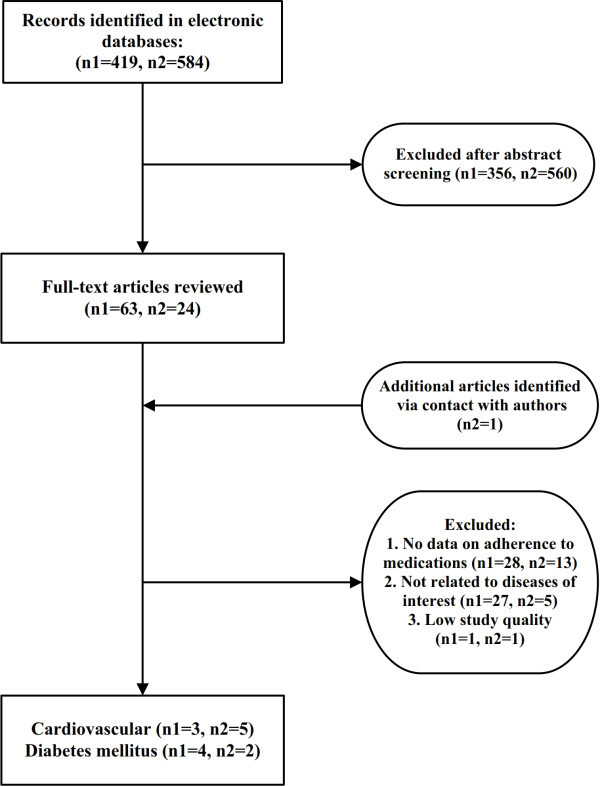
Treatment of diseases such as diabetes mellitus and cardiovascular disorders are highly dependent on medications and particularly adherence to medications to achieve optimal pharmacotherapy outcomes. Several factors can affect a patient's adherence including: knowledge and beliefs about their illness and medications, concomitant psychological disorders, type of therapeutic regimen, and lack of access to medicines. In Iran, a middle income country, essential medicines are highly available and affordable. However, adherence to medications has not been emphasized especially for patients with diabetes and cardiovascular diseases. In the present study, we reviewed the available literature on adherence to medications used to treat diabetes and cardiovascular disorders in Iran. We systematically searched Scopus, Web of Science, PubMed, CINAHL, Google Scholar, Scientific Information Database, and IranMedex using a highly sensitive protocol on July 2012. We retrieved 1003 citations; and two independent researchers screened them for relevant publications. Studies were included if they reported rate or determinants of adherence to diabetes mellitus and cardiovascular medications. Trials on improving interventions were also included. The quality of studies was assessed using appropriate guidelines. Fourteen studies were eligible for data extraction and review. The definition of adherence and the measurement tools used were unclear among studies. Methodological caveats including inappropriate sample size, sampling methods, inclusion/exclusion criteria, and high rate of loss to follow-up were also observed. Nevertheless, adherence rate was reported to be 62.8-86.3% for oral hypoglycemic medications and 38.8-60.0% for cardiovascular medicines. Forgetfulness, lack of knowledge about medical condition and prescribed medications, and concerns about medications efficacy and side effects were consistently reported as barriers to adherence. Patient education plus telephone or short message service follow-ups were reported to improve adherence to oral hypo-glycemic medications. We did not find any high quality trials on adherence to cardiovascular medicines. In conclusion, adherence to cardiovascular and diabetes medications is not assured in Iranian patients. Based on the available literature, patient education and reinforcement interventions are required to address this issue. Future studies should employ careful designs and standard tools for assessment of adherence to medications.
糖尿病和心血管疾病等病症的治疗高度依赖药物,尤其是对药物的依从性,以实现最佳药物治疗效果。有几个因素会影响患者的依从性,包括:对自身疾病和药物的了解与信念、并存的心理障碍、治疗方案类型以及药品可及性不足。在伊朗这个中等收入国家,基本药物极易获取且价格亲民。然而,尤其是糖尿病和心血管疾病患者,对药物依从性问题并未得到重视。在本研究中,我们回顾了伊朗用于治疗糖尿病和心血管疾病药物的依从性方面的现有文献。2012年7月,我们使用高度敏感的方案系统检索了Scopus、科学网、PubMed、CINAHL、谷歌学术、科学信息数据库和伊朗医学数据库。我们检索到1003条引文;两名独立研究人员对其进行筛选以找出相关出版物。如果研究报告了糖尿病和心血管药物的依从率或决定因素,则将其纳入。关于改善干预措施的试验也被纳入。使用适当的指南评估研究质量。十四项研究符合数据提取和综述的条件。研究中依从性的定义和所使用的测量工具并不明确。还观察到方法学上的缺陷,包括样本量不合适、抽样方法、纳入/排除标准以及随访失访率高。尽管如此,口服降糖药的依从率据报告为62.8 - 86.3%,心血管药物的依从率为38.8 - 60.0%。遗忘、对病情和处方药缺乏了解以及对药物疗效和副作用的担忧一直被报告为依从性的障碍。据报告,患者教育加上电话或短信服务随访可提高口服降糖药的依从性。我们未找到任何关于心血管药物依从性的高质量试验。总之,伊朗患者对心血管药物和糖尿病药物的依从性无法得到保证。根据现有文献,需要患者教育和强化干预措施来解决这一问题。未来的研究应采用精心设计和标准工具来评估药物依从性。