Messerli Research Institute, University of Veterinary Medicine Vienna, Medical University of Vienna and University of Vienna Vienna, Austria ; Wolf Science Center Ernstbrunn, Austria.
Front Psychol. 2013 Dec 3;4:868. doi: 10.3389/fpsyg.2013.00868. eCollection 2013.
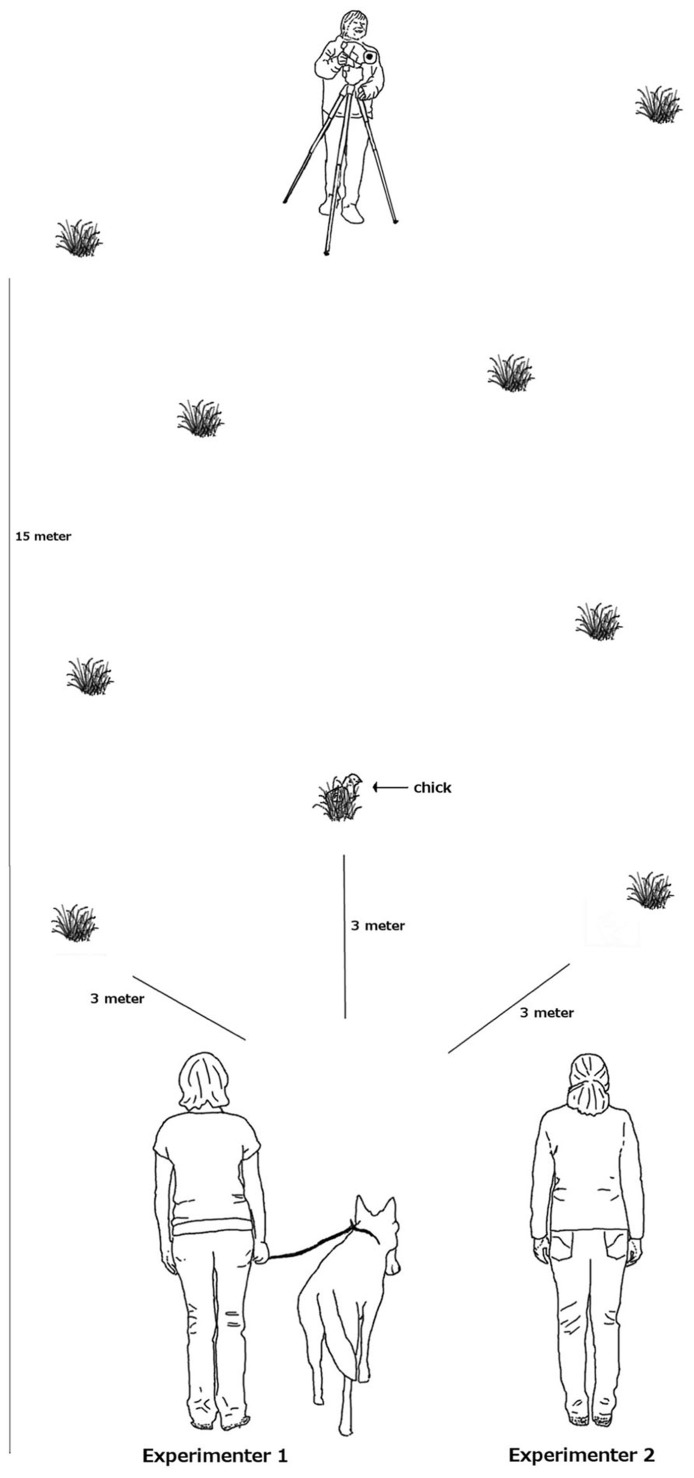
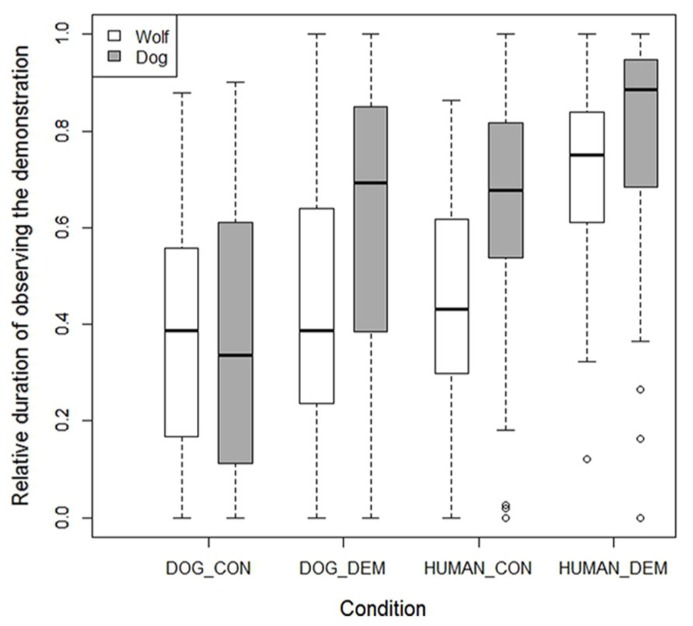
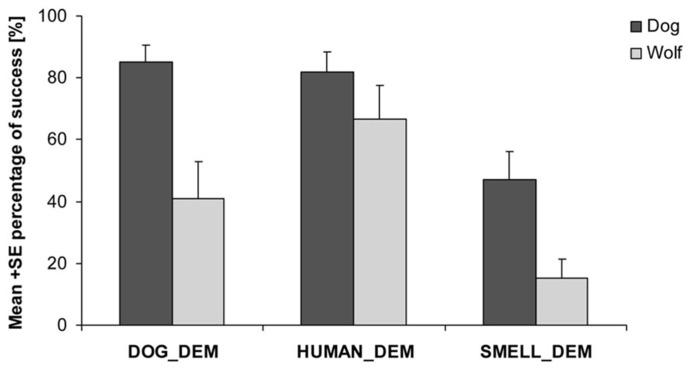
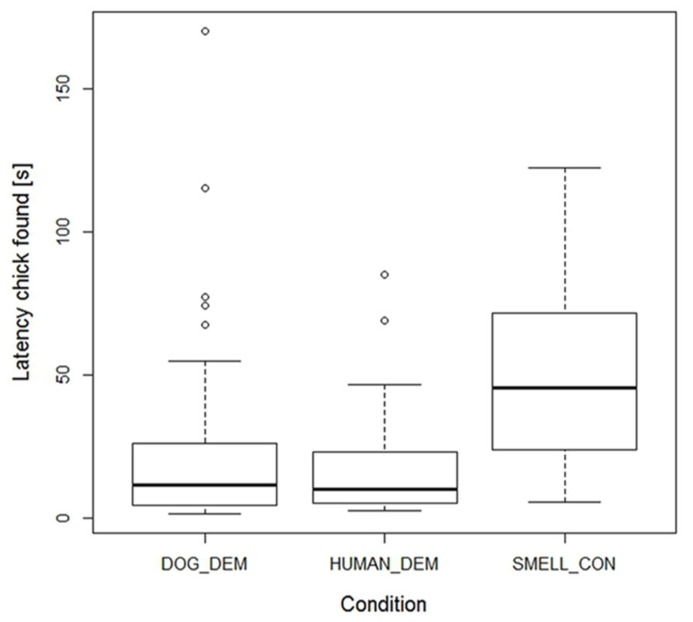
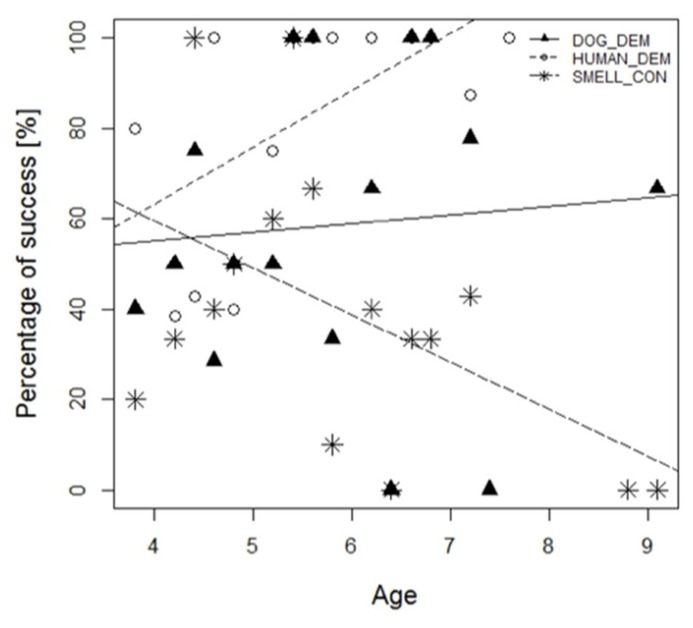
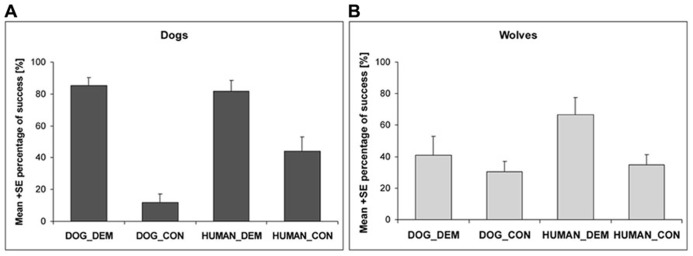
Most domestication hypotheses propose that dogs have been selected for enhanced communication and interactions with humans, including learning socially from human demonstrators. However, to what extent these skills are newly derived and to what extent they originate from wolf-wolf interactions is unclear. In order to test for the possible origins of dog social cognition, we need to compare the interactions of wolves and dogs with humans and with conspecifics. Here, we tested identically raised and kept juvenile wolves and dogs in a social learning task with human and conspecific demonstrators. Using a local enhancement task, we found that both wolves and dogs benefitted from a demonstration independent of the demonstrator species in comparison to a control, no demonstration condition. Interestingly, if the demonstrator only pretended to hide food at the target location, wolves and dogs reacted differently: while dogs differentiated between this without-food and with-food demonstration independent of the demonstrator species, wolves only did so in case of human demonstrators. We attribute this finding to wolves being more attentive toward behavioral details of the conspecific models than the dogs: although the demonstrator dogs were trained to execute the demonstration, they disliked the food reward, which might have decreased the interest of the wolves in finding the food reward. Overall, these results suggest that dogs but also wolves can use information provided by both human and conspecific demonstrators in a local enhancement task. Therefore we suggest that a more fine-scale analysis of dog and wolf social learning is needed to determine the effects of domestication.
大多数驯化假说提出,狗是通过增强与人类的交流和互动而被选择的,包括从人类示范者那里学习社交技能。然而,这些技能在多大程度上是新衍生的,在多大程度上是源于狼与狼之间的互动,目前还不清楚。为了检验狗的社会认知可能的起源,我们需要比较狼和狗与人类和同类之间的互动。在这里,我们在一个有人类和同类示范者的社会学习任务中测试了同样饲养和饲养的幼狼和幼犬。使用局部增强任务,我们发现与对照(无示范)条件相比,无论是狼还是狗,都能从示范中受益,而不依赖于示范者的物种。有趣的是,如果示范者只是假装在目标位置藏食物,狼和狗的反应就不同了:虽然狗能区分无食物和有食物的示范,而不依赖于示范者的物种,但只有在人类示范者的情况下,狼才能做到这一点。我们将这一发现归因于狼比狗更关注同类示范者的行为细节:尽管示范犬接受了执行示范的训练,但它们不喜欢食物奖励,这可能降低了狼寻找食物奖励的兴趣。总的来说,这些结果表明,狗和狼都可以在局部增强任务中利用人类和同类示范者提供的信息。因此,我们建议需要更精细地分析狗和狼的社会学习,以确定驯化的影响。