Kimani-Murage Elizabeth W, Kyobutungi Catherine, Ezeh Alex C, Wekesah Frederick, Wanjohi Milka, Muriuki Peterrock, Musoke Rachel N, Norris Shane A, Griffiths Paula, Madise Nyovani J
African Population and Health Research Center (APHRC), P,O, 10787, 00100 Nairobi, Kenya.
Trials. 2013 Dec 27;14:445. doi: 10.1186/1745-6215-14-445.
Nutrition in the first 1,000 days of life (during pregnancy and the first two years) is critical for child growth and survival. Poor maternal, infant and young child nutrition (MIYCN) practices are widely documented in Kenya, with potential detrimental effects on child growth and survival. This is particularly a problem in slums, where most urban residents live. For example, exclusive breastfeeding for the first six months is only about two per cent. Innovative strategies to reach slum residents are therefore needed. Strategies like the Baby Friendly Hospital Initiative have proven effective in some settings but their effectiveness in resource-limited settings, including slums where many women do not deliver in hospital, is questionable. We propose to test the effectiveness of a home-based intervention on infant feeding practices, nutrition and health outcomes of infants born in two slums in Nairobi, Kenya.
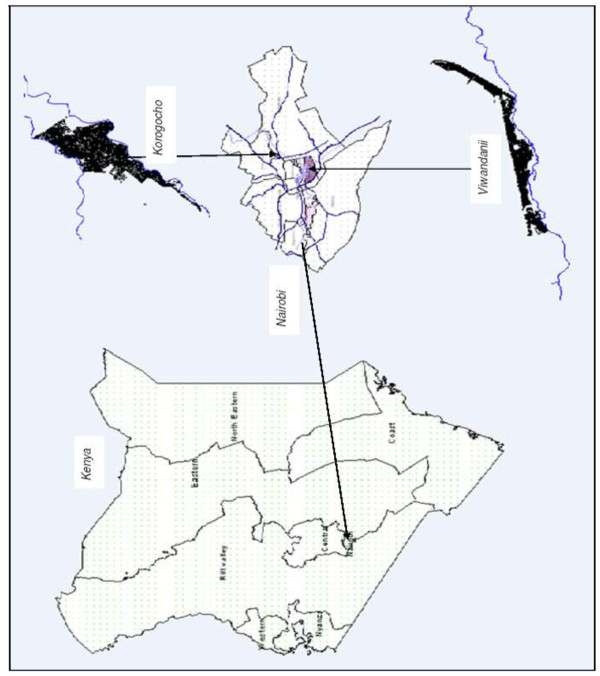
METHODS/DESIGN: The study, employing a cluster-randomised study design, will be conducted in two slums in Nairobi: Korogocho and Viwandani where 14 community units (defined by the Government's health care system) will form the unit of randomization. A total of 780 pregnant women and their respective child will be recruited into the study. The mother-child pair will be followed up until the child is one year old. Recruitment will last approximately one year and three months from September 2012 to December 2013. The mothers will receive regular, personalised, home-based counselling by trained Community Health Workers on MIYCN. Regular assessment of knowledge, attitudes and practices on MIYCN will be done, coupled with assessments of nutritional status of the mother-child pairs and diarrhea morbidity for the children. Statistical methods will include analysis of covariance and multinomial logistic regression. Additionally, cost-effectiveness analysis will be done. The study is funded by the Wellcome Trust and will run from March 2012 to February 2015.
Interventions aimed at promoting optimal breastfeeding and complementary feeding practices are considered to have high impact and could prevent a fifth of the under-five deaths in countries with high mortality rates. This study will inform policy and practice in Kenya and similar settings regarding delivery mechanisms for such high-impact interventions, particularly among urban poor populations.
ISRCTN83692672.
生命最初1000天(孕期及头两年)的营养对儿童生长和生存至关重要。肯尼亚广泛存在不良的孕产妇、婴幼儿营养(MIYCN)行为,对儿童生长和生存可能产生不利影响。在大多数城市居民居住的贫民窟,这一问题尤为突出。例如,纯母乳喂养头六个月的比例仅约为2%。因此,需要创新策略来覆盖贫民窟居民。像爱婴医院倡议这样的策略在某些环境中已被证明有效,但在资源有限的环境中,包括许多妇女不在医院分娩的贫民窟,其有效性值得怀疑。我们提议测试一项基于家庭的干预措施对肯尼亚内罗毕两个贫民窟出生婴儿的喂养方式、营养和健康状况的有效性。
方法/设计:该研究采用整群随机研究设计,将在内罗毕的两个贫民窟进行:科罗戈乔和维万达尼,14个社区单元(由政府医疗系统界定)将作为随机分组单位。总共780名孕妇及其各自的孩子将被纳入研究。母婴对将随访至孩子一岁。招募将从2012年9月持续约一年零三个月至2013年12月。母亲们将接受经过培训的社区卫生工作者关于MIYCN的定期、个性化、上门咨询。将定期评估关于MIYCN的知识、态度和行为,同时评估母婴对的营养状况以及儿童腹泻发病率。统计方法将包括协方差分析和多项逻辑回归。此外,还将进行成本效益分析。该研究由惠康信托基金资助,将于2012年3月至2015年2月进行。
旨在促进最佳母乳喂养和辅食添加行为的干预措施被认为具有重大影响,在高死亡率国家可预防五分之一的五岁以下儿童死亡。本研究将为肯尼亚及类似环境中关于此类重大影响干预措施的实施机制提供政策和实践参考,特别是在城市贫困人口中。
ISRCTN83692672