Fierro Annalisa, Liccardo Antonella
Consiglio Nazionale delle Ricerche (CNR) - Institute Superconductors, oxides and other innovative materials and devices (SPIN), Napoli, Italy ; Physics Department, Università degli Studi di Napoli "Federico II", Napoli, Italy.
Physics Department, Università degli Studi di Napoli "Federico II", Napoli, Italy ; Istituto Nazionale Fisica Nucleare (INFN) - Sezione di Napoli, Napoli, Italy.
PLoS One. 2013 Dec 23;8(12):e83641. doi: 10.1371/journal.pone.0083641. eCollection 2013.
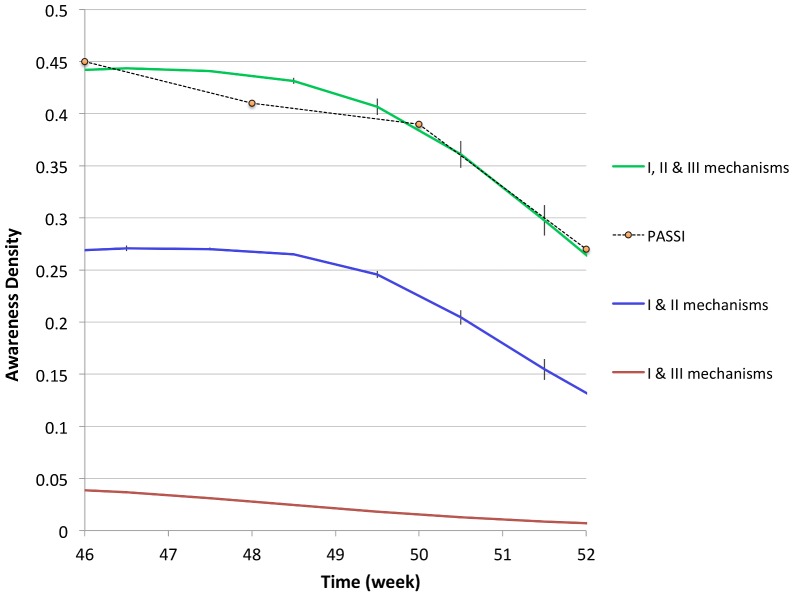
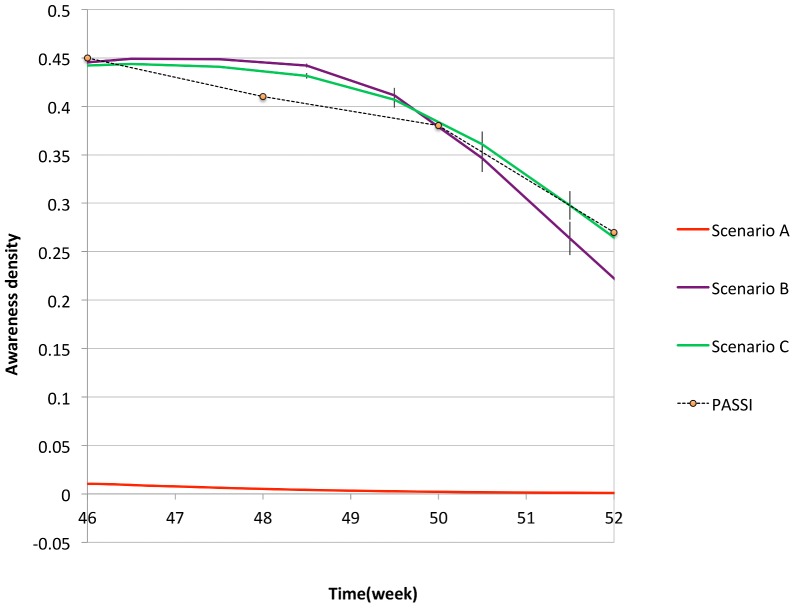
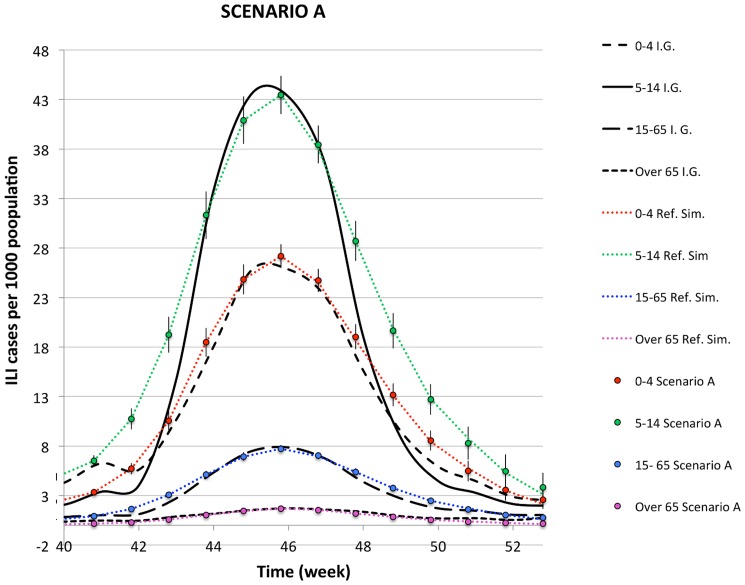
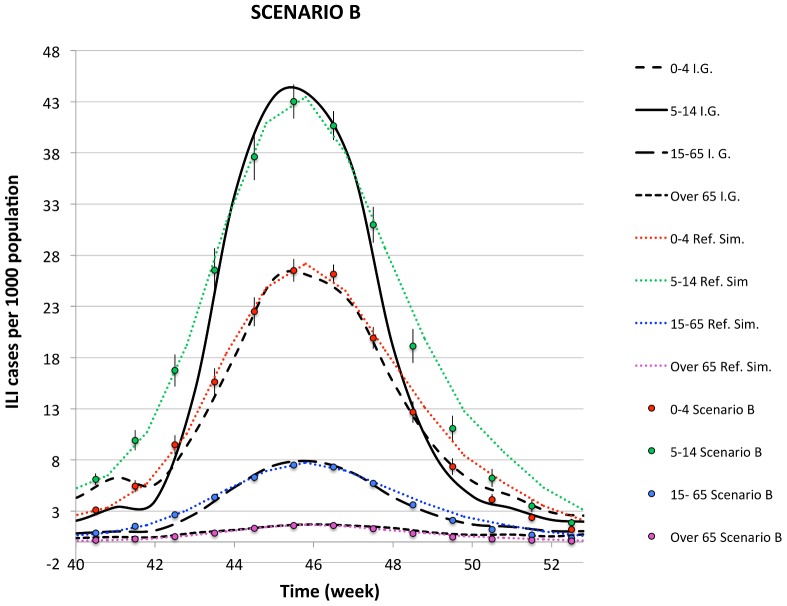
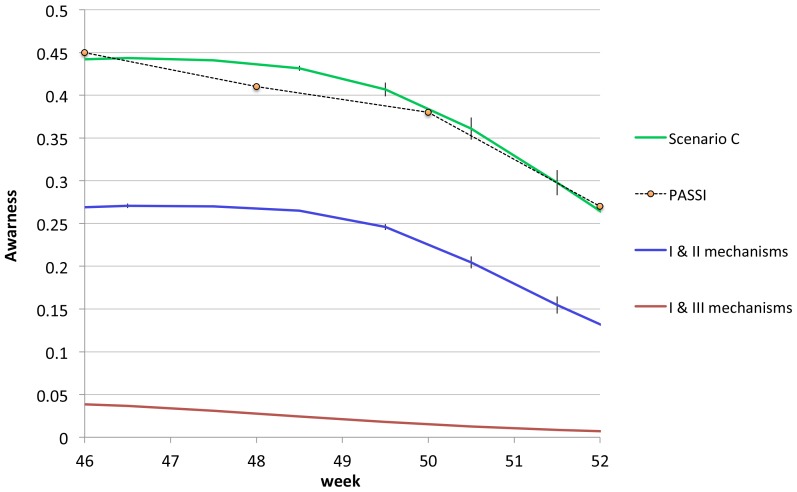
Individual behavioral response to the spreading of an epidemic plays a crucial role in the progression of the epidemic itself. The risk perception induces individuals to adopt a protective behavior, as for instance reducing their social contacts, adopting more restrictive hygienic measures or undergoing prophylaxis procedures. In this paper, starting with a previously developed lattice-gas SIR model, we construct a coupled behavior-disease model for influenza spreading with spontaneous behavioral changes. The focus is on self-initiated behavioral changes that alter the susceptibility to the disease, without altering the contact patterns among individuals. Three different mechanisms of awareness spreading are analyzed: the local spreading due to the presence in the neighborhood of infective individuals; the global spreading due to the news published by the mass media and to educational campaigns implemented at institutional level; the local spreading occurring through the "thought contagion" among aware and unaware individuals. The peculiarity of the present approach is that the awareness spreading model is calibrated on available data on awareness and concern of the population about the risk of contagion. In particular, the model is validated against the A(H1N1) epidemic outbreak in Italy during the 2009/2010 season, by making use of the awareness data gathered by the behavioral risk factor surveillance system (PASSI). We find that, increasing the accordance between the simulated awareness spreading and the PASSI data on risk perception, the agreement between simulated and experimental epidemiological data improves as well. Furthermore, we show that, within our model, the primary mechanism to reproduce a realistic evolution of the awareness during an epidemic, is the one due to globally available information. This result highlights how crucial is the role of mass media and educational campaigns in influencing the epidemic spreading of infectious diseases.
个体对流行病传播的行为反应在流行病本身的发展过程中起着至关重要的作用。风险感知促使个体采取保护行为,例如减少社交接触、采取更严格的卫生措施或接受预防程序。在本文中,我们从先前开发的格子气SIR模型出发,构建了一个具有自发行为变化的流感传播行为 - 疾病耦合模型。重点在于自我引发的行为变化,这种变化会改变对疾病的易感性,而不改变个体之间的接触模式。分析了三种不同的意识传播机制:由于感染个体在邻里中的存在而导致的局部传播;由于大众媒体发布的新闻以及机构层面开展的教育活动而导致的全局传播;通过有意识和无意识个体之间的“思想传染”而发生的局部传播。本方法的独特之处在于,意识传播模型是根据关于人群对传染风险的意识和关注的现有数据进行校准的。特别是,通过利用行为风险因素监测系统(PASSI)收集的意识数据,该模型针对2009/2010季节意大利的甲型H1N1流感疫情爆发进行了验证。我们发现,随着模拟的意识传播与PASSI关于风险感知的数据之间的一致性增加,模拟的和实验性的流行病学数据之间的一致性也得到改善。此外,我们表明,在我们的模型中,在流行病期间重现意识现实演变的主要机制是由于全局可用信息的机制。这一结果凸显了大众媒体和教育活动在影响传染病流行传播方面的作用有多关键。