Grammes Fabian, Reveco Felipe Eduardo, Romarheim Odd Helge, Landsverk Thor, Mydland Liv Torunn, Øverland Margareth
Aquaculture Protein Centre, CoE, Department of Animal and Aquacultural Sciences, Norwegian University of Life Sciences, Ås, Norway.
Department of Basic Sciences and Aquatic Medicine, Norwegian School of Veterinary Science, Oslo, Norway.
PLoS One. 2013 Dec 27;8(12):e83213. doi: 10.1371/journal.pone.0083213. eCollection 2013.
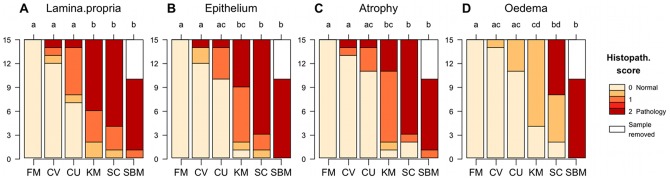
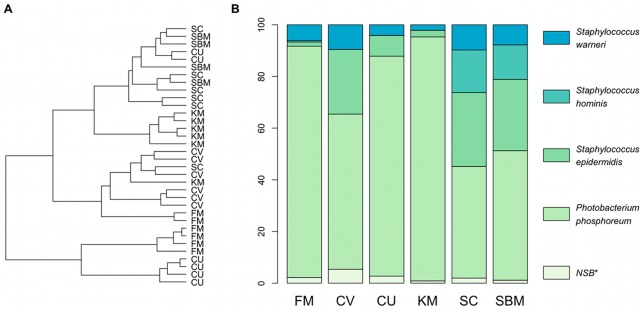
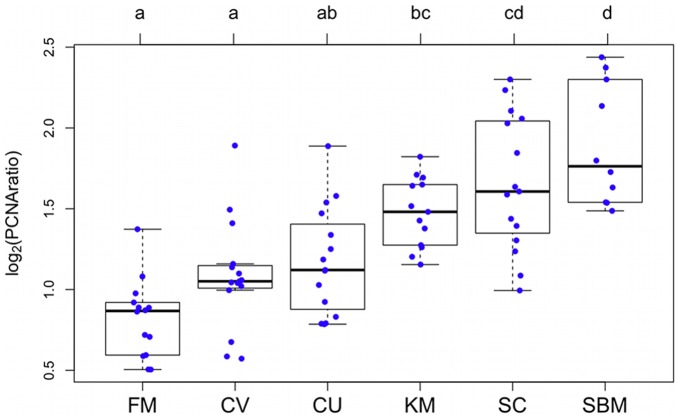
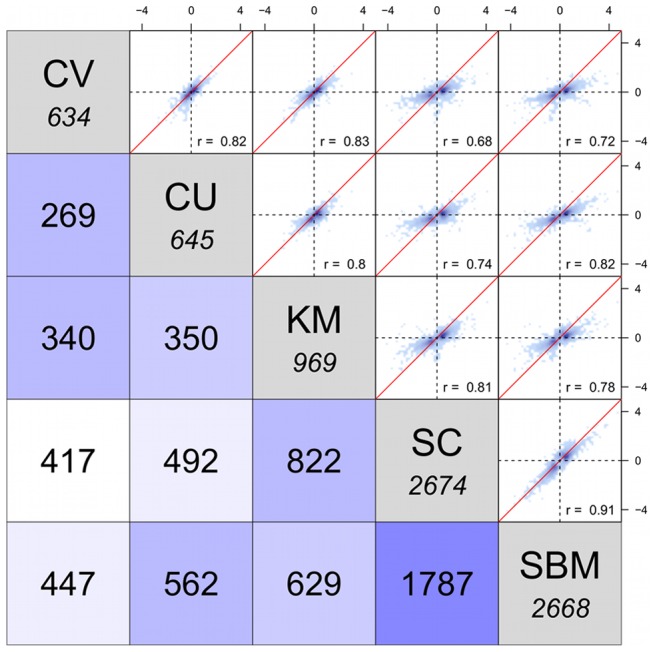
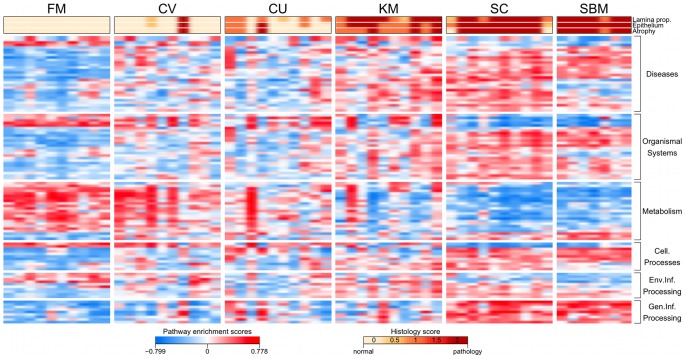
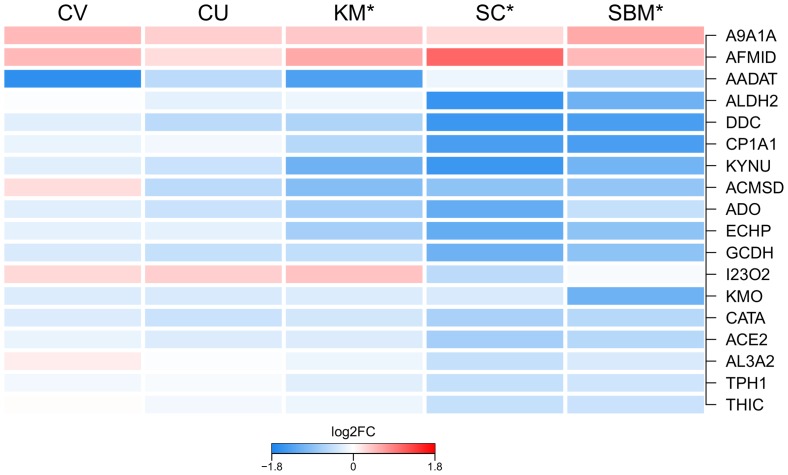
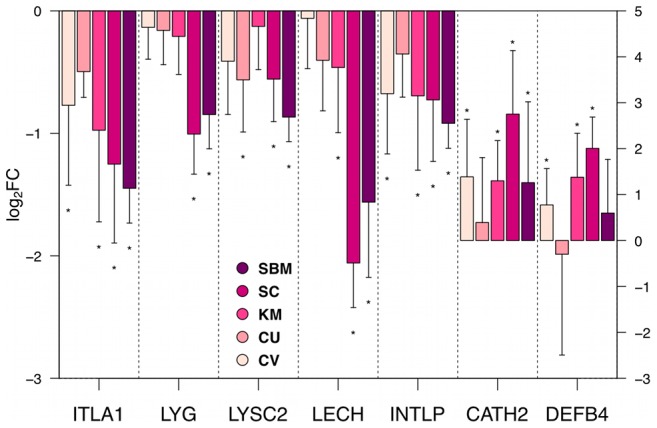
Intestinal inflammation, caused by impaired intestinal homeostasis, is a serious condition in both animals and humans. The use of conventional extracted soybean meal (SBM) in diets for Atlantic salmon and several other fish species is known to induce enteropathy in the distal intestine, a condition often referred to as SBM induced enteropathy (SBMIE). In the present study, we investigated the potential of different microbial ingredients to alleviate SBMIE in Atlantic salmon, as a model of feed-induced inflammation. The dietary treatments consisted of a negative control based on fish meal (FM), a positive control based on 20% SBM, and four experimental diets combining 20% SBM with either one of the three yeasts Candida utilis (CU), Kluyveromyces marxianus (KM), Saccharomyces cerevisiae (SC) or the microalgae Chlorella vulgaris (CV). Histopathological examination of the distal intestine showed that all fish fed the SC or SBM diets developed characteristic signs of SBMIE, while those fed the FM, CV or CU diets showed a healthy intestine. Fish fed the KM diet showed intermediate signs of SBMIE. Corroborating results were obtained when measuring the relative length of PCNA positive cells in the crypts of the distal intestine. Gene set enrichment analysis revealed decreased expression of amino acid, fat and drug metabolism pathways as well as increased expression of the pathways for NOD-like receptor signalling and chemokine signalling in both the SC and SBM groups while CV and CU were similar to FM and KM was intermediate. Gene expression of antimicrobial peptides was reduced in the groups showing SBMIE. The characterisation of microbial communities using PCR-DGGE showed a relative increased abundance of Firmicutes bacteria in fish fed the SC or SBM diets. Overall, our results show that both CU and CV were highly effective to counteract SBMIE, while KM had less effect and SC had no functional effects.
肠道内稳态受损引发的肠道炎症,在动物和人类中都是一种严重病症。已知在大西洋鲑鱼和其他几种鱼类的日粮中使用传统提取的豆粕(SBM)会诱发远端肠道的肠病,这种病症通常被称为豆粕诱导的肠病(SBMIE)。在本研究中,作为饲料诱导炎症的模型,我们研究了不同微生物成分减轻大西洋鲑鱼SBMIE的潜力。日粮处理包括以鱼粉(FM)为基础的阴性对照、以20% SBM为基础的阳性对照,以及四种实验日粮,即将20% SBM与三种酵母之一产朊假丝酵母(CU)、马克斯克鲁维酵母(KM)、酿酒酵母(SC)或微藻小球藻(CV)组合。远端肠道的组织病理学检查表明,所有喂食SC或SBM日粮的鱼都出现了SBMIE的特征性症状,而喂食FM、CV或CU日粮的鱼肠道健康。喂食KM日粮的鱼表现出SBMIE的中度症状。在测量远端肠道隐窝中PCNA阳性细胞的相对长度时得到了佐证结果。基因集富集分析显示,SC和SBM组中氨基酸、脂肪和药物代谢途径的表达降低,而NOD样受体信号传导和趋化因子信号传导途径的表达增加,而CV和CU与FM相似,KM处于中间状态。在出现SBMIE的组中,抗菌肽的基因表达降低。使用PCR-DGGE对微生物群落进行表征显示,喂食SC或SBM日粮的鱼中厚壁菌门细菌的相对丰度增加。总体而言,我们的结果表明,CU和CV都能高效对抗SBMIE,而KM的效果较差,SC没有功能作用。