Department of Immunology and Cell Biology, Graduate School of Medicine, Osaka University, Suita, Osaka, Japan ; Laboratory of Cellular Dynamics, WPI-Immunology Frontier Research Center, Osaka University, Suita, Osaka, Japan ; JST, CREST, Chiyoda-ku, Tokyo, Japan ; Department of Gastroenterological Surgery, Graduate School of Medicine, Osaka University, Suita, Osaka, Japan.
Department of Molecular Biology and Biochemistry, Graduate School of Medicine, Osaka University, Suita, Osaka, Japan.
PLoS One. 2013 Dec 30;8(12):e83629. doi: 10.1371/journal.pone.0083629. eCollection 2013.
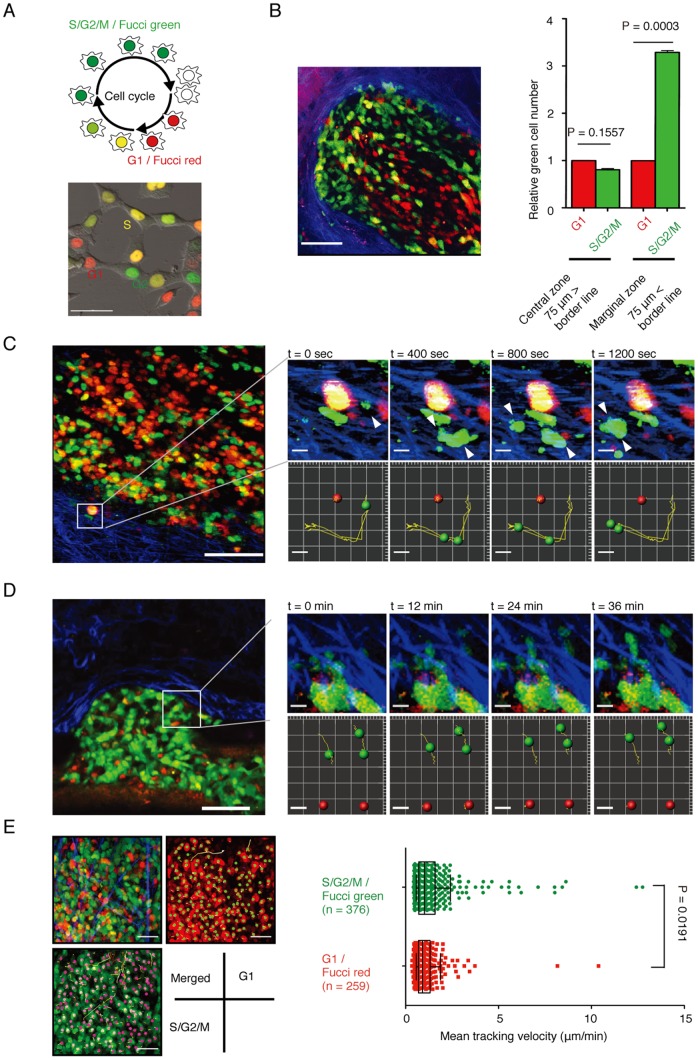
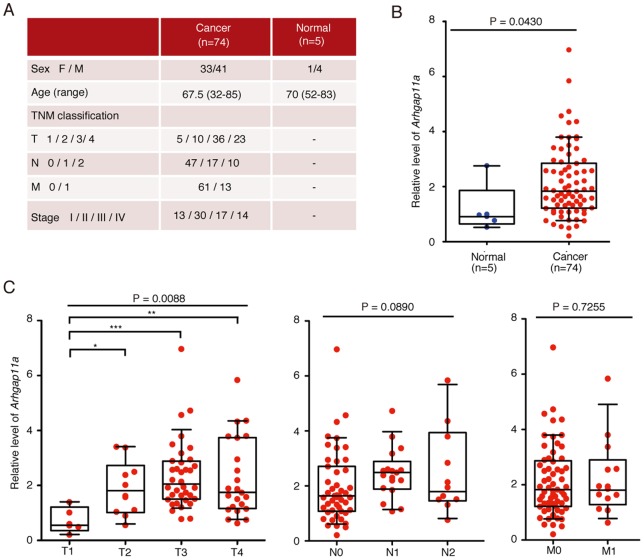
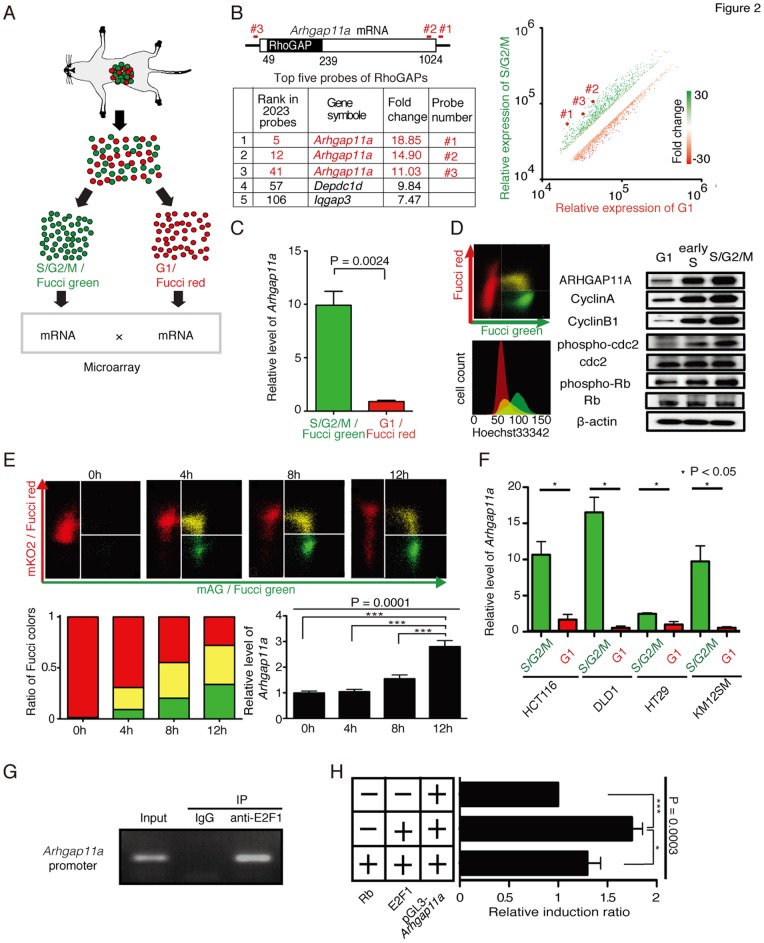
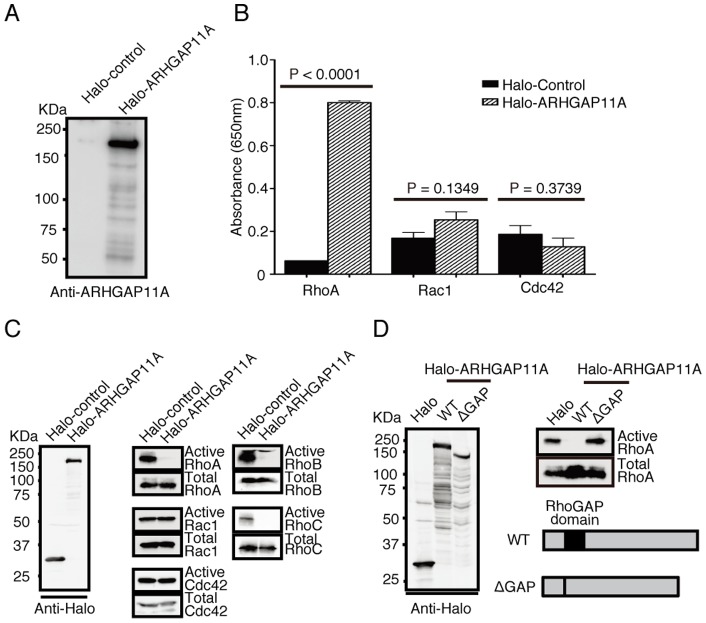
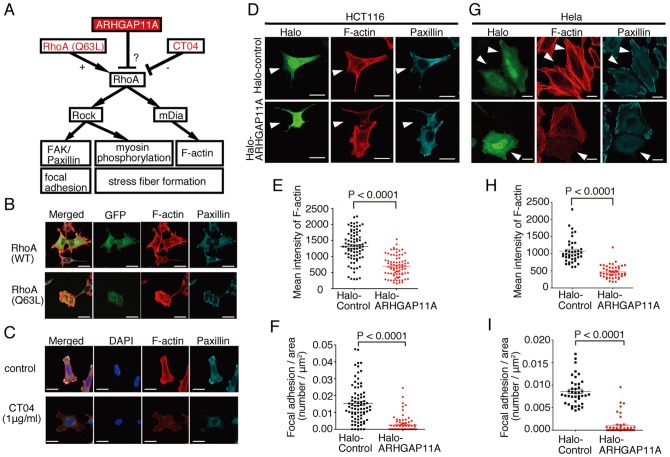
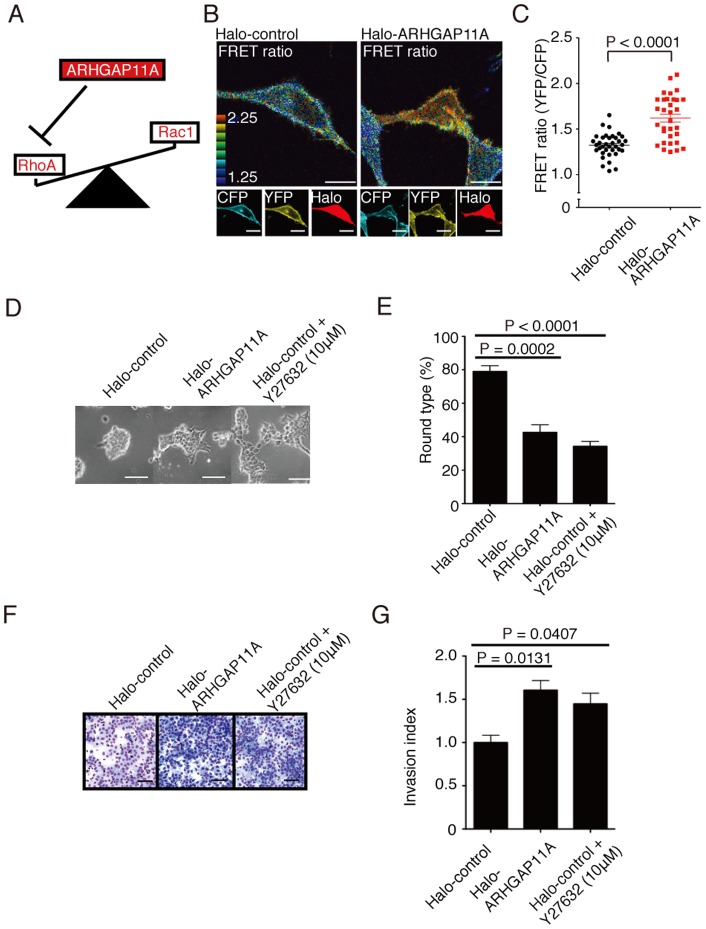
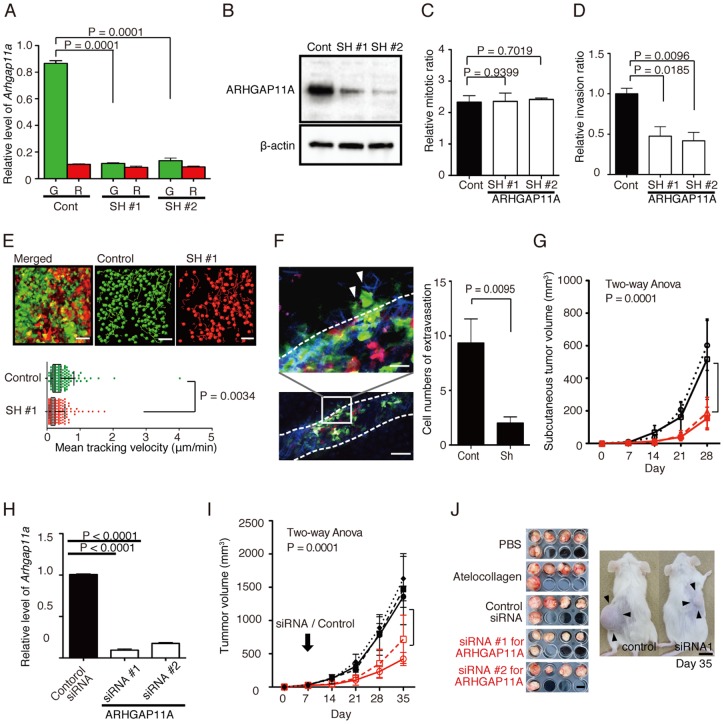
The mechanism behind the spatiotemporal control of cancer cell dynamics and its possible association with cell proliferation has not been well established. By exploiting the intravital imaging technique, we found that cancer cell motility and invasive properties were closely associated with the cell cycle. In vivo inoculation of human colon cancer cells bearing fluorescence ubiquitination-based cell cycle indicator (Fucci) demonstrated an unexpected phenomenon: S/G2/M cells were more motile and invasive than G1 cells. Microarray analyses showed that Arhgap11a, an uncharacterized Rho GTPase-activating protein (RhoGAP), was expressed in a cell-cycle-dependent fashion. Expression of ARHGAP11A in cancer cells suppressed RhoA-dependent mechanisms, such as stress fiber formation and focal adhesion, which made the cells more prone to migrate. We also demonstrated that RhoA suppression by ARHGAP11A induced augmentation of relative Rac1 activity, leading to an increase in the invasive properties. RNAi-based inhibition of Arhgap11a reduced the invasion and in vivo expansion of cancers. Additionally, analysis of human specimens showed the significant up-regulation of Arhgap11a in colon cancers, which was correlated with clinical invasion status. The present study suggests that ARHGAP11A, a cell cycle-dependent RhoGAP, is a critical regulator of cancer cell mobility and is thus a promising therapeutic target in invasive cancers.
癌症细胞动力学时空控制的背后机制及其与细胞增殖的可能关联尚未得到很好的阐明。通过利用活体成像技术,我们发现癌症细胞的运动性和侵袭性与细胞周期密切相关。体内接种带有荧光泛素化细胞周期指示剂(Fucci)的人结肠癌细胞显示出一种意外现象:S/G2/M 期细胞比 G1 期细胞更具运动性和侵袭性。微阵列分析表明,Arhgap11a,一种未被表征的 Rho GTPase 激活蛋白(RhoGAP),呈细胞周期依赖性表达。癌细胞中 ARHGAP11A 的表达抑制了 RhoA 依赖性机制,如应力纤维形成和焦点黏附,从而使细胞更易迁移。我们还证明,ARHGAP11A 通过抑制 RhoA 诱导相对 Rac1 活性的增加,从而增加侵袭特性。基于 RNAi 的 Arhgap11a 抑制减少了癌症的侵袭和体内扩张。此外,对人类标本的分析表明,Arhgap11a 在结肠癌中显著上调,与临床侵袭状态相关。本研究表明,ARHGAP11A 是一种细胞周期依赖性 RhoGAP,是癌症细胞迁移的关键调节因子,因此是侵袭性癌症有前途的治疗靶点。