Chang Yung-Chi, Olson Joshua, Beasley Federico C, Tung Christine, Zhang Jiquan, Crocker Paul R, Varki Ajit, Nizet Victor
Glycobiology Research and Training Center, University of California, San Diego, La Jolla, California, United States of America ; Department of Pediatrics, University of California, San Diego, La Jolla, California, United States of America.
Department of Pediatrics, University of California, San Diego, La Jolla, California, United States of America.
PLoS Pathog. 2014 Jan;10(1):e1003846. doi: 10.1371/journal.ppat.1003846. Epub 2014 Jan 2.
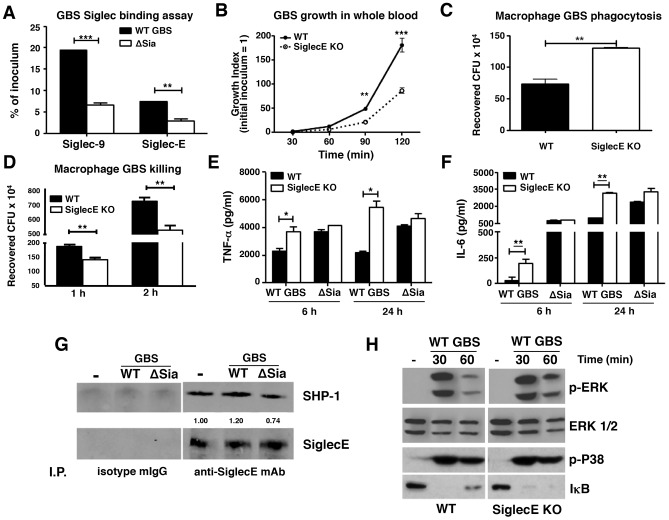
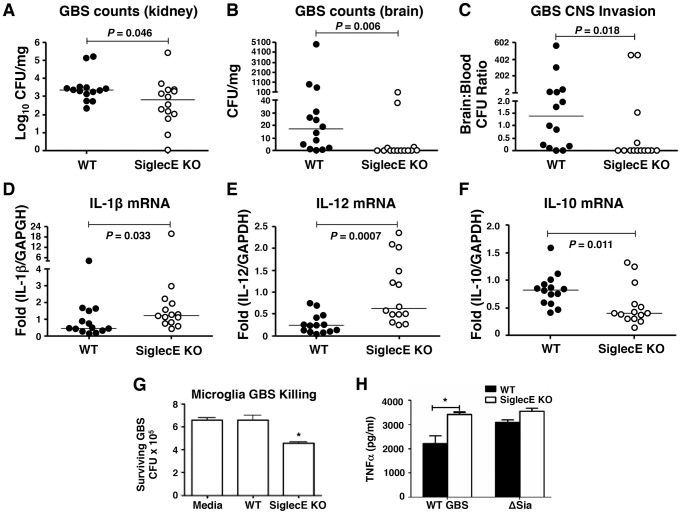
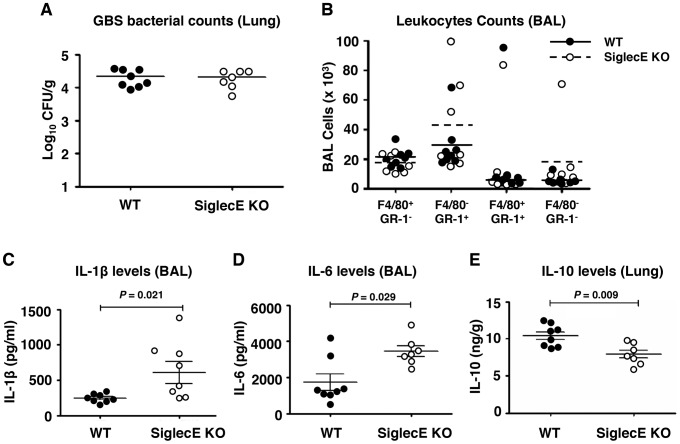
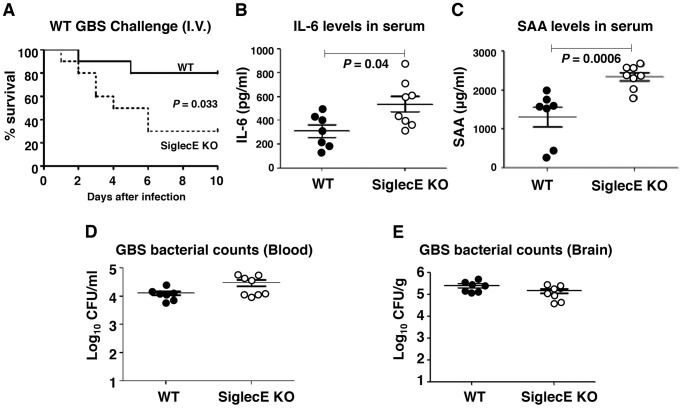
Group B Streptococcus (GBS) is a common agent of bacterial sepsis and meningitis in newborns. The GBS surface capsule contains sialic acids (Sia) that engage Sia-binding immunoglobulin-like lectins (Siglecs) on leukocytes. Here we use mice lacking Siglec-E, an inhibitory Siglec of myelomonocytic cells, to study the significance of GBS Siglec engagement during in vivo infection. We found GBS bound to Siglec-E in a Sia-specific fashion to blunt NF-κB and MAPK activation. As a consequence, Siglec-E-deficient macrophages had enhanced pro-inflammatory cytokine secretion, phagocytosis and bactericidal activity against the pathogen. Following pulmonary or low-dose intravenous GBS challenge, Siglec-E KO mice produced more pro-inflammatory cytokines and exhibited reduced GBS invasion of the central nervous system. In contrast, upon high dose lethal challenges, cytokine storm in Siglec-E KO mice was associated with accelerated mortality. We conclude that GBS Sia mimicry influences host innate immune and inflammatory responses in vivo through engagement of an inhibitory Siglec, with the ultimate outcome of the host response varying depending upon the site, stage and magnitude of infection.
B族链球菌(GBS)是新生儿细菌性败血症和脑膜炎的常见病原体。GBS表面荚膜含有唾液酸(Sia),可与白细胞上的唾液酸结合免疫球蛋白样凝集素(Siglec)结合。在此,我们使用缺乏Siglec-E(一种骨髓单核细胞抑制性Siglec)的小鼠,来研究体内感染期间GBS与Siglec结合的意义。我们发现GBS以Sia特异性方式与Siglec-E结合,从而抑制NF-κB和MAPK激活。因此,缺乏Siglec-E的巨噬细胞具有增强的促炎细胞因子分泌、吞噬作用以及对病原体的杀菌活性。在进行肺部或低剂量静脉内GBS攻击后,Siglec-E基因敲除小鼠产生更多促炎细胞因子,并表现出GBS对中枢神经系统的侵袭减少。相反,在高剂量致死性攻击后,Siglec-E基因敲除小鼠的细胞因子风暴与死亡率加速相关。我们得出结论,GBS的Sia模拟通过与一种抑制性Siglec结合,在体内影响宿主先天免疫和炎症反应,宿主反应的最终结果因感染的部位、阶段和程度而异。