Unité de Neuroscience, Information et Complexité, UPR 3293 Centre National de la Recherche Scientifique Gif-sur-Yvette, France.
Front Neural Circuits. 2013 Dec 27;7:206. doi: 10.3389/fncir.2013.00206. eCollection 2013.
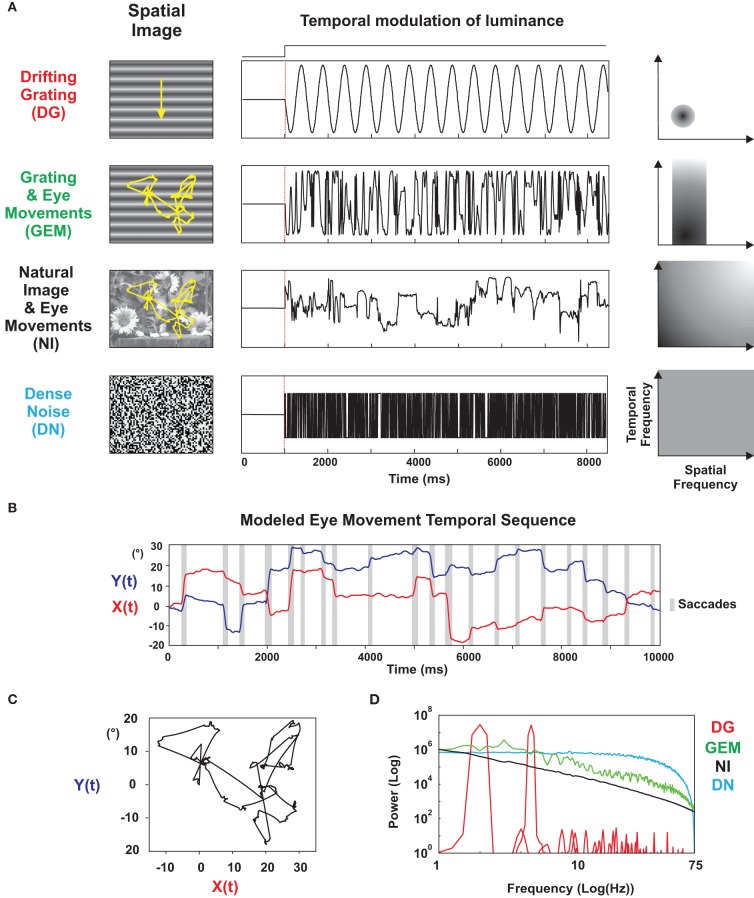
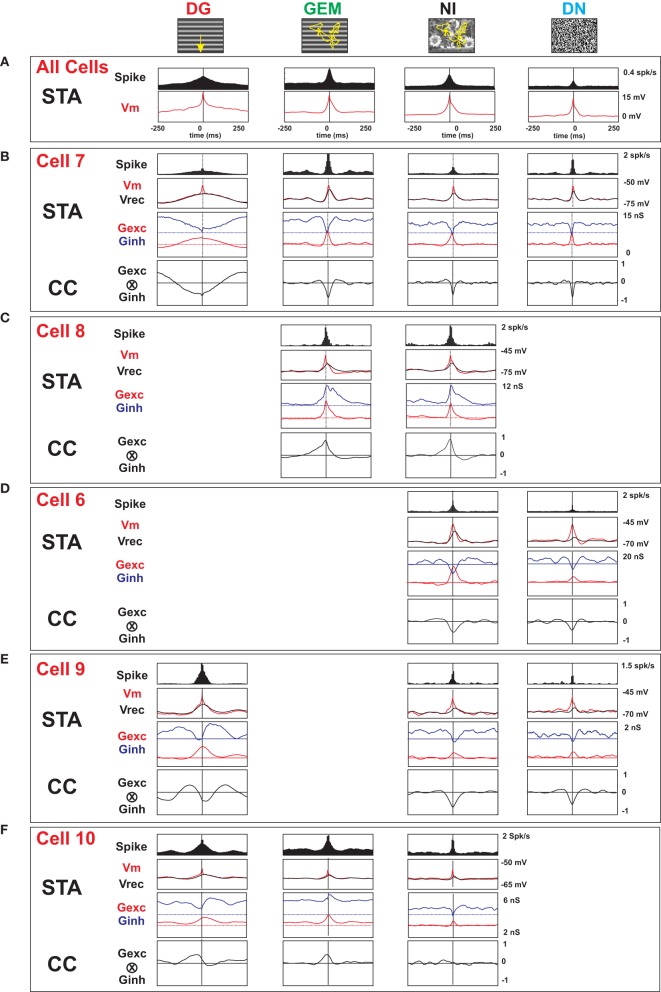
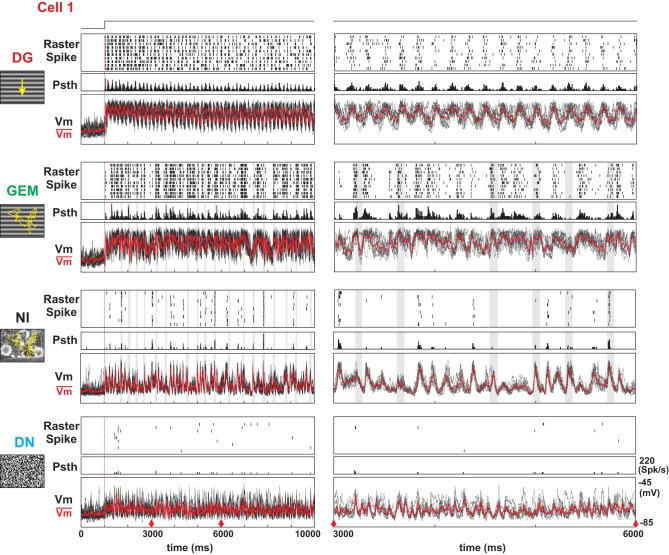
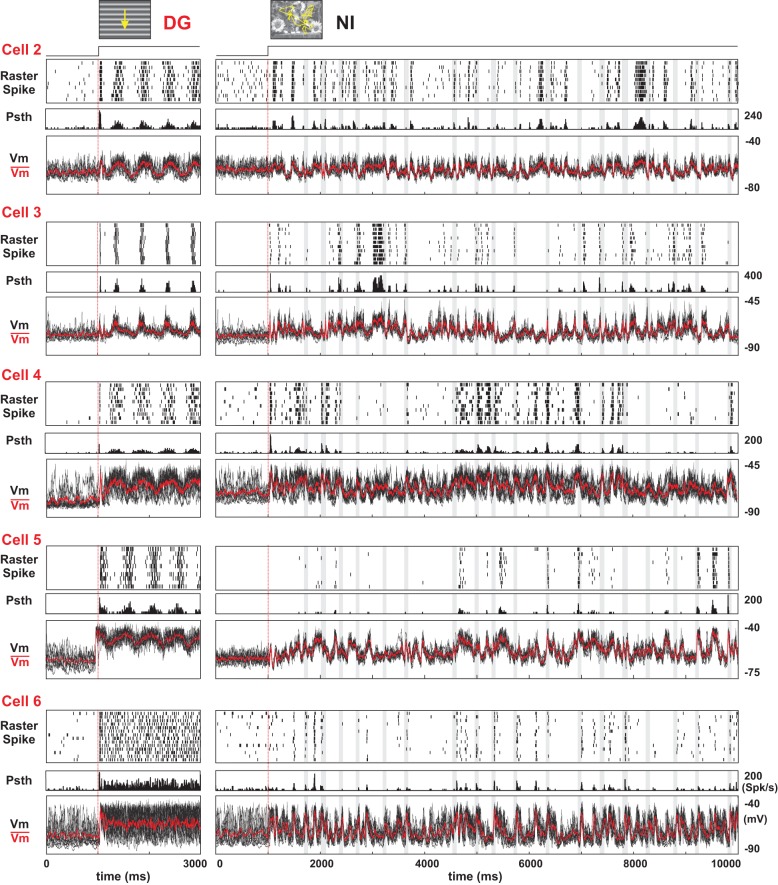
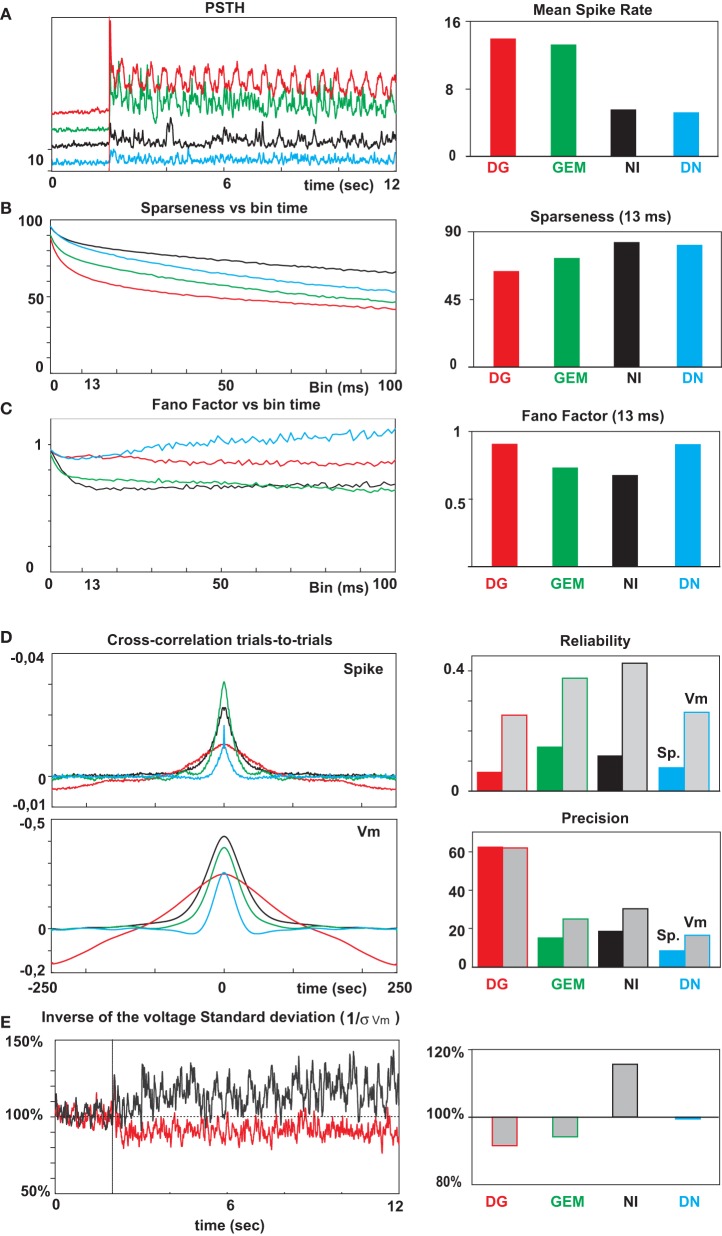
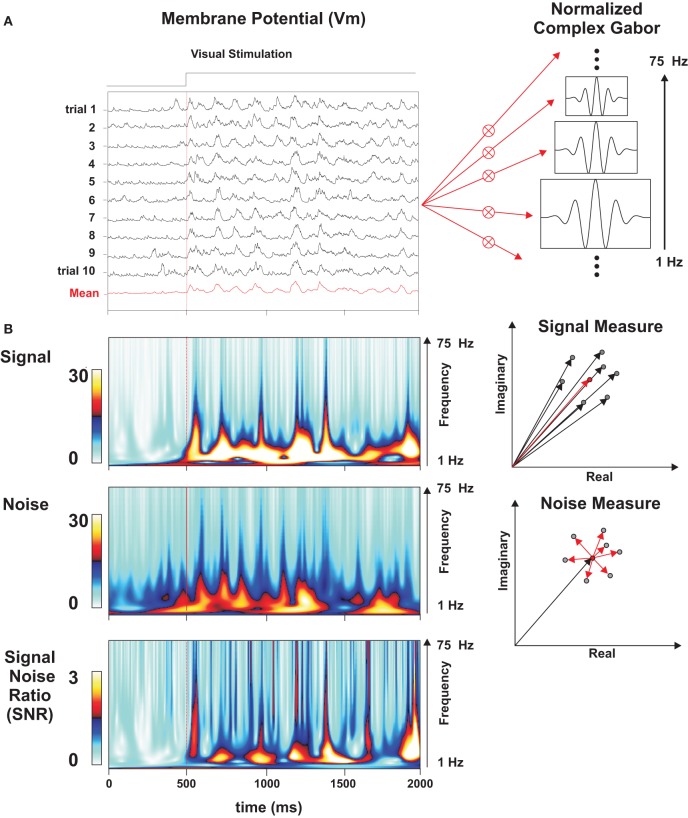
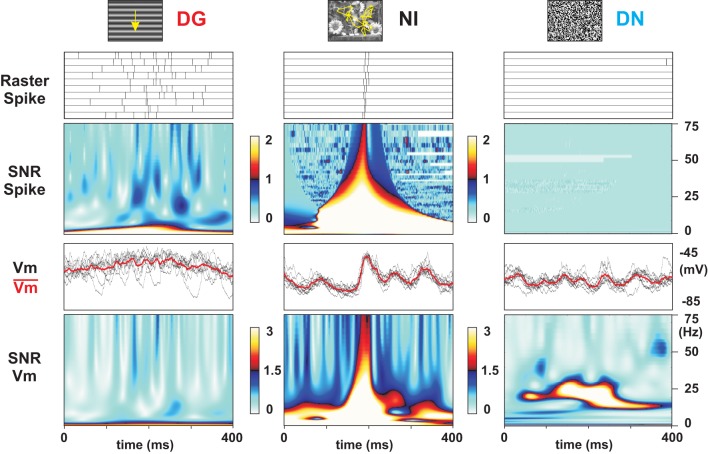
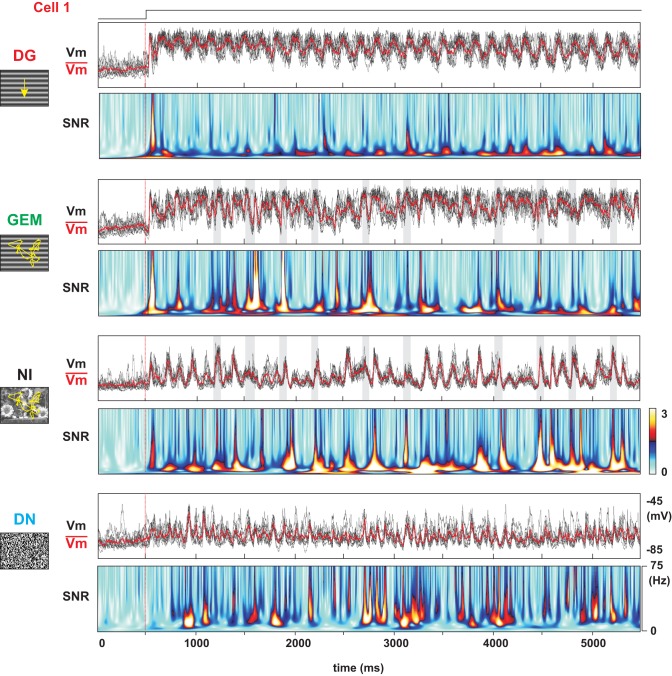
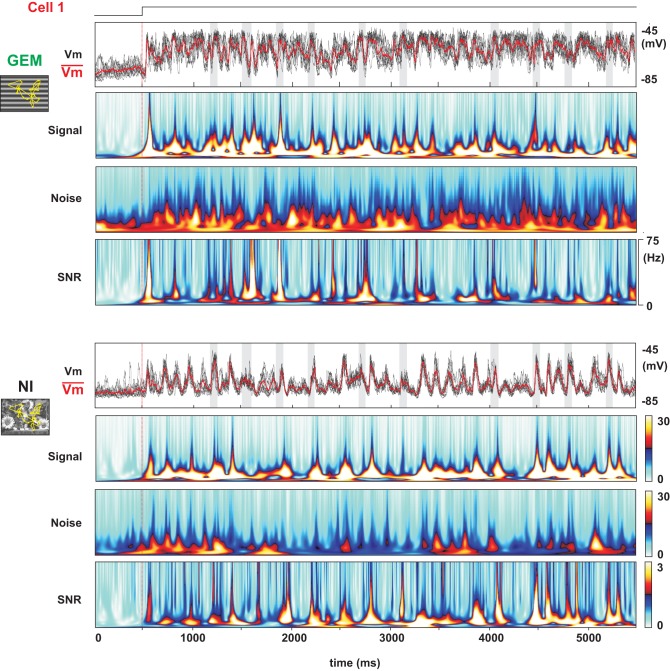
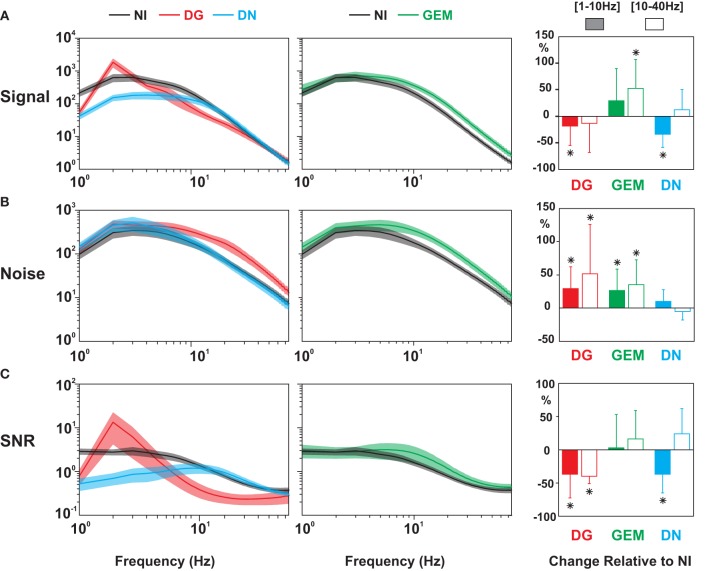
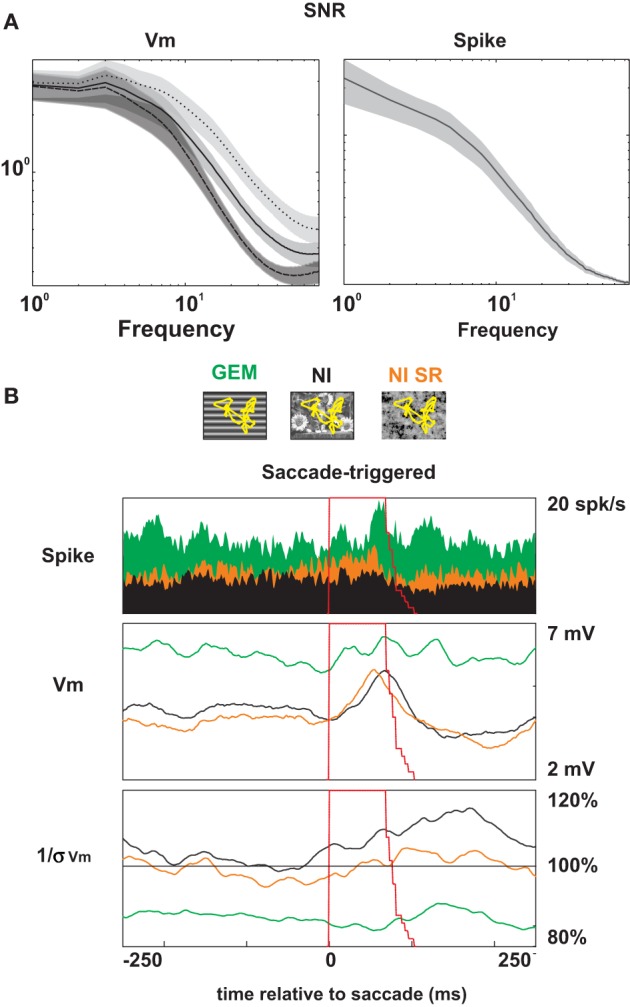
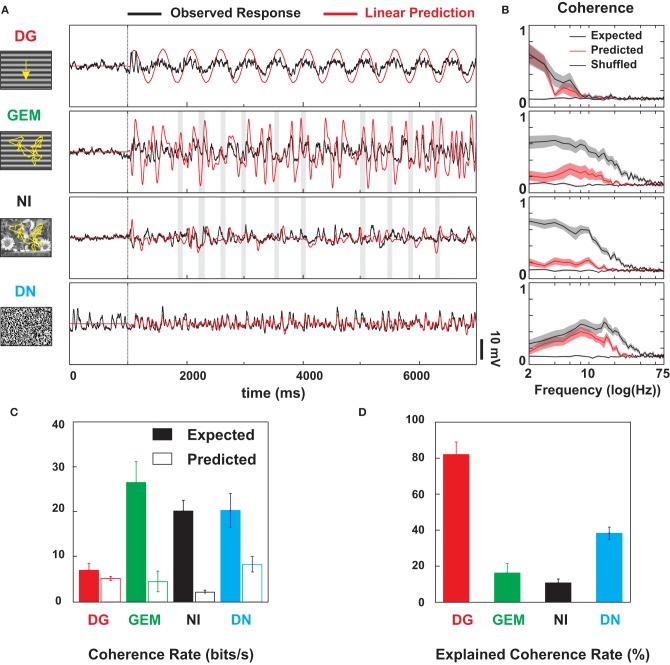
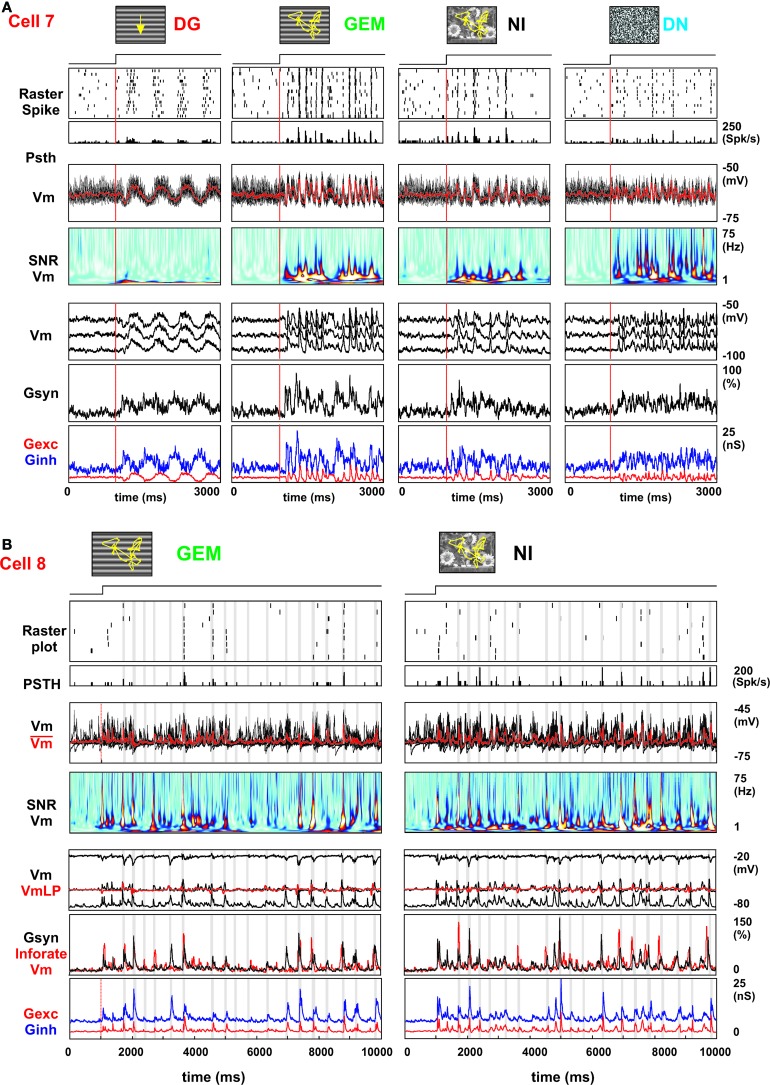
Synaptic noise is thought to be a limiting factor for computational efficiency in the brain. In visual cortex (V1), ongoing activity is present in vivo, and spiking responses to simple stimuli are highly unreliable across trials. Stimulus statistics used to plot receptive fields, however, are quite different from those experienced during natural visuomotor exploration. We recorded V1 neurons intracellularly in the anaesthetized and paralyzed cat and compared their spiking and synaptic responses to full field natural images animated by simulated eye-movements to those evoked by simpler (grating) or higher dimensionality statistics (dense noise). In most cells, natural scene animation was the only condition where high temporal precision (in the 10-20 ms range) was maintained during sparse and reliable activity. At the subthreshold level, irregular but highly reproducible membrane potential dynamics were observed, even during long (several 100 ms) "spike-less" periods. We showed that both the spatial structure of natural scenes and the temporal dynamics of eye-movements increase the signal-to-noise ratio by a non-linear amplification of the signal combined with a reduction of the subthreshold contextual noise. These data support the view that the sparsening and the time precision of the neural code in V1 may depend primarily on three factors: (1) broadband input spectrum: the bandwidth must be rich enough for recruiting optimally the diversity of spatial and time constants during recurrent processing; (2) tight temporal interplay of excitation and inhibition: conductance measurements demonstrate that natural scene statistics narrow selectively the duration of the spiking opportunity window during which the balance between excitation and inhibition changes transiently and reversibly; (3) signal energy in the lower frequency band: a minimal level of power is needed below 10 Hz to reach consistently the spiking threshold, a situation rarely reached with visual dense noise.
突触噪声被认为是大脑计算效率的限制因素。在视觉皮层 (V1) 中,体内存在持续活动,并且对简单刺激的尖峰反应在试验之间高度不可靠。然而,用于绘制感受野的刺激统计数据与自然视觉运动探索期间经历的统计数据有很大不同。我们在麻醉和瘫痪的猫中记录了 V1 神经元的细胞内活动,并将它们对全视野自然图像的尖峰和突触反应与更简单的(光栅)或更高维统计数据(密集噪声)进行了比较,这些自然图像是由模拟眼球运动产生的。在大多数细胞中,只有在稀疏和可靠活动期间保持高时间精度(在 10-20ms 范围内)的情况下,自然场景动画才是唯一的条件。在亚阈值水平上,即使在长(数 100ms)“无尖峰”期间,也观察到不规则但高度可重复的膜电位动力学。我们表明,自然场景的空间结构和眼球运动的时间动态通过非线性放大信号并降低亚阈值上下文噪声,从而增加了信号与噪声的比率。这些数据支持这样的观点,即 V1 中的神经代码稀疏化和时间精度可能主要取决于三个因素:(1)宽带输入频谱:带宽必须足够丰富,以便在递归处理过程中最佳地招募空间和时间常数的多样性;(2)兴奋和抑制的紧密时间相互作用:电导率测量表明,自然场景统计数据选择性地缩小了尖峰机会窗口的持续时间,在此期间,兴奋和抑制之间的平衡会暂时和可逆地改变;(3)低频带的信号能量:需要低于 10Hz 的最小电平功率才能始终达到尖峰阈值,这种情况很少用视觉密集噪声达到。