Håkansson Å, Tormo-Badia N, Baridi A, Xu J, Molin G, Hagslätt M-L, Karlsson C, Jeppsson B, Cilio C M, Ahrné S
Food Hygiene, Division of Applied Nutrition and Food Chemistry, Lund University, Lund, Sweden,
Clin Exp Med. 2015 Feb;15(1):107-20. doi: 10.1007/s10238-013-0270-5. Epub 2014 Jan 11.
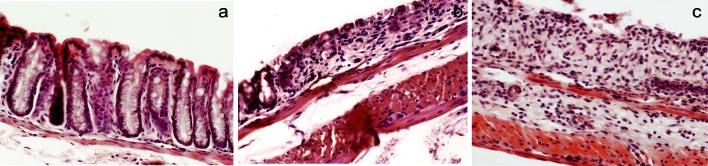
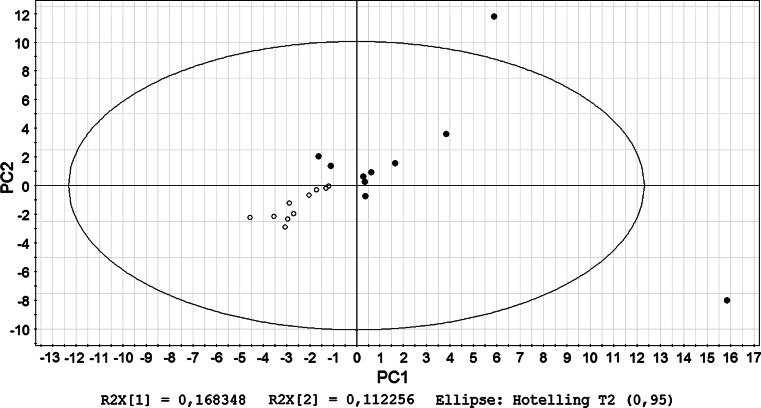
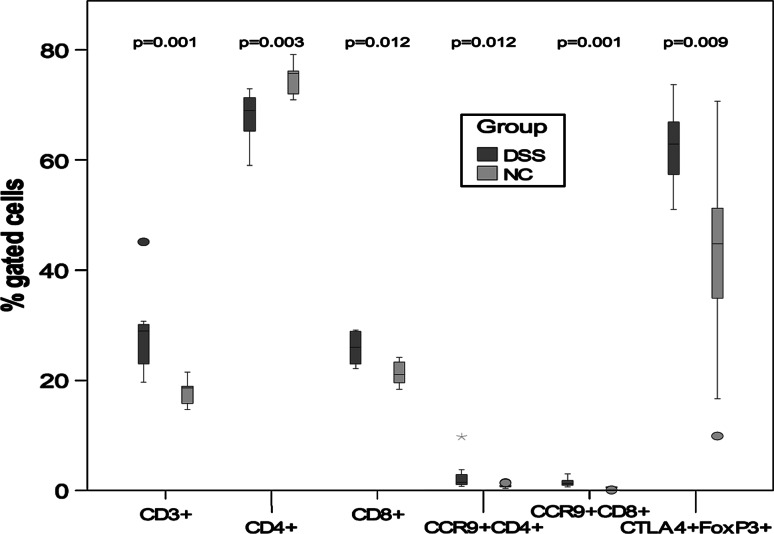
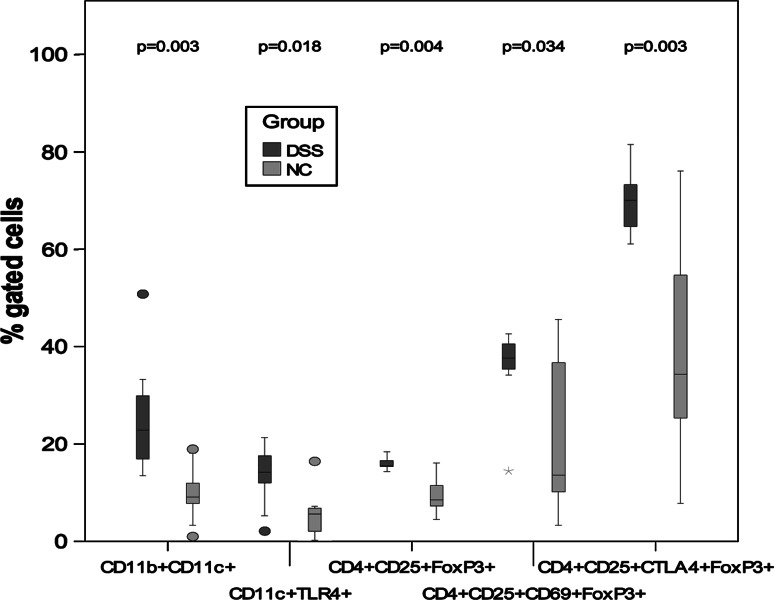
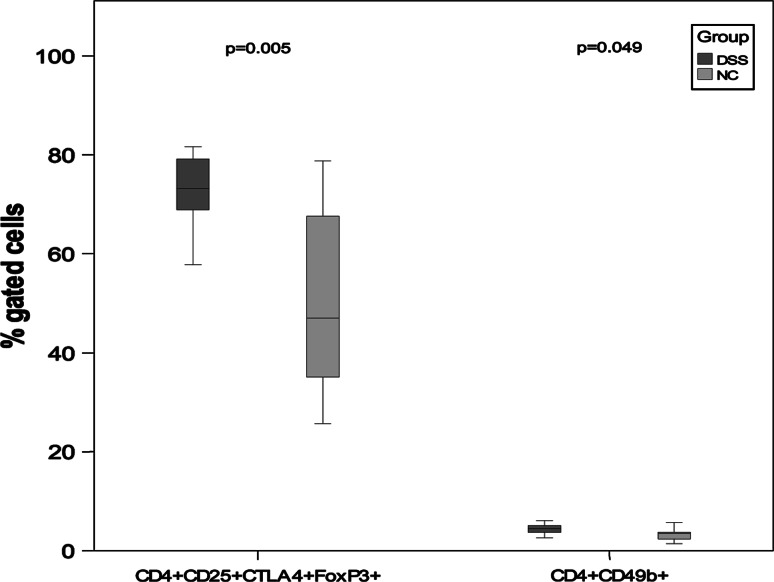
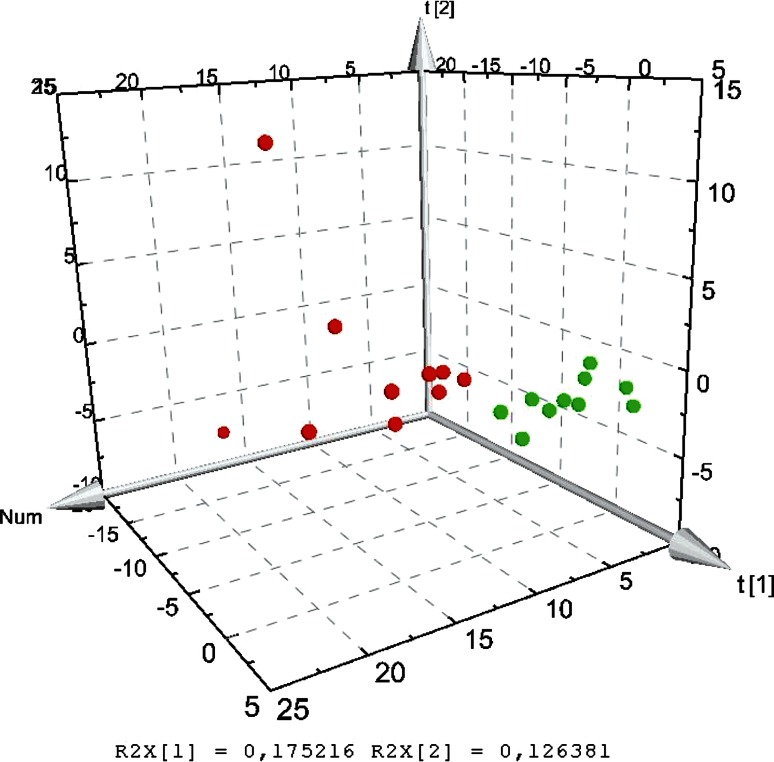
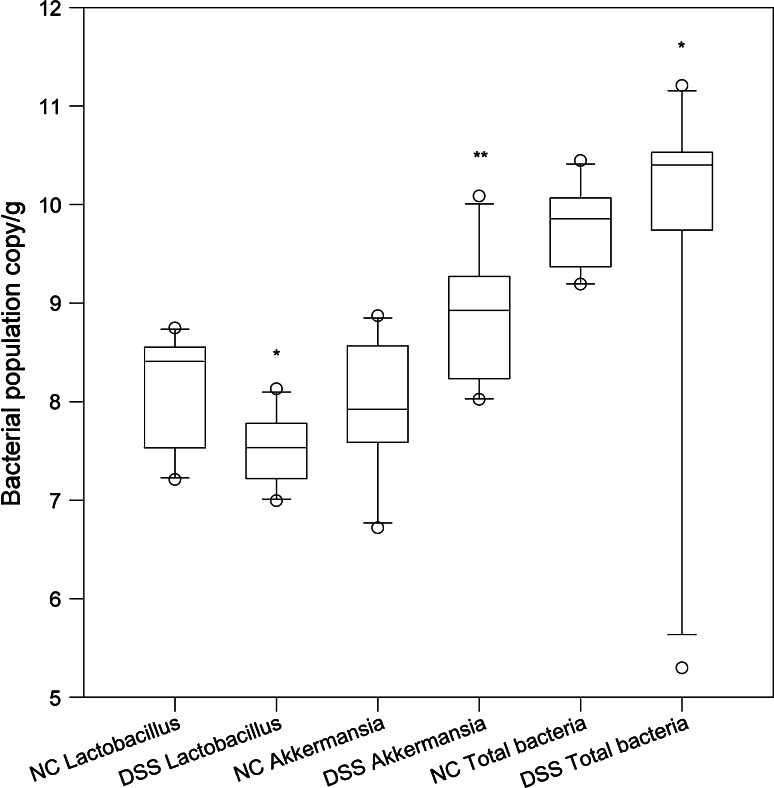
Ulcerative colitis (UC) is characterized by chronic inflammation of the colonic mucosa. Administration of dextran sulfate sodium (DSS) to animals is a frequently used model to mimic human colitis. Deregulation of the immune response to the enteric microflora or pathogens as well as increased intestinal permeability have been proposed as disease-driving mechanisms. To enlarge the understanding of the pathogenesis, we have studied the effect of DSS on the immune system and gut microbiota in mice. Intestinal inflammation was verified through histological evaluation and myeloperoxidase activity. Immunological changes were assessed by flow cytometry in spleen, Peyer's patches and mesenteric lymph nodes and through multiplex cytokine profiling. In addition, quantification of the total amount of bacteria on colonic mucosa as well as the total amount of lactobacilli, Akkermansia, Desulfovibrio and Enterobacteriaceae was performed by the use of quantitative PCR. Diversity and community structure were analysed by terminal restriction fragment length polymorphism (T-RFLP) patterns, and principal component analysis was utilized on immunological and T-RFLP patterns. DSS-induced colitis show clinical and histological similarities to UC. The composition of the colonic microflora was profoundly changed and correlated with several alterations of the immune system. The results demonstrate a relationship between multiple immunological changes and alterations of the gut microbiota after DSS administration. These data highlight and improve the definition of the immunological basis of the disease and suggest a role for dysregulation of the gut microbiota in the pathogenesis of colitis.
溃疡性结肠炎(UC)的特征是结肠黏膜的慢性炎症。给动物施用葡聚糖硫酸钠(DSS)是一种常用于模拟人类结肠炎的模型。对肠道微生物群或病原体的免疫反应失调以及肠道通透性增加被认为是疾病驱动机制。为了扩大对发病机制的理解,我们研究了DSS对小鼠免疫系统和肠道微生物群的影响。通过组织学评估和髓过氧化物酶活性验证肠道炎症。通过流式细胞术在脾脏、派尔集合淋巴结和肠系膜淋巴结中以及通过多重细胞因子分析评估免疫变化。此外,使用定量PCR对结肠黏膜上的细菌总量以及乳酸杆菌、阿克曼氏菌、脱硫弧菌和肠杆菌科的总量进行定量。通过末端限制性片段长度多态性(T-RFLP)模式分析多样性和群落结构,并对免疫和T-RFLP模式进行主成分分析。DSS诱导的结肠炎在临床和组织学上与UC相似。结肠微生物群的组成发生了深刻变化,并与免疫系统的几种改变相关。结果表明,DSS给药后多种免疫变化与肠道微生物群改变之间存在关联。这些数据突出并完善了该疾病免疫基础的定义,并提示肠道微生物群失调在结肠炎发病机制中的作用。