• 文献检索
  • 文档翻译
  • 深度研究
  • 学术资讯
  • Suppr Zotero 插件Zotero 插件
  • 邀请有礼
  • 套餐&价格
  • 历史记录
应用&插件
Suppr Zotero 插件Zotero 插件浏览器插件Mac 客户端Windows 客户端微信小程序
定价
高级版会员购买积分包购买API积分包
服务
文献检索文档翻译深度研究API 文档MCP 服务
关于我们
关于 Suppr公司介绍联系我们用户协议隐私条款
关注我们

Suppr 超能文献

核心技术专利:CN118964589B侵权必究
粤ICP备2023148730 号-1Suppr @ 2026

文献检索

告别复杂PubMed语法,用中文像聊天一样搜索,搜遍4000万医学文献。AI智能推荐,让科研检索更轻松。

立即免费搜索

文件翻译

保留排版,准确专业,支持PDF/Word/PPT等文件格式,支持 12+语言互译。

免费翻译文档

深度研究

AI帮你快速写综述,25分钟生成高质量综述,智能提取关键信息,辅助科研写作。

立即免费体验

基于NUCB2蛋白评估的前列腺癌预后预测:前列腺癌中的NUCB2

Prognostication of prostate cancer based on NUCB2 protein assessment: NUCB2 in prostate cancer.

作者信息

Zhang Hongtuan, Qi Can, Wang Andi, Yao Bing, Li Liang, Wang Yuzhuo, Xu Yong

出版信息

J Exp Clin Cancer Res. 2013 Oct 16;32(1):77. doi: 10.1186/1756-9966-32-77.

DOI:10.1186/1756-9966-32-77
PMID:24422979
原文链接:https://pmc.ncbi.nlm.nih.gov/articles/PMC3852884/
Abstract

BACKGROUND

Nucleobindin 2 (NUCB2) protein, a novel oncoprotein, is overexpressed in breast cancer. To date, there have been no published data regarding the role of NUCB2 protein expression in prostate cancer (PCa). Therefore, this study was performed to investigate the correlations between NUCB2 protein expression and prognosis in patients with PCa.

METHODS

Through immunohistochemistry, NUCB2 protein expression was evaluated in 60 benign prostatic hyperplasia (BPH) specimens and 180 PCa specimens. The correlation of NUCB2 protein expression with clinicopathological parameters was assessed using χ2 analysis. Kaplan-Meier analysis and Cox proportional hazards regression models were used to investigate the correlation between NUCB2 protein expression and prognosis of PCa patients.

RESULTS

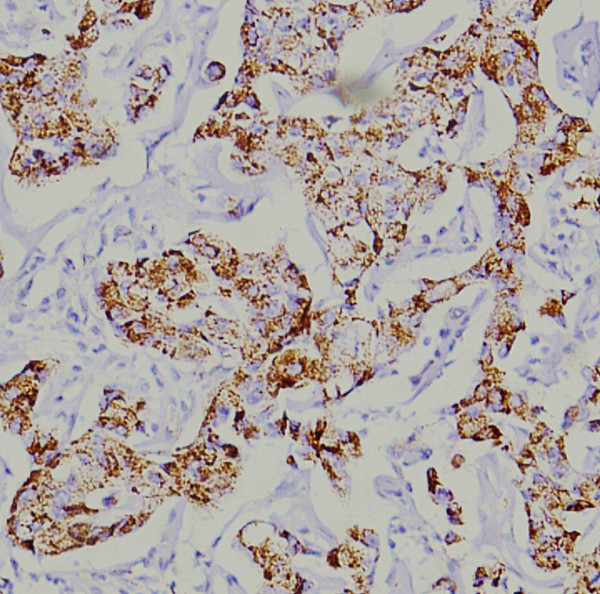
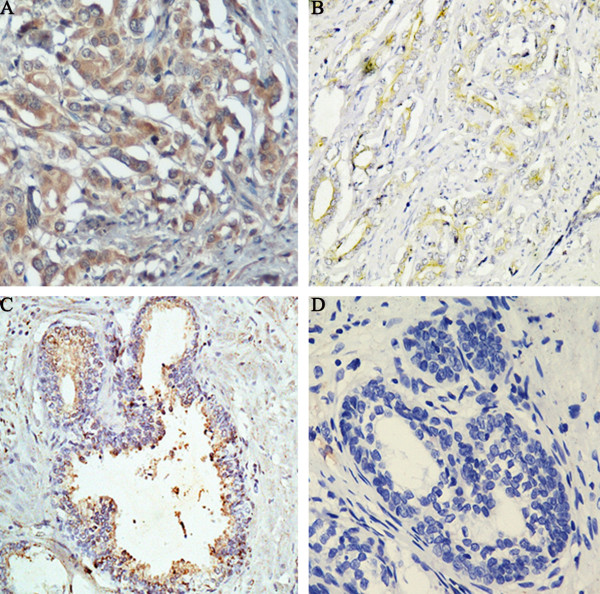
The immunohistochemistry results showed that the expression level of NUCB2 in PCa cases was significantly higher than that in BPH tissues (P < 0.001). Moreover, statistical analysis also showed that high NUCB2 protein expression was positively related to seminal vesicle invasion, lymph node metastasis, angiolymphatic invasion, higher Gleason score, biochemical recurrence (BCR), and higher preoperative prostate-specific antigen (PSA). Furthermore, it was also shown that patients with high NUCB2 protein expression had significantly poorer overall survival and BCR- free survival compared with patients with low expression of NUCB2 protein. Multivariate Cox regression analysis revealed that high NUCB2 protein expression level was an independent prognostic factor for overall survival and BCR-free survival of patients with PCa.

CONCLUSIONS

NUCB2 protein expression showed a strong association with the potencies of BCR and progression of PCa, and that may be applied as a novel biomarker for the prediction of BCR, and helpful for improving the diagnosis, prognosis and treatment of PCa.

摘要

背景

核结合蛋白2(NUCB2)是一种新型癌蛋白,在乳腺癌中过表达。迄今为止,尚无关于NUCB2蛋白表达在前列腺癌(PCa)中作用的公开数据。因此,本研究旨在探讨NUCB2蛋白表达与PCa患者预后之间的相关性。

方法

通过免疫组织化学法,在60例良性前列腺增生(BPH)标本和180例PCa标本中评估NUCB2蛋白表达。采用χ2分析评估NUCB2蛋白表达与临床病理参数的相关性。使用Kaplan-Meier分析和Cox比例风险回归模型研究NUCB2蛋白表达与PCa患者预后的相关性。

结果

免疫组织化学结果显示,PCa病例中NUCB2的表达水平显著高于BPH组织(P < 0.001)。此外,统计分析还表明,高NUCB2蛋白表达与精囊侵犯、淋巴结转移、血管淋巴管侵犯、较高的Gleason评分、生化复发(BCR)以及较高的术前前列腺特异性抗原(PSA)呈正相关。此外,还显示与低NUCB2蛋白表达的患者相比,高NUCB2蛋白表达的患者总生存期和无BCR生存期明显更差。多变量Cox回归分析显示,高NUCB2蛋白表达水平是PCa患者总生存期和无BCR生存期的独立预后因素。

结论

NUCB2蛋白表达与PCa的BCR能力和进展密切相关,可作为预测BCR的新型生物标志物,有助于改善PCa的诊断、预后和治疗。
https://cdn.ncbi.nlm.nih.gov/pmc/blobs/b1fc/3852884/d17371d6ea28/1756-9966-32-77-2.jpg
https://cdn.ncbi.nlm.nih.gov/pmc/blobs/b1fc/3852884/fbcd0a65a3a2/1756-9966-32-77-1.jpg
https://cdn.ncbi.nlm.nih.gov/pmc/blobs/b1fc/3852884/d17371d6ea28/1756-9966-32-77-2.jpg
https://cdn.ncbi.nlm.nih.gov/pmc/blobs/b1fc/3852884/fbcd0a65a3a2/1756-9966-32-77-1.jpg
https://cdn.ncbi.nlm.nih.gov/pmc/blobs/b1fc/3852884/d17371d6ea28/1756-9966-32-77-2.jpg

相似文献

1
Prognostication of prostate cancer based on NUCB2 protein assessment: NUCB2 in prostate cancer.基于NUCB2蛋白评估的前列腺癌预后预测:前列腺癌中的NUCB2
J Exp Clin Cancer Res. 2013 Oct 16;32(1):77. doi: 10.1186/1756-9966-32-77.
2
Clinical significance of NUCB2 mRNA expression in prostate cancer.前列腺癌中 NUCB2 mRNA 表达的临床意义。
J Exp Clin Cancer Res. 2013 Aug 16;32(1):56. doi: 10.1186/1756-9966-32-56.
3
High expression of nucleobindin 2 mRNA: an independent prognostic factor for overall survival of patients with prostate cancer.核结合蛋白2信使核糖核酸的高表达:前列腺癌患者总生存的独立预后因素
Tumour Biol. 2014 Mar;35(3):2025-8. doi: 10.1007/s13277-013-1268-z. Epub 2013 Oct 4.
4
Overexpression of LAPTM4B-35: a novel marker of poor prognosis of prostate cancer.LAPTM4B-35的过表达:前列腺癌预后不良的一种新标志物。
PLoS One. 2014 Mar 20;9(3):e91069. doi: 10.1371/journal.pone.0091069. eCollection 2014.
5
Overexpression of Cdc20 in clinically localized prostate cancer: Relation to high Gleason score and biochemical recurrence after laparoscopic radical prostatectomy.Cdc20在临床局限性前列腺癌中的过表达:与高Gleason评分及腹腔镜根治性前列腺切除术后生化复发的关系。
Cancer Biomark. 2016;16(3):351-8. doi: 10.3233/CBM-160573.
6
Overexpression of Pleomorphic Adenoma Gene-Like 2 Is a Novel Poor Prognostic Marker of Prostate Cancer.多形性腺瘤样基因2过表达是前列腺癌一种新的不良预后标志物。
PLoS One. 2016 Aug 18;11(8):e0158667. doi: 10.1371/journal.pone.0158667. eCollection 2016.
7
[miR-129 in the diagnosis, treatment and prediction of clinical prognosis of prostate cancer].[微小RNA-129在前列腺癌临床诊断、治疗及预后预测中的作用]
Zhonghua Nan Ke Xue. 2022 Nov;28(11):996-1005.
8
High level of androgen receptor is associated with aggressive clinicopathologic features and decreased biochemical recurrence-free survival in prostate: cancer patients treated with radical prostatectomy.高水平的雄激素受体与前列腺癌患者侵袭性的临床病理特征相关,且接受根治性前列腺切除术治疗的前列腺癌患者无生化复发生存期缩短。
Am J Surg Pathol. 2004 Jul;28(7):928-34. doi: 10.1097/00000478-200407000-00013.
9
Nucleobindin 2 expression is an independent prognostic factor for clear cell renal cell carcinoma.核结合蛋白2的表达是透明细胞肾细胞癌的一个独立预后因素。
Histopathology. 2015 Apr;66(5):650-7. doi: 10.1111/his.12587. Epub 2014 Dec 22.
10
High Expression of KIF22/Kinesin-Like DNA Binding Protein (Kid) as a Poor Prognostic Factor in Prostate Cancer Patients.KIF22/驱动蛋白样 DNA 结合蛋白(Kid)高表达是前列腺癌患者预后不良的一个因素。
Med Sci Monit. 2018 Nov 14;24:8190-8197. doi: 10.12659/MSM.912643.

引用本文的文献

1
NUCB-2/Nesfatin-1 promotes the proliferation of nasopharyngeal carcinoma cells.核连蛋白-2/核连蛋白衍生脂肪抑制素-1促进鼻咽癌细胞的增殖。
Cancer Cell Int. 2023 Aug 27;23(1):181. doi: 10.1186/s12935-023-03038-x.
2
Ki-67, topoisomerase IIα and miR-221 have a limited prostate cancer risk stratification ability on a medium-term follow-up: results of a high-risk radical prostatectomy cohort.在中期随访中,Ki-67、拓扑异构酶IIα和miR-221对前列腺癌的风险分层能力有限:一项高危根治性前列腺切除术队列研究的结果
Transl Androl Urol. 2022 Sep;11(9):1271-1281. doi: 10.21037/tau-21-628.
3
NUCB2: roles in physiology and pathology.

本文引用的文献

1
High expression of nucleobindin 2 mRNA: an independent prognostic factor for overall survival of patients with prostate cancer.核结合蛋白2信使核糖核酸的高表达:前列腺癌患者总生存的独立预后因素
Tumour Biol. 2014 Mar;35(3):2025-8. doi: 10.1007/s13277-013-1268-z. Epub 2013 Oct 4.
2
Clinical significance of NUCB2 mRNA expression in prostate cancer.前列腺癌中 NUCB2 mRNA 表达的临床意义。
J Exp Clin Cancer Res. 2013 Aug 16;32(1):56. doi: 10.1186/1756-9966-32-56.
3
PCA3 in the detection and management of early prostate cancer.PCA3在早期前列腺癌的检测与管理中的应用
NUCB2:在生理学和病理学中的作用。
J Physiol Biochem. 2022 Aug;78(3):603-617. doi: 10.1007/s13105-022-00895-4. Epub 2022 Jun 9.
4
Nucleobindin-2/Nesfatin-1-A New Cancer Related Molecule?核结合蛋白 2/内脂素-1—一种新的癌症相关分子?
Int J Mol Sci. 2021 Aug 2;22(15):8313. doi: 10.3390/ijms22158313.
5
The Multifaceted Nature of Nucleobindin-2 in Carcinogenesis.核结合蛋白-2在肿瘤发生中的多面性
Int J Mol Sci. 2021 May 26;22(11):5687. doi: 10.3390/ijms22115687.
6
Nucleobindin-2 enhances the epithelial-mesenchymal transition in renal cell carcinoma.核结合蛋白-2促进肾细胞癌的上皮-间质转化。
Oncol Lett. 2020 Jun;19(6):3653-3664. doi: 10.3892/ol.2020.11526. Epub 2020 Apr 10.
7
High expression of NUCB2 promotes papillary thyroid cancer cells proliferation and invasion.NUCB2的高表达促进甲状腺乳头状癌细胞的增殖和侵袭。
Onco Targets Ther. 2019 Feb 18;12:1309-1318. doi: 10.2147/OTT.S184560. eCollection 2019.
8
Loss of miR-516a-3p mediates upregulation of ABCC5 in prostate cancer and drives its progression.miR-516a-3p缺失介导前列腺癌中ABCC5的上调并推动其进展。
Onco Targets Ther. 2018 Jul 6;11:3853-3867. doi: 10.2147/OTT.S167463. eCollection 2018.
9
High NUCB2 expression level is associated with metastasis and may promote tumor progression in colorectal cancer.高NUCB2表达水平与转移相关,可能促进结直肠癌的肿瘤进展。
Oncol Lett. 2018 Jun;15(6):9188-9194. doi: 10.3892/ol.2018.8523. Epub 2018 Apr 18.
10
A novel function of NUCB2 in promoting the development and invasion of renal cell carcinoma.NUCB2在促进肾细胞癌发展和侵袭方面的新功能。
Oncol Lett. 2018 Feb;15(2):2425-2430. doi: 10.3892/ol.2017.7563. Epub 2017 Dec 8.
Tumour Biol. 2013 Jun;34(3):1337-47. doi: 10.1007/s13277-013-0739-6. Epub 2013 Mar 16.
4
The association between metabolic syndrome and the risk of prostate cancer, high-grade prostate cancer, advanced prostate cancer, prostate cancer-specific mortality and biochemical recurrence.代谢综合征与前列腺癌、高级别前列腺癌、晚期前列腺癌、前列腺癌特异性死亡率和生化复发的风险之间的关联。
J Exp Clin Cancer Res. 2013 Feb 13;32(1):9. doi: 10.1186/1756-9966-32-9.
5
Cancer statistics, 2013.癌症统计数据,2013 年。
CA Cancer J Clin. 2013 Jan;63(1):11-30. doi: 10.3322/caac.21166. Epub 2013 Jan 17.
6
Overexpression of LAPTM4B: an independent prognostic marker in breast cancer.LAPTM4B 过表达:乳腺癌的一个独立预后标志物。
J Cancer Res Clin Oncol. 2013 Apr;139(4):661-7. doi: 10.1007/s00432-012-1368-y. Epub 2013 Jan 6.
7
Characterization of cell-free circulating DNA in plasma in patients with prostate cancer.前列腺癌患者血浆中游离循环DNA的特征分析
Tumour Biol. 2013 Apr;34(2):983-6. doi: 10.1007/s13277-012-0634-6. Epub 2012 Dec 27.
8
First-in-man application of a novel therapeutic cancer vaccine formulation with the capacity to induce multi-functional T cell responses in ovarian, breast and prostate cancer patients.新型治疗性癌症疫苗制剂在卵巢癌、乳腺癌和前列腺癌患者中诱导多功能 T 细胞反应的首次人体应用。
J Transl Med. 2012 Aug 3;10:156. doi: 10.1186/1479-5876-10-156.
9
In vitro the behaviors of metastasis with suppression of VEGF in human bone metastatic LNCaP-derivative C4-2B prostate cancer cell line.在体外,通过抑制 VEGF 来观察人骨转移前列腺癌细胞系 LNCaP 衍生 C4-2B 细胞的转移行为。
J Exp Clin Cancer Res. 2012 May 1;31(1):40. doi: 10.1186/1756-9966-31-40.
10
Human periprostatic adipose tissue promotes prostate cancer aggressiveness in vitro.人前列腺周脂肪组织在体外促进前列腺癌侵袭性。
J Exp Clin Cancer Res. 2012 Apr 2;31(1):32. doi: 10.1186/1756-9966-31-32.