Deelen Joris, Beekman Marian, Codd Veryan, Trompet Stella, Broer Linda, Hägg Sara, Fischer Krista, Thijssen Peter E, Suchiman H Eka D, Postmus Iris, Uitterlinden André G, Hofman Albert, de Craen Anton J M, Metspalu Andres, Pedersen Nancy L, van Duijn Cornelia M, Jukema J Wouter, Houwing-Duistermaat Jeanine J, Samani Nilesh J, Slagboom P Eline
Department of Molecular Epidemiology, Leiden University Medical Center, Leiden, The Netherlands, Netherlands Consortium for Healthy Ageing, Leiden University Medical Center, Leiden, The Netherlands, Department of Cardiovascular Sciences, University of Leicester, Leicester, UK, Department of Cardiology, Leiden University Medical Center, Leiden, The Netherlands, Department of Gerontology and Geriatrics, Leiden University Medical Center, Leiden, The Netherlands, Department of Epidemiology, Erasmus Medical Center, Rotterdam, The Netherlands, Department of Medical Epidemiology and Biostatistics, Karolinska Institutet, Stockholm, Sweden, Estonian Genome Center, University of Tartu, Tartu, Estonia, Department of Human Genetics, Leiden University Medical Center, Leiden, The Netherlands, Department of Internal Medicine, Erasmus Medical Center, Rotterdam, The Netherlands and Department of Medical Statistics, Leiden University Medical Center, Leiden, The NetherlandsDepartment of Molecular Epidemiology, Leiden University Medical Center, Leiden, The Netherlands, Netherlands Consortium for Healthy Ageing, Leiden University Medical Center, Leiden, The Netherlands, Department of Cardiovascular Sciences, University of Leicester, Leicester, UK, Department of Cardiology, Leiden University Medical Center, Leiden, The Netherlands, Department of Gerontology and Geriatrics, Leiden University Medical Center, Leiden, The Netherlands, Department of Epidemiology, Erasmus Medical Center, Rotterdam, The Netherlands, Department of Medical Epidemiology and Biostatistics, Karolinska Institutet, Stockholm, Sweden, Estonian Genome Center, University of Tartu, Tartu, Estonia, Department of Human Genetics, Leiden University Medical Center, Leiden, The Netherlands, Department of Internal Medicine, Erasmus Medical Center, Rotterdam, The Netherlands and Department of Medical Statistics, Leiden University Medical Center, Leiden, The Netherlands
Department of Molecular Epidemiology, Leiden University Medical Center, Leiden, The Netherlands, Netherlands Consortium for Healthy Ageing, Leiden University Medical Center, Leiden, The Netherlands, Department of Cardiovascular Sciences, University of Leicester, Leicester, UK, Department of Cardiology, Leiden University Medical Center, Leiden, The Netherlands, Department of Gerontology and Geriatrics, Leiden University Medical Center, Leiden, The Netherlands, Department of Epidemiology, Erasmus Medical Center, Rotterdam, The Netherlands, Department of Medical Epidemiology and Biostatistics, Karolinska Institutet, Stockholm, Sweden, Estonian Genome Center, University of Tartu, Tartu, Estonia, Department of Human Genetics, Leiden University Medical Center, Leiden, The Netherlands, Department of Internal Medicine, Erasmus Medical Center, Rotterdam, The Netherlands and Department of Medical Statistics, Leiden University Medical Center, Leiden, The NetherlandsDepartment of Molecular Epidemiology, Leiden University Medical Center, Leiden, The Netherlands, Netherlands Consortium for Healthy Ageing, Leiden University Medical Center, Leiden, The Netherlands, Department of Cardiovascular Sciences, University of Leicester, Leicester, UK, Department of Cardiology, Leiden University Medical Center, Leiden, The Netherlands, Department of Gerontology and Geriatrics, Leiden University Medical Center, Leiden, The Netherlands, Department of Epidemiology, Erasmus Medical Center, Rotterdam, The Netherlands, Department of Medical Epidemiology and Biostatistics, Karolinska Institutet, Stockholm, Sweden, Estonian Genome Center, University of Tartu, Tartu, Estonia, Department of Human Genetics, Leiden University Medical Center, Leiden, The Netherlands, Department of Internal Medicine, Erasmus Medical Center, Rotterdam, The Netherlands and Department of Medical Statistics, Leiden University Medical Center, Leiden, The Netherlands.
Int J Epidemiol. 2014 Jun;43(3):878-86. doi: 10.1093/ije/dyt267. Epub 2014 Jan 14.
Human leukocyte telomere length (LTL) decreases with age and shorter LTL has previously been associated with increased prospective mortality. However, it is not clear whether LTL merely marks the health status of an individual by its association with parameters of immune function, for example, or whether telomere shortening also contributes causally to lifespan variation in humans.
We measured LTL in 870 nonagenarian siblings (mean age 93 years), 1580 of their offspring and 725 spouses thereof (mean age 59 years) from the Leiden Longevity Study (LLS).
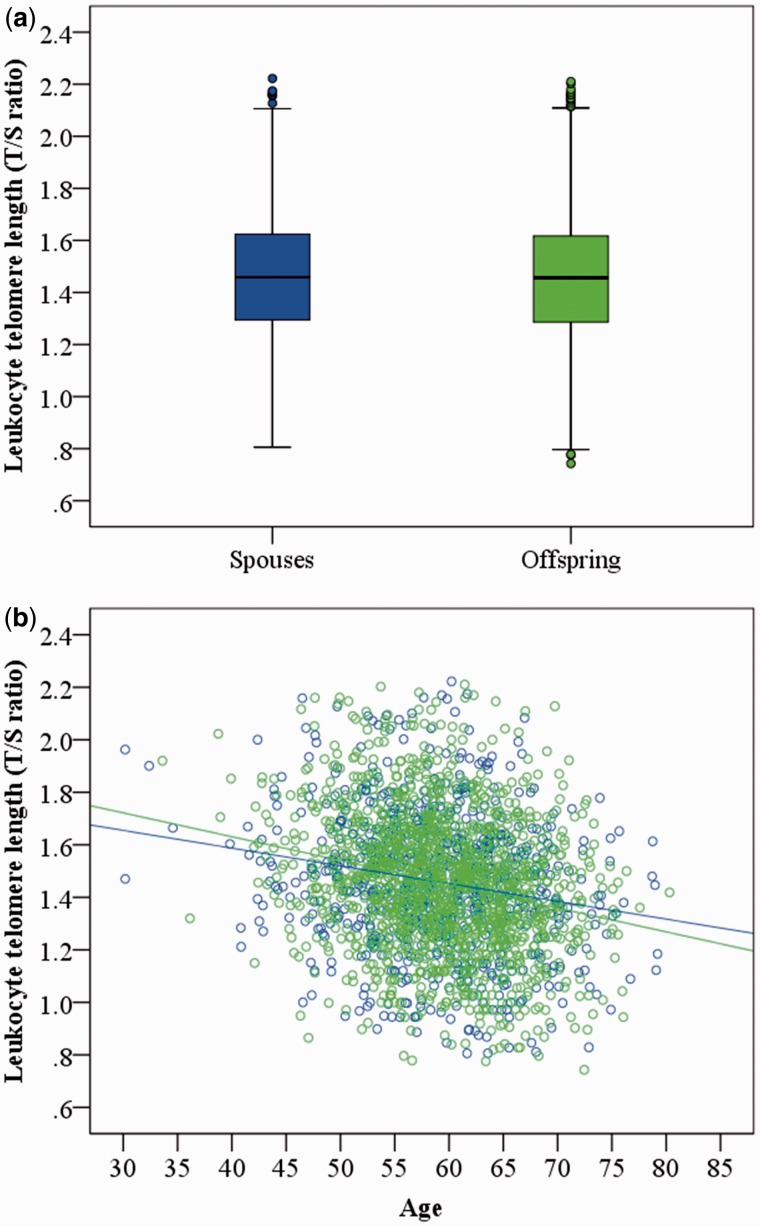
We found that shorter LTL is associated with increased prospective mortality in middle (30-80 years; hazard ratio (HR)=0.75, P=0.001) and highly advanced age (≥90 years; HR=0.92, P=0.028), and show that this association cannot be explained by the association of LTL with the immune-related markers insulin-like growth factor 1 to insulin-like growth factor binding protein 3 molar ratio, C-reactive protein, interleukin 6, cytomegalovirus serostatus or white blood cell counts. We found no difference in LTL between the middle-aged LLS offspring and their spouses (β=0.006, P=0.932). Neither did we observe an association of LTL-associated genetic variants with mortality in a prospective meta-analysis of multiple cohorts (n=8165).
We confirm LTL to be a marker of prospective mortality in middle and highly advanced age and additionally show that this association could not be explained by the association of LTL with various immune-related markers. Furthermore, the approaches performed here do not further support the hypothesis that LTL variation contributes to the genetic propensity for longevity.
人类白细胞端粒长度(LTL)随年龄增长而缩短,且此前已有研究表明较短的LTL与预期死亡率增加相关。然而,尚不清楚LTL仅仅是通过与免疫功能参数的关联来标记个体的健康状况,还是端粒缩短也在因果关系上导致了人类寿命的差异。
我们对来自莱顿长寿研究(LLS)的870名九旬兄弟姐妹(平均年龄93岁)、1580名他们的后代以及725名配偶(平均年龄59岁)的LTL进行了测量。
我们发现,较短的LTL与中年(30 - 80岁;风险比(HR)=0.75,P = 0.001)和高龄(≥90岁;HR = 0.92,P = 0.028)人群预期死亡率的增加相关,并表明这种关联无法通过LTL与免疫相关标志物胰岛素样生长因子1与胰岛素样生长因子结合蛋白3的摩尔比、C反应蛋白、白细胞介素6、巨细胞病毒血清状态或白细胞计数之间的关联来解释。我们发现中年LLS后代与其配偶之间的LTL没有差异(β = 0.006,P = 0.932)。在对多个队列(n = 8165)的前瞻性荟萃分析中,我们也未观察到与LTL相关的基因变异与死亡率之间存在关联。
我们证实LTL是中年和高龄人群预期死亡率的一个标志物,此外还表明这种关联无法通过LTL与各种免疫相关标志物的关联来解释。此外,本文所采用的方法并未进一步支持LTL变异导致长寿遗传倾向的假说。