Nottingham Digestive Diseases Biomedical Research Unit, School of Medicine, The University of Nottingham, Nottingham, UK.
Gut. 2014 Oct;63(10):1550-9. doi: 10.1136/gutjnl-2013-306253. Epub 2014 Jan 16.
Helicobacter pylori-induced peptic ulceration is less likely to occur in patients with a strong gastric anti-inflammatory regulatory T cell (Treg) response. Migration of Tregs into the gastric mucosa is therefore important.
To identify the homing receptors involved in directing Tregs to the gastric mucosa, and investigate how H pylori stimulates the relevant chemokine responses.
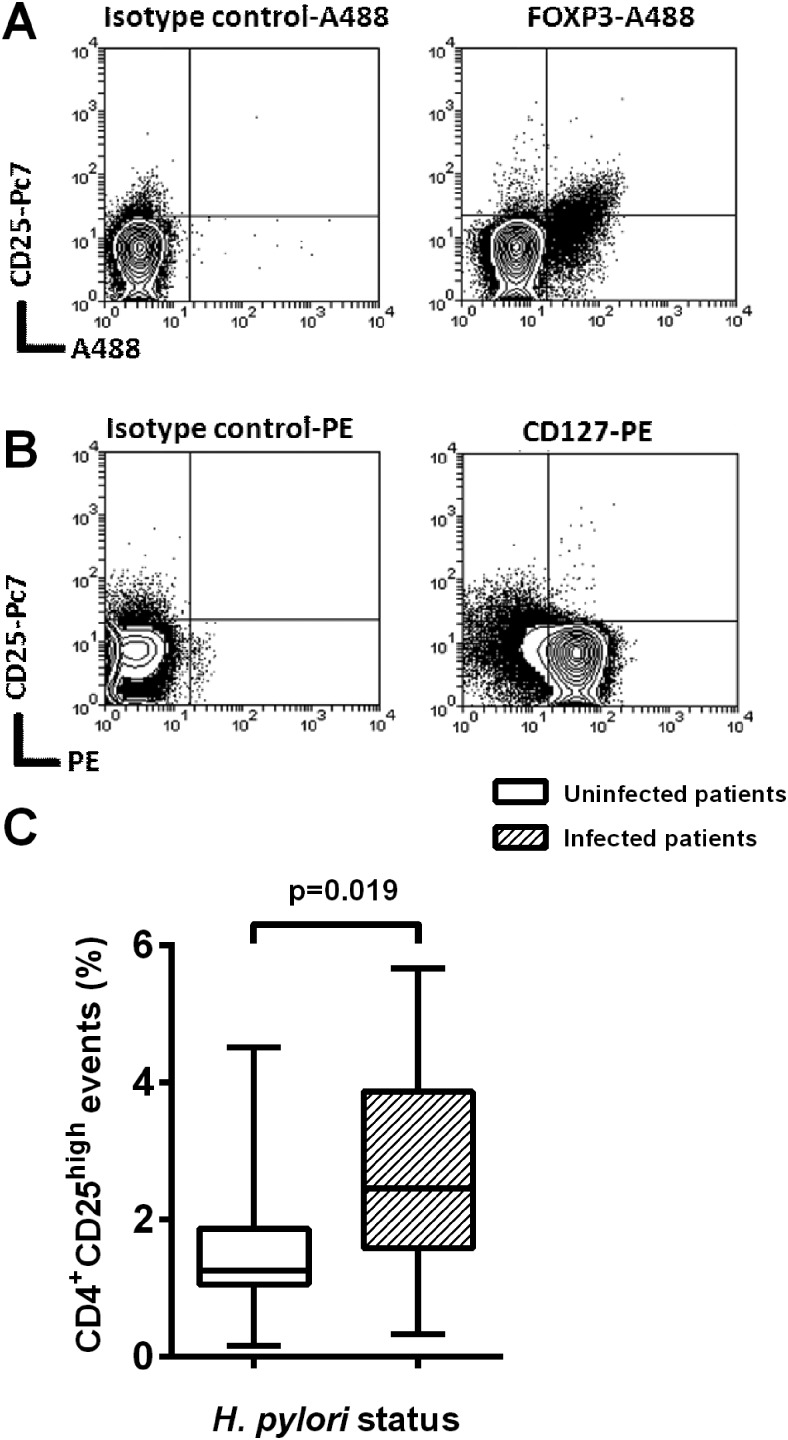
Gastric biopsy samples and peripheral blood were donated by 84 H pylori-infected and 46 uninfected patients. Luminex assays quantified gastric biopsy chemokine concentrations. Flow cytometry was used to characterise homing receptors on CD4(+)CD25(hi) Tregs. H pylori wild-type and isogenic mutants were used to investigate the signalling mechanisms behind CCL20 and IL-8 induction in gastric epithelial cell lines. Transwell assays were used to quantify Treg migration towards chemokines in vitro.
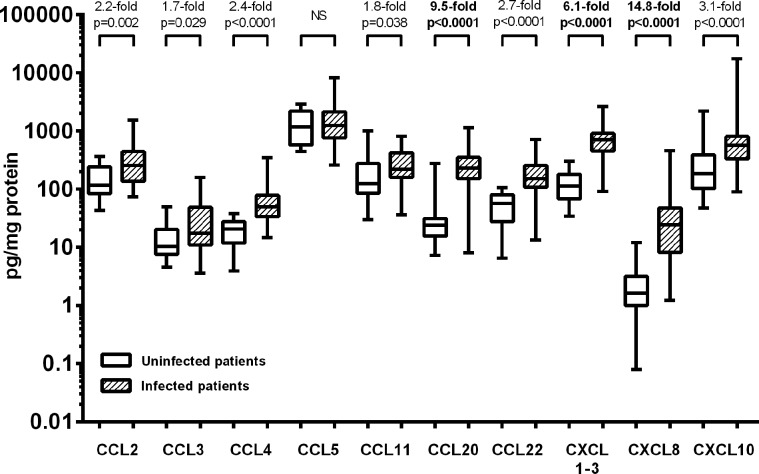
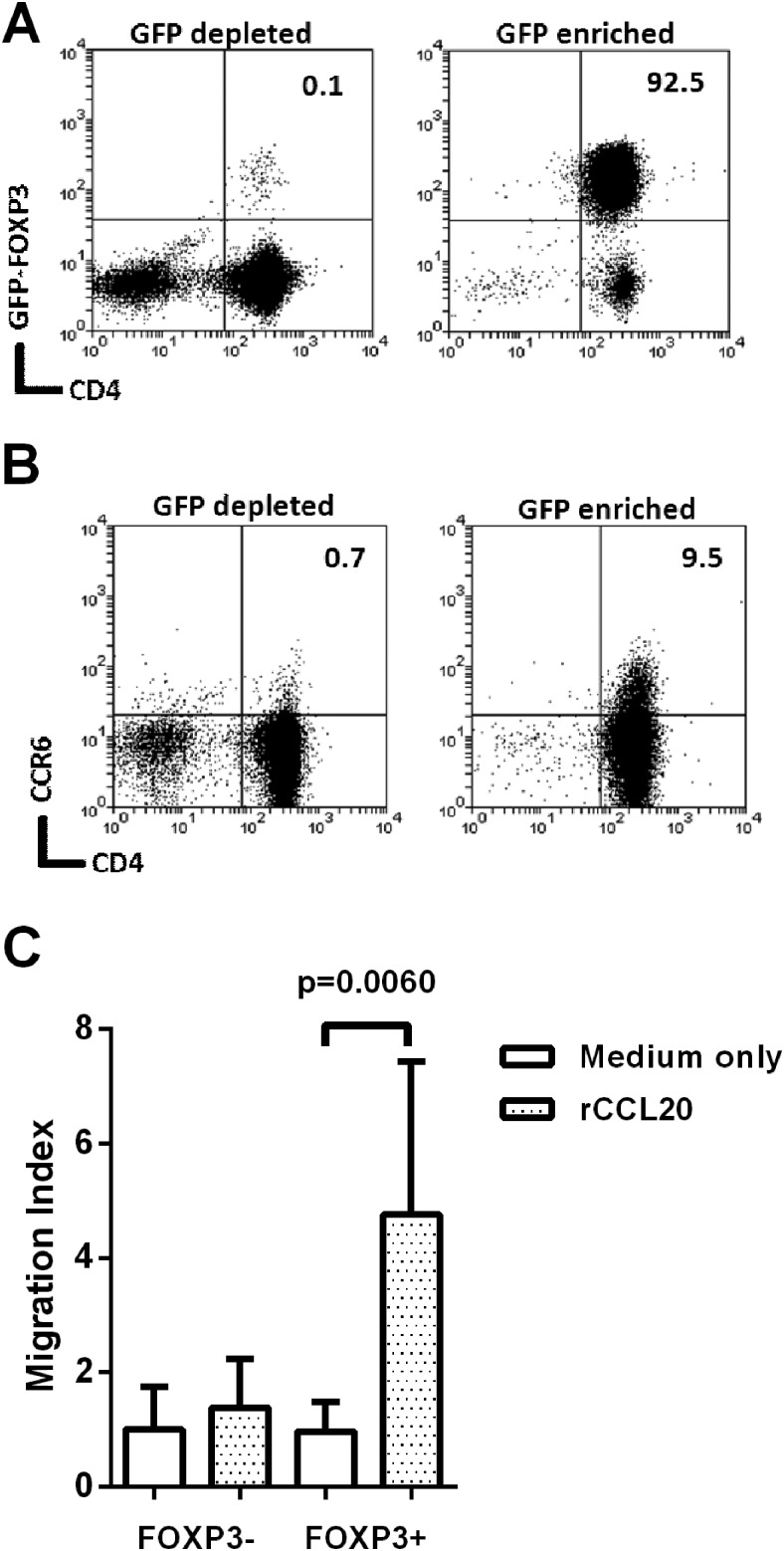
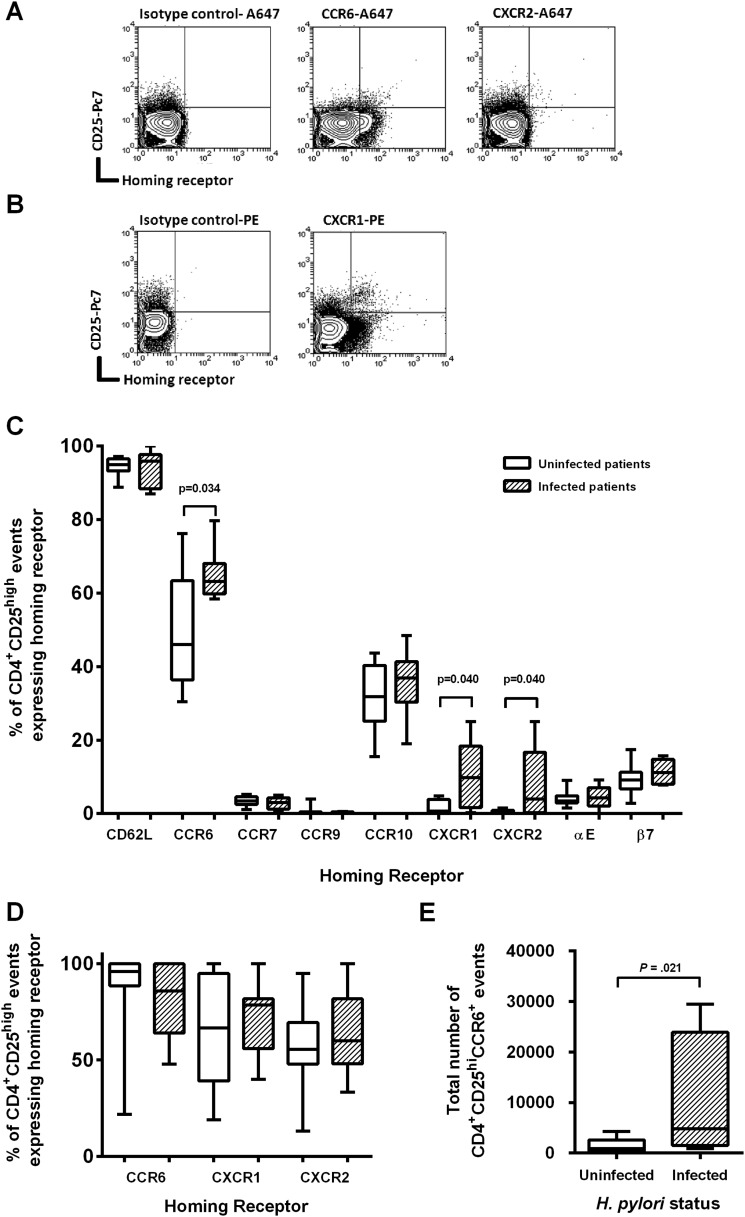
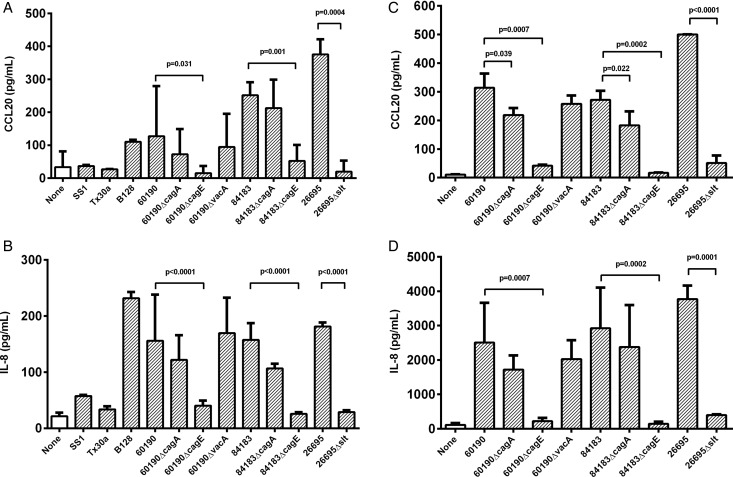
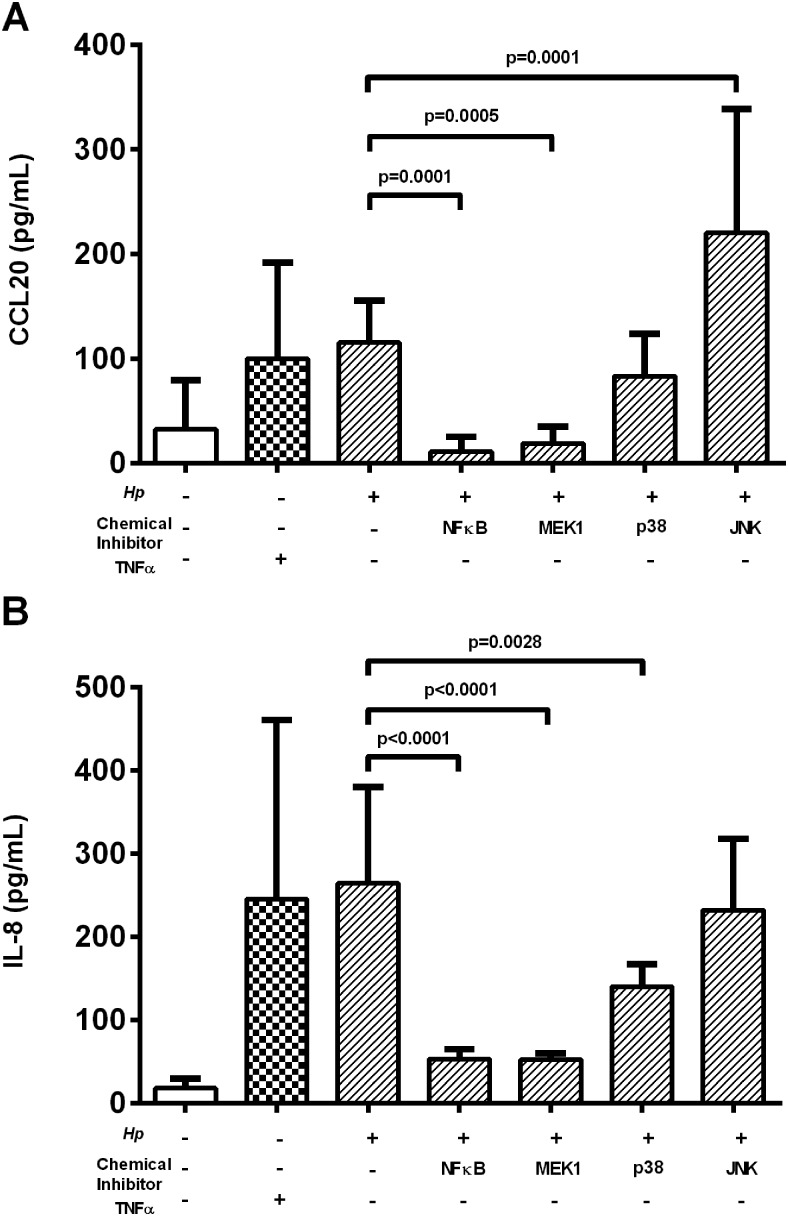
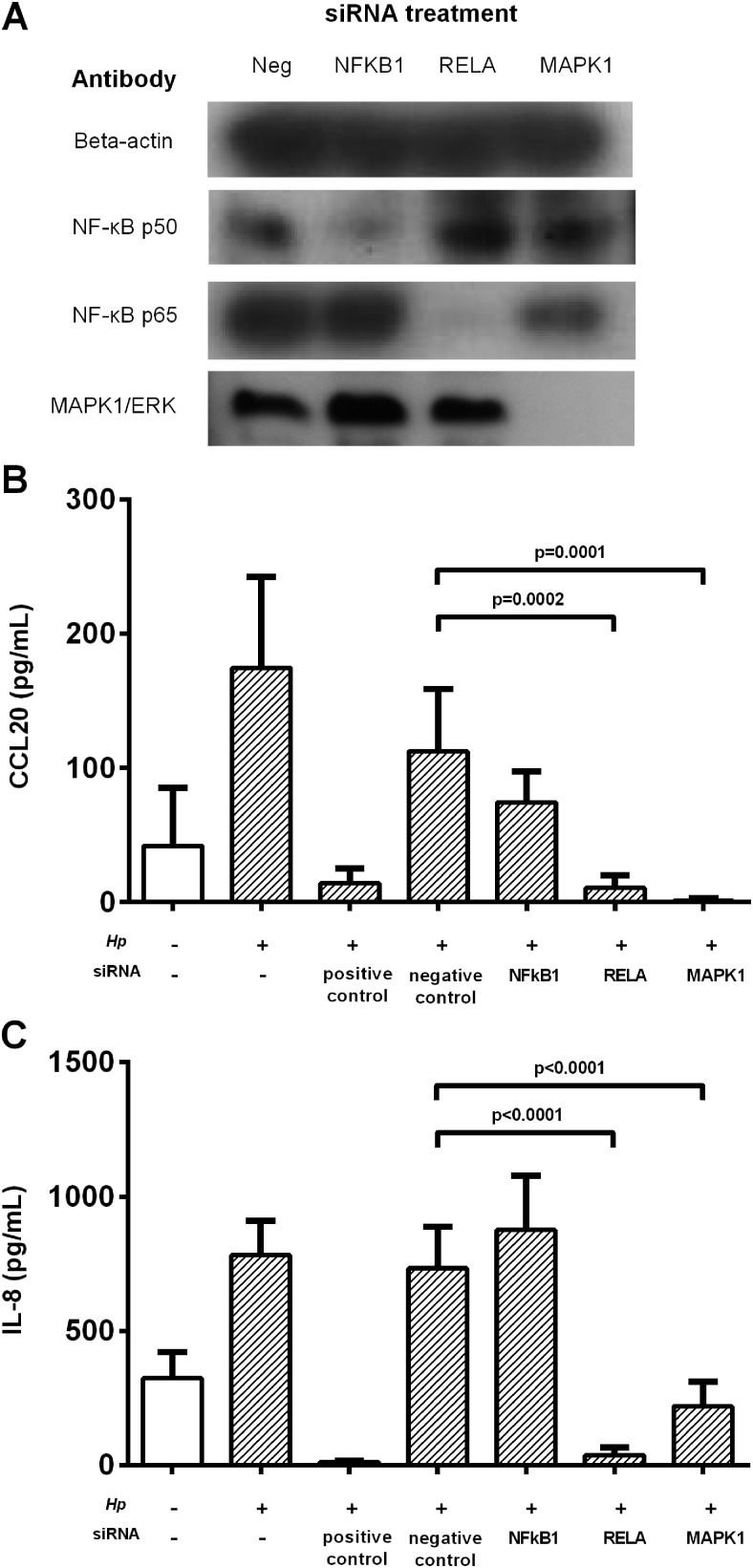
CCL20, CXCL1-3 and IL-8 concentrations were significantly increased in gastric biopsy samples from H pylori-infected patients. CCR6 (CCL20 receptor), CXCR1 and CXCR2 (IL-8 and CXCL1-3 receptors) were expressed by a higher proportion of peripheral blood Tregs in infected patients. Most gastric Tregs expressed these receptors. H pylori induced CCL20 production by gastric epithelial cells via cag pathogenicity island (cagPAI)-dependent NF-κB signalling. Foxp3(+), but not Foxp3(-), CD4 cells from infected mice migrated towards recombinant CCL20 in vitro.
As well as increasing Treg numbers, H pylori infection induces a change in their characteristics. Expression of CCR6, CXCR1 and CXCR2 probably enables their migration towards CCL20 and IL-8 in the infected gastric mucosa. Such qualitative changes may also explain how H pylori protects against some extragastric inflammatory disorders.
在具有较强胃抗炎调节性 T 细胞(Treg)反应的患者中,幽门螺杆菌引起的消化性溃疡不太可能发生。因此,Tregs 向胃黏膜的迁移很重要。
确定指导 Tregs 进入胃黏膜的归巢受体,并研究 H 幽门螺杆菌如何刺激相关趋化因子反应。
84 名 H 幽门螺杆菌感染和 46 名未感染患者捐赠了胃活检样本和外周血。Luminex 测定法定量了胃活检趋化因子浓度。流式细胞术用于表征 CD4(+)CD25(hi)Tregs 上的归巢受体。使用 H 幽门螺杆菌野生型和同源突变体来研究 CCL20 和 IL-8 在胃上皮细胞系中诱导的信号转导机制。Transwell 测定法用于体外量化 Treg 向趋化因子的迁移。
来自 H 幽门螺杆菌感染患者的胃活检样本中 CCL20、CXCL1-3 和 IL-8 浓度显着增加。感染患者外周血 Tregs 中表达 CCR6(CCL20 受体)、CXCR1 和 CXCR2(IL-8 和 CXCL1-3 受体)的比例更高。大多数胃 Tregs 表达这些受体。H 幽门螺杆菌通过 cag 致病岛(cagPAI)依赖性 NF-κB 信号诱导胃上皮细胞产生 CCL20。来自感染小鼠的 Foxp3(+),而不是 Foxp3(-),CD4 细胞在体外向重组 CCL20 迁移。
除了增加 Treg 数量外,H 幽门螺杆菌感染还会改变其特征。CCR6、CXCR1 和 CXCR2 的表达可能使它们向感染胃黏膜中的 CCL20 和 IL-8 迁移。这种性质的变化也可能解释 H 幽门螺杆菌如何预防某些胃外炎症性疾病。