Molfenter Sonja M, Steele Catriona M
Swallowing Rehabilitation Research Laboratory, Toronto Rehabilitation Institute, University Health Network, 550 University Avenue, 12th floor, Toronto, ON, M5G 2A2, Canada,
Dysphagia. 2014 Apr;29(2):269-76. doi: 10.1007/s00455-013-9506-5. Epub 2014 Jan 21.
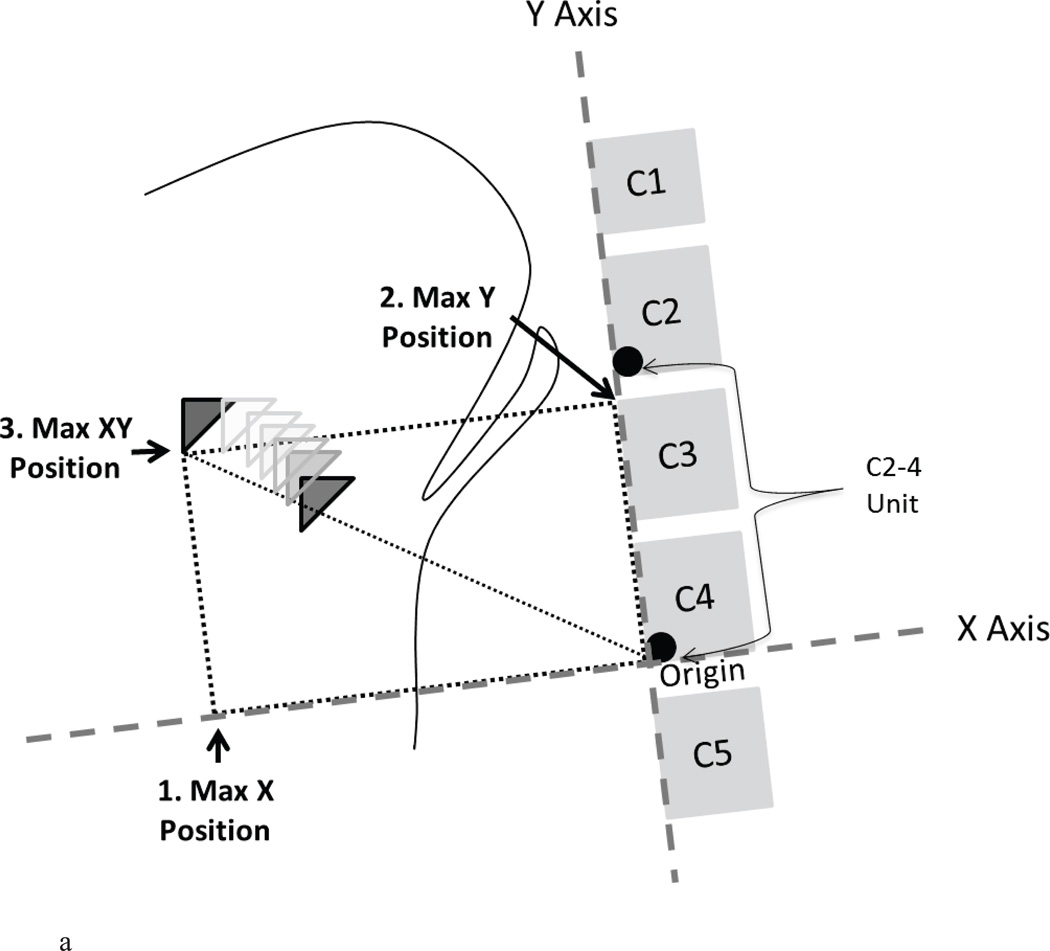
In this study we undertook careful analysis of 13 quantitative physiological variables related to oropharyngeal swallowing from a sample of 42 subacute patients referred for dysphagia assessment. Each patient underwent a videofluoroscopic swallowing examination in which they swallowed up to five boluses of 22 % w/v ultrathin liquid barium suspension administered by teaspoon. Our goal was to determine whether scores on 13 kinematic or temporal parameters of interest were independently associated with the presence of penetration-aspiration in the final compiled dataset of 178 swallows. Participants were classified as aspirators based on the presence of at least one swallow that demonstrated a Penetration-Aspiration Scale score of ≥3. The parameters of interest included six kinematic parameters for capturing hyoid position, three swallow durations [laryngeal closure duration, hyoid movement duration, and upper esophageal sphincter (UES) opening duration], and four swallow intervals (laryngeal closure to UES opening, bolus dwell time in the pharynx prior to laryngeal closure, stage transition duration, and pharyngeal transit time). Mixed-model repeated-measures ANOVAs were conducted to determine the association between each parameter and aspiration status. Only 1 of the 13 parameters tested distinguished aspirators from nonaspirators: aspirators demonstrated significantly shorter UES opening duration. In addition, a trend toward reduced maximum superior position of the hyoid was seen in aspirators. Limitations and future considerations are discussed.
在本研究中,我们对42名因吞咽困难接受评估的亚急性患者样本中与口咽吞咽相关的13个定量生理变量进行了仔细分析。每位患者均接受了视频荧光吞咽检查,在此过程中,他们用茶匙吞咽了多达五口22% w/v的超薄液体钡剂悬浮液。我们的目标是确定在最终汇总的178次吞咽数据集中,13个感兴趣的运动学或时间参数得分是否与渗透 - 误吸的存在独立相关。根据至少有一次吞咽的渗透 - 误吸量表得分≥3,将参与者分类为误吸者。感兴趣的参数包括用于捕捉舌骨位置的六个运动学参数、三个吞咽持续时间[喉关闭持续时间、舌骨运动持续时间和上食管括约肌(UES)开放持续时间]以及四个吞咽间隔(喉关闭至UES开放、喉关闭前食团在咽部的停留时间、阶段转换持续时间和咽部通过时间)。进行了混合模型重复测量方差分析以确定每个参数与误吸状态之间的关联。在测试的13个参数中,只有1个参数能够区分误吸者和非误吸者:误吸者的UES开放持续时间明显更短。此外,在误吸者中观察到舌骨最大上移位置有降低的趋势。文中还讨论了局限性和未来的考虑因素。