Chaudhuri Rishidev, Bernacchia Alberto, Wang Xiao-Jing
Department of Applied Mathematics, Yale University, New Haven, United States.
Elife. 2014;3:e01239. doi: 10.7554/eLife.01239. Epub 2014 Jan 21.
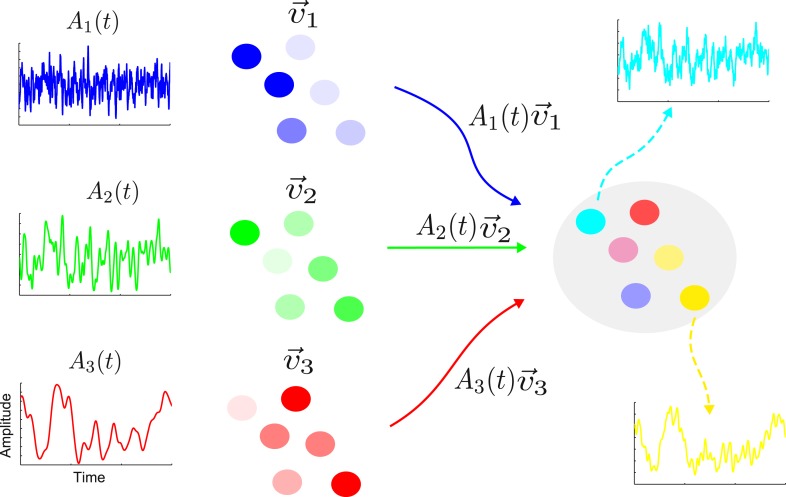
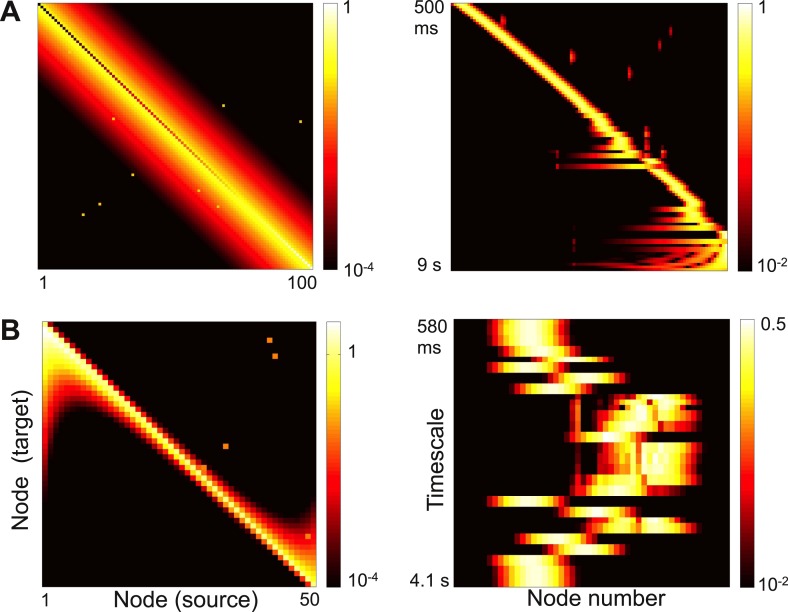
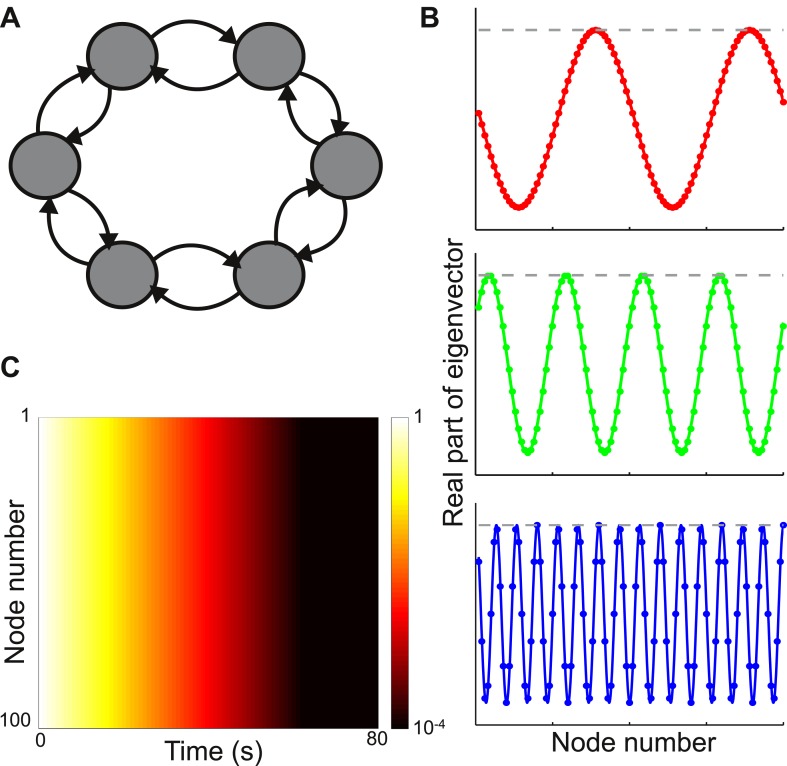
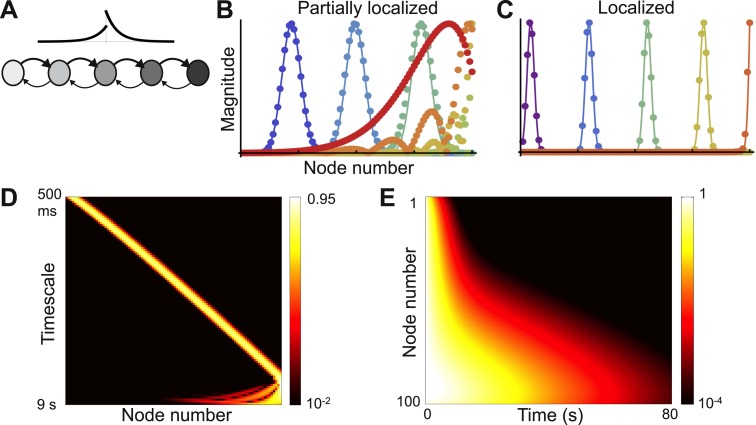
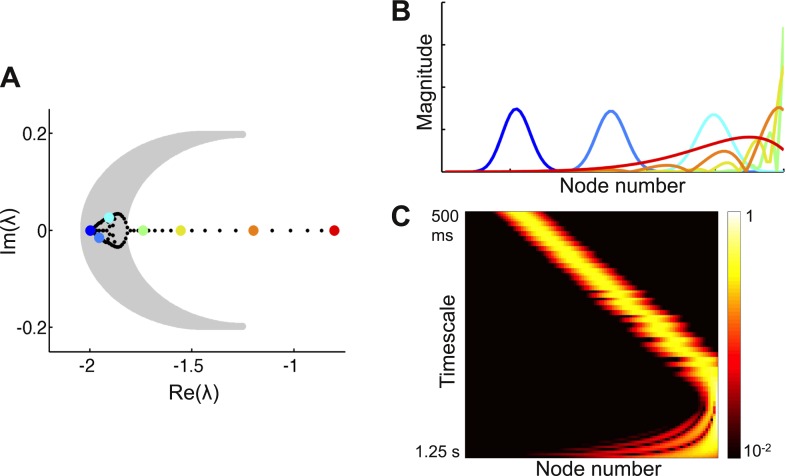
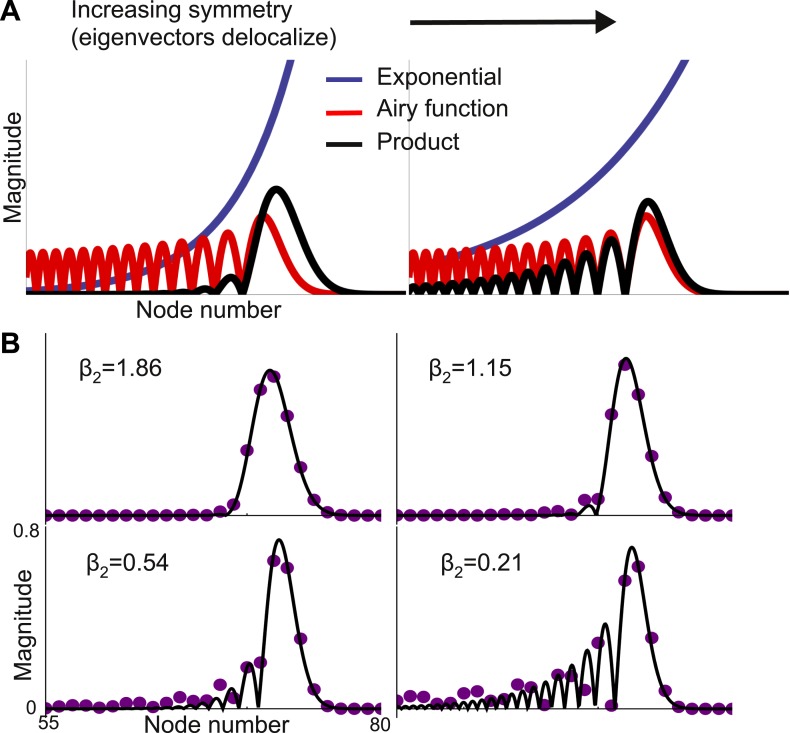
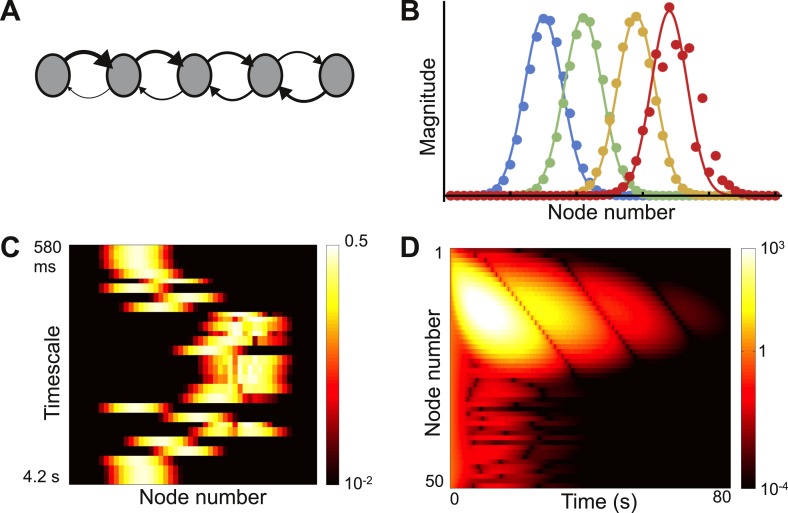
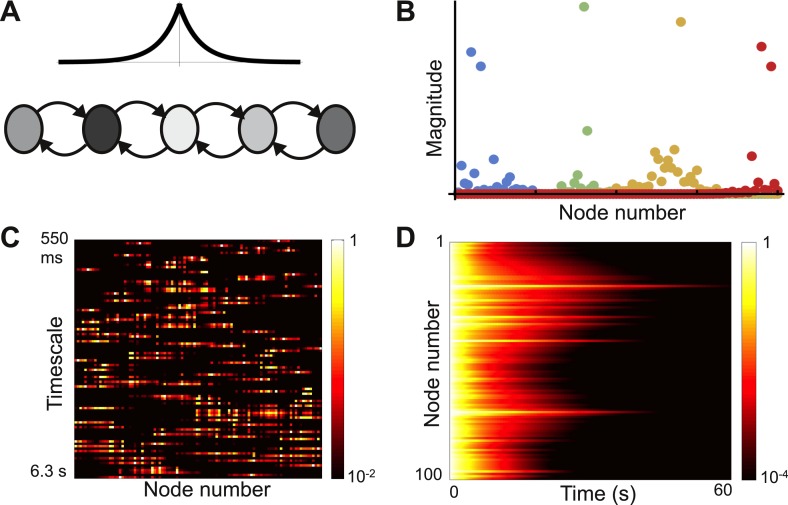
Neurons show diverse timescales, so that different parts of a network respond with disparate temporal dynamics. Such diversity is observed both when comparing timescales across brain areas and among cells within local populations; the underlying circuit mechanism remains unknown. We examine conditions under which spatially local connectivity can produce such diverse temporal behavior. In a linear network, timescales are segregated if the eigenvectors of the connectivity matrix are localized to different parts of the network. We develop a framework to predict the shapes of localized eigenvectors. Notably, local connectivity alone is insufficient for separate timescales. However, localization of timescales can be realized by heterogeneity in the connectivity profile, and we demonstrate two classes of network architecture that allow such localization. Our results suggest a framework to relate structural heterogeneity to functional diversity and, beyond neural dynamics, are generally applicable to the relationship between structure and dynamics in biological networks. DOI: http://dx.doi.org/10.7554/eLife.01239.001.
神经元表现出不同的时间尺度,因此网络的不同部分会以不同的时间动态做出反应。在比较不同脑区的时间尺度以及局部群体内细胞之间的时间尺度时,都能观察到这种多样性;其潜在的电路机制仍然未知。我们研究了空间局部连接性能够产生这种多样时间行为的条件。在一个线性网络中,如果连接矩阵的特征向量定位于网络的不同部分,那么时间尺度就会被分离。我们开发了一个框架来预测局部特征向量的形状。值得注意的是,仅局部连接性不足以实现时间尺度的分离。然而,时间尺度的局部化可以通过连接性分布的异质性来实现,并且我们展示了两类允许这种局部化的网络架构。我们的结果提出了一个将结构异质性与功能多样性联系起来的框架,并且除了神经动力学之外,该框架普遍适用于生物网络中结构与动态之间的关系。DOI: http://dx.doi.org/10.7554/eLife.01239.001 。