Department of Clinical and Movement Neurosciences, University College London, London, United Kingdom.
Wellcome Trust Centre for Neuroimaging, University College London, London, United Kingdom.
Front Neural Circuits. 2020 Dec 21;14:615626. doi: 10.3389/fncir.2020.615626. eCollection 2020.
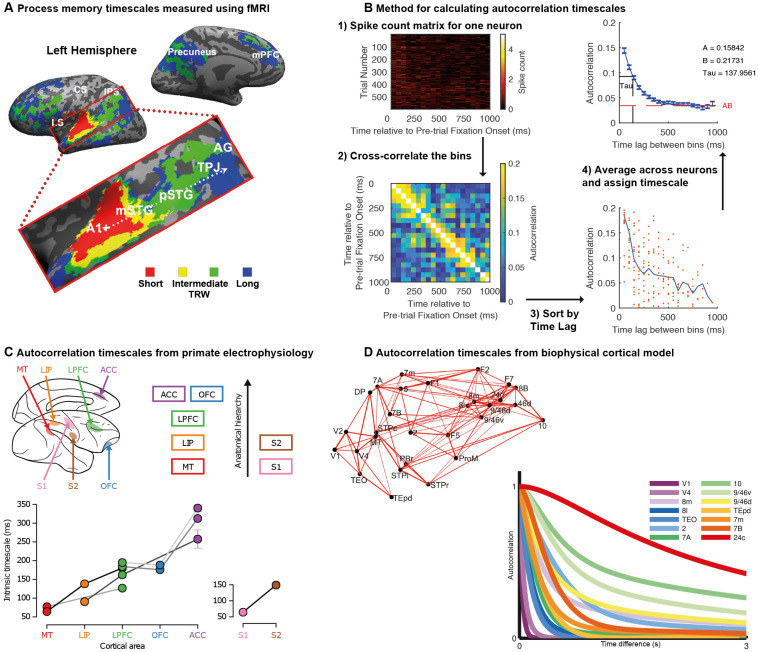
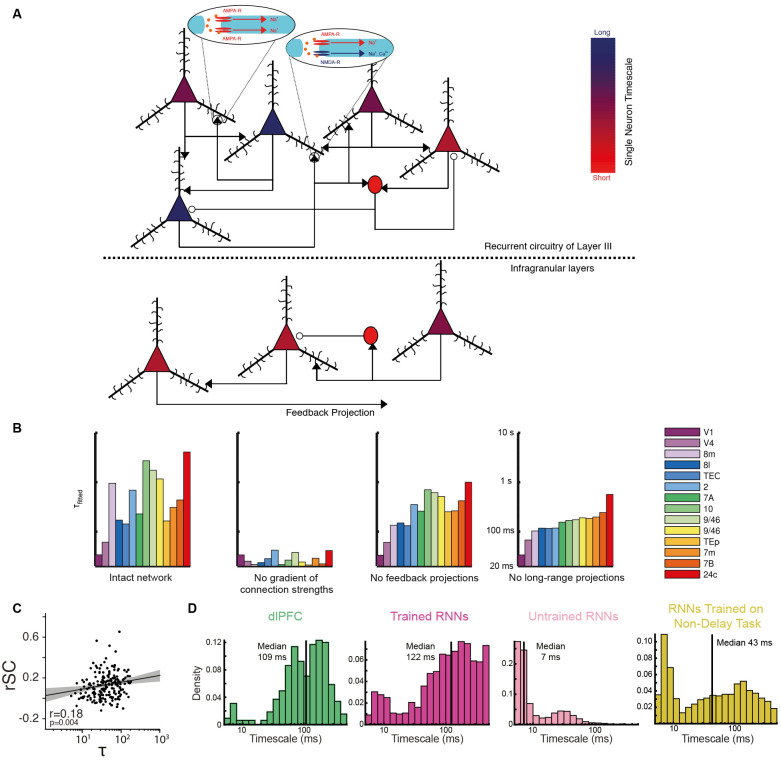
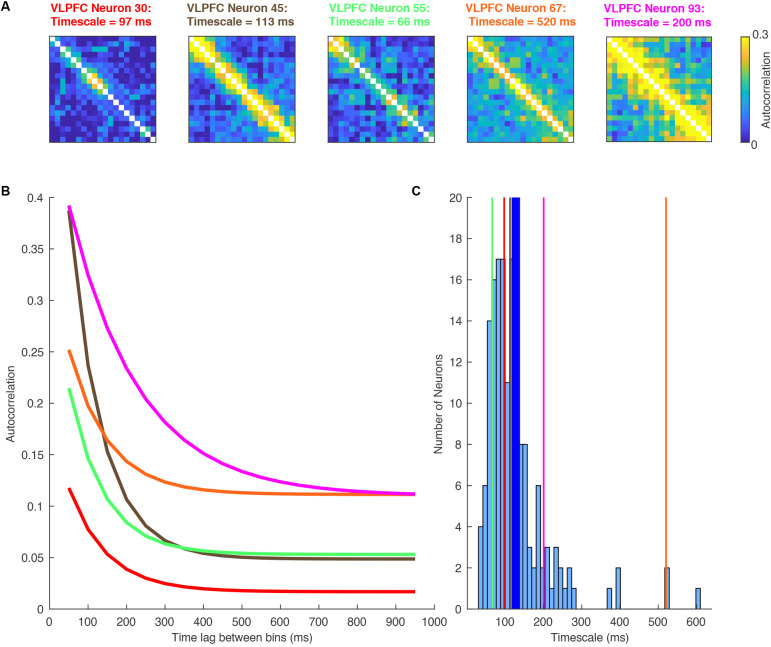
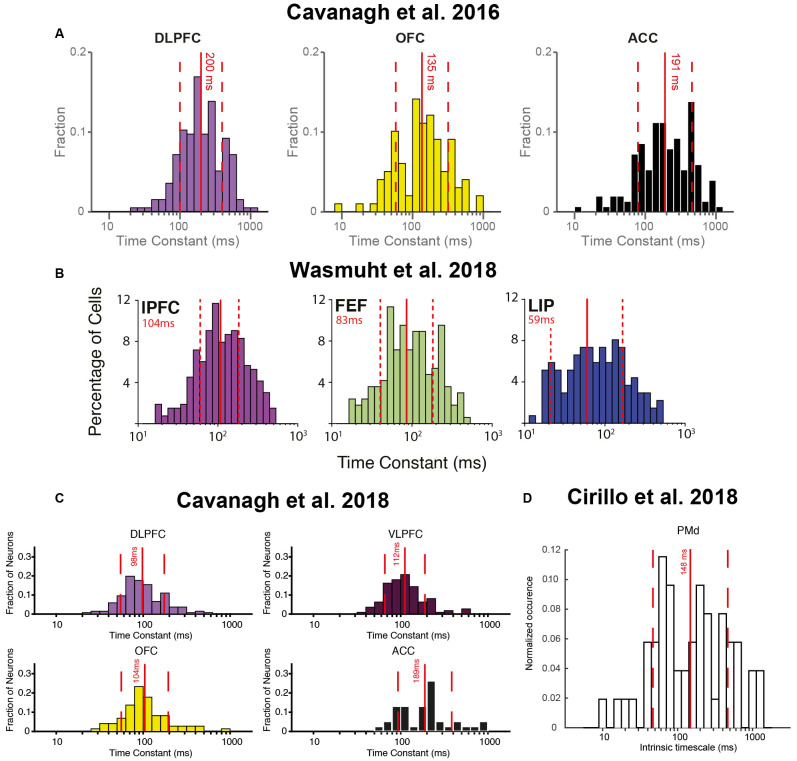
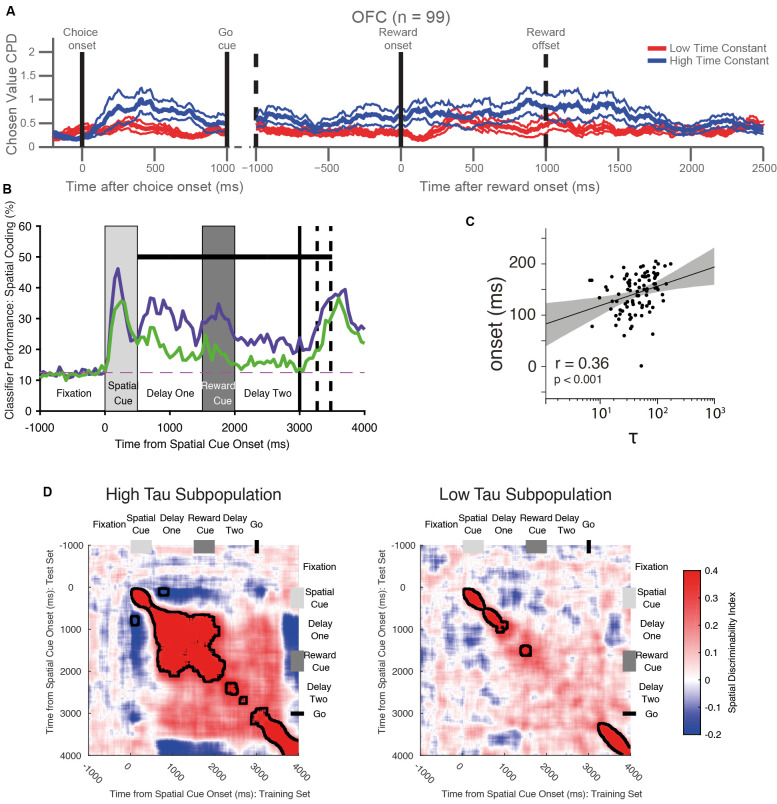
Neural processing occurs across a range of temporal scales. To facilitate this, the brain uses fast-changing representations reflecting momentary sensory input alongside more temporally extended representations, which integrate across both short and long temporal windows. The temporal flexibility of these representations allows animals to behave adaptively. Short temporal windows facilitate adaptive responding in dynamic environments, while longer temporal windows promote the gradual integration of information across time. In the cognitive and motor domains, the brain sets overarching goals to be achieved within a long temporal window, which must be broken down into sequences of actions and precise movement control processed across much shorter temporal windows. Previous human neuroimaging studies and large-scale artificial network models have ascribed different processing timescales to different cortical regions, linking this to each region's position in an anatomical hierarchy determined by patterns of inter-regional connectivity. However, even within cortical regions, there is variability in responses when studied with single-neuron electrophysiology. Here, we review a series of recent electrophysiology experiments that demonstrate the heterogeneity of temporal receptive fields at the level of single neurons within a cortical region. This heterogeneity appears functionally relevant for the computations that neurons perform during decision-making and working memory. We consider anatomical and biophysical mechanisms that may give rise to a heterogeneity of timescales, including recurrent connectivity, cortical layer distribution, and neurotransmitter receptor expression. Finally, we reflect on the computational relevance of each brain region possessing a heterogeneity of neuronal timescales. We argue that this architecture is of particular importance for sensory, motor, and cognitive computations.
神经处理发生在多个时间尺度上。为了实现这一点,大脑使用快速变化的表示来反映瞬间的感官输入,同时还使用更具时间扩展性的表示来整合短期和长期的时间窗口。这些表示的时间灵活性使动物能够适应行为。短期时间窗口有助于在动态环境中进行自适应反应,而较长的时间窗口则促进信息在时间上的逐渐整合。在认知和运动领域,大脑设定了在长时间窗口内实现的总体目标,这些目标必须分解为动作序列,并通过更短的时间窗口来精确控制运动。以前的人类神经影像学研究和大规模人工网络模型将不同的处理时间尺度归因于不同的皮质区域,将其与每个区域在由区域间连接模式决定的解剖学层次结构中的位置联系起来。然而,即使在皮质区域内,使用单细胞电生理学进行研究时,反应也存在可变性。在这里,我们回顾了一系列最近的电生理学实验,这些实验证明了单个皮质区域内单个神经元的时间感受野的异质性。这种异质性似乎对神经元在决策和工作记忆过程中执行的计算具有功能相关性。我们考虑了可能导致时间尺度异质性的解剖学和生物物理机制,包括递归连接、皮质层分布和神经递质受体表达。最后,我们反思了每个大脑区域具有神经元时间尺度异质性的计算相关性。我们认为,这种架构对于感觉、运动和认知计算特别重要。