RNA. 2014 Mar;20(3):295-307. doi: 10.1261/rna.041137.113. Epub 2014 Jan 21.
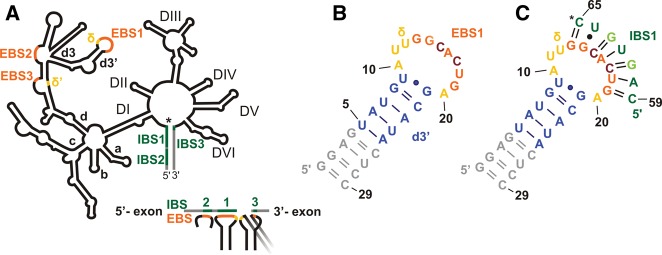
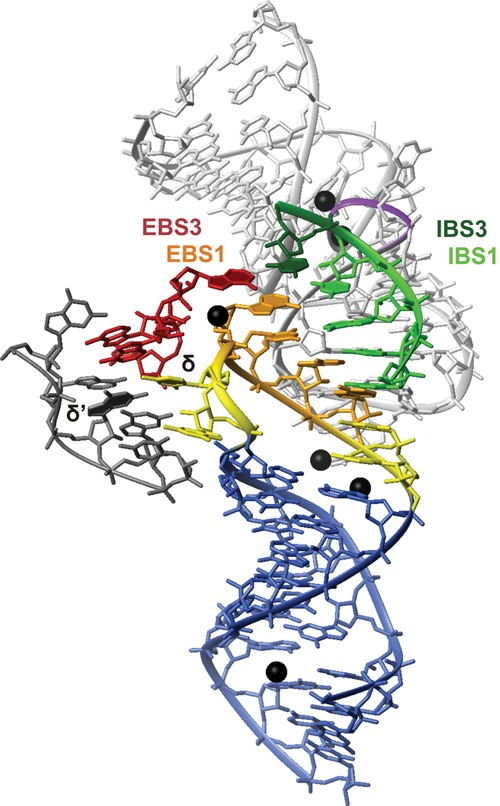
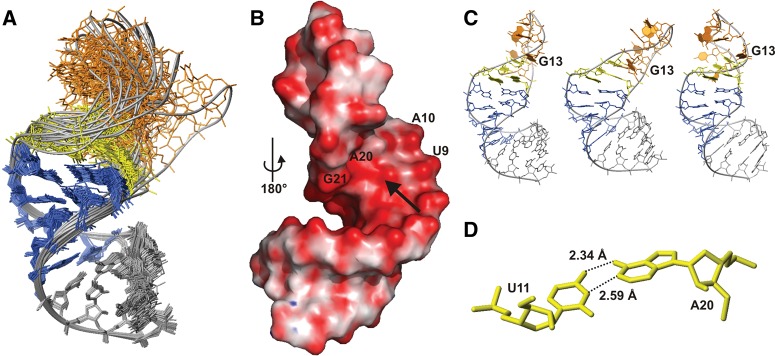
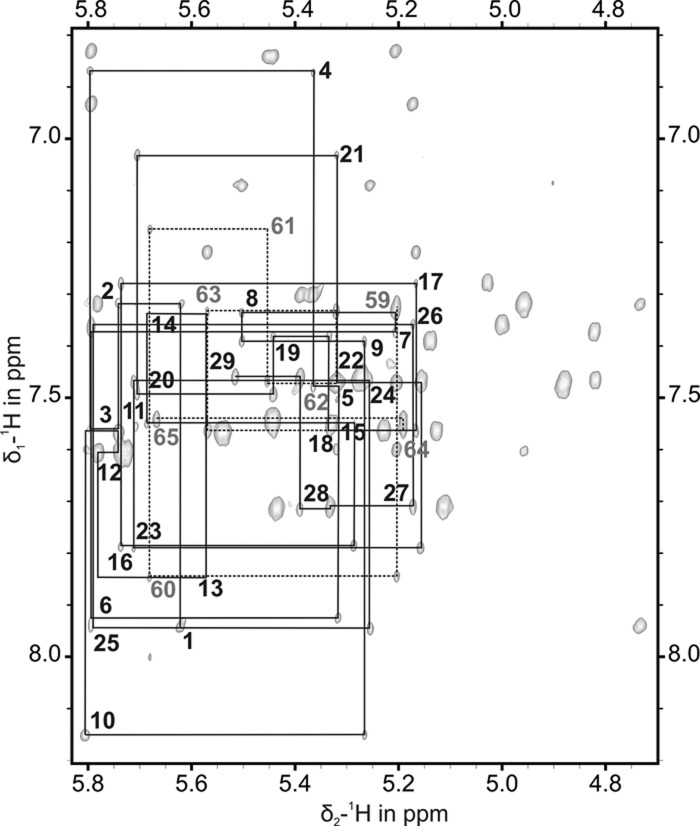
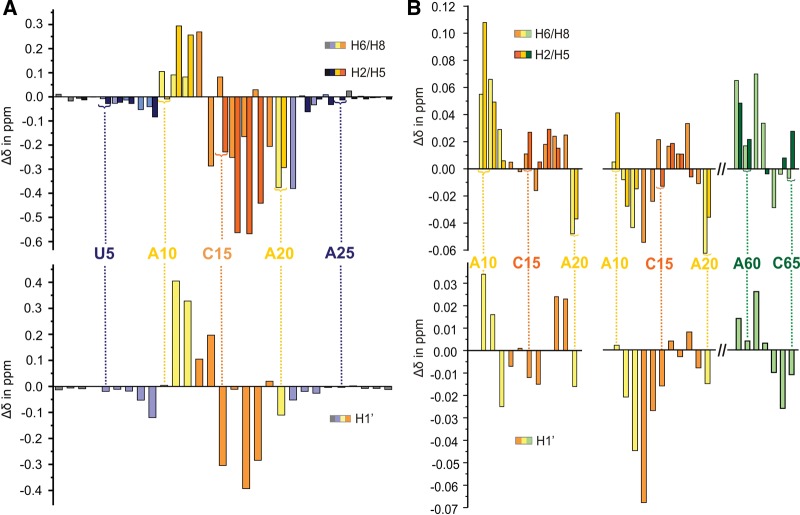
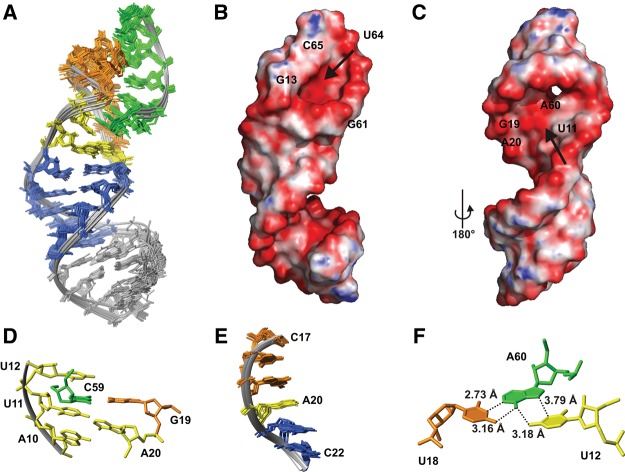
A crucial step of the self-splicing reaction of group II intron ribozymes is the recognition of the 5' exon by the intron. This recognition is achieved by two regions in domain 1 of the intron, the exon-binding sites EBS1 and EBS2 forming base pairs with the intron-binding sites IBS1 and IBS2 located at the end of the 5' exon. The complementarity of the EBS1•IBS1 contact is most important for ensuring site-specific cleavage of the phosphodiester bond between the 5' exon and the intron. Here, we present the NMR solution structures of the d3' hairpin including EBS1 free in solution and bound to the IBS1 7-mer. In the unbound state, EBS1 is part of a flexible 11-nucleotide (nt) loop. Binding of IBS1 restructures and freezes the entire loop region. Mg(2+) ions are bound near the termini of the EBS1•IBS1 helix, stabilizing the interaction. Formation of the 7-bp EBS1•IBS1 helix within a loop of only 11 nt forces the loop backbone to form a sharp turn opposite of the splice site, thereby presenting the scissile phosphate in a position that is structurally unique.
内含子核酶自我剪接反应的关键步骤是内含子识别 5' 外显子。这种识别是通过内含子 1 结构域中的两个区域来实现的,外显子结合位点 EBS1 和 EBS2 与位于 5' 外显子末端的内含子结合位点 IBS1 和 IBS2 形成碱基对。EBS1•IBS1 接触的互补性对于确保 5' 外显子和内含子之间磷酸二酯键的特异性切割至关重要。在这里,我们展示了 d3' 发夹的 NMR 溶液结构,其中 EBS1 在溶液中是游离的,与 IBS1 7 -mer 结合。在非结合状态下,EBS1 是一个灵活的 11 个核苷酸(nt)环的一部分。IBS1 的结合使整个环区发生构象重排并固定。Mg(2+)离子靠近 EBS1•IBS1 螺旋的末端结合,稳定了相互作用。在只有 11 个核苷酸的环内形成 7 个碱基对的 EBS1•IBS1 螺旋迫使环骨架形成与剪接位点相反的急转弯,从而使剪切磷酸基团处于独特的结构位置。