Genty Emilie, Clay Zanna, Hobaiter Catherine, Zuberbühler Klaus
Cognitive Science Centre, University of Neuchâtel, Neuchâtel, Switzerland ; School of Psychology and Neuroscience, University of St Andrews, Fife, United Kingdom.
Living Links, Yerkes National Primate Research Center, Emory University, Atlanta, Georgia, United States of America.
PLoS One. 2014 Jan 15;9(1):e84738. doi: 10.1371/journal.pone.0084738. eCollection 2014.
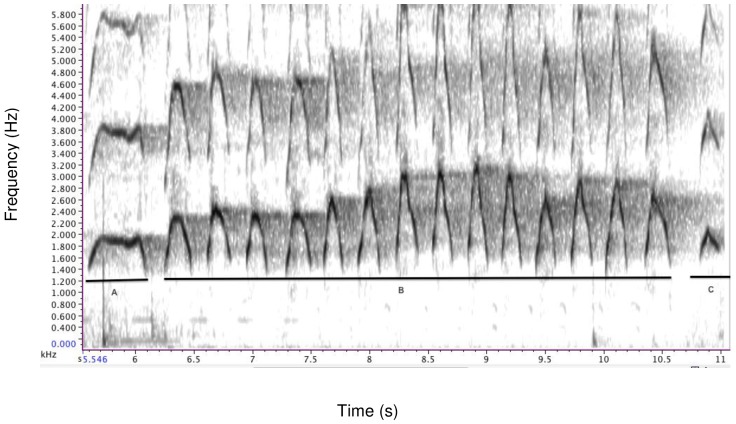
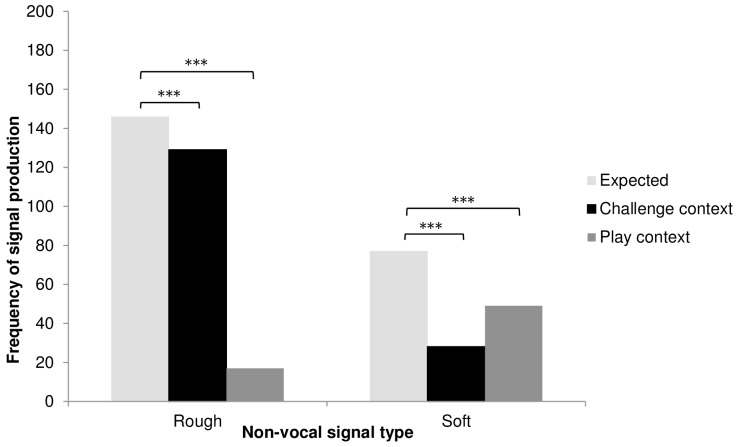
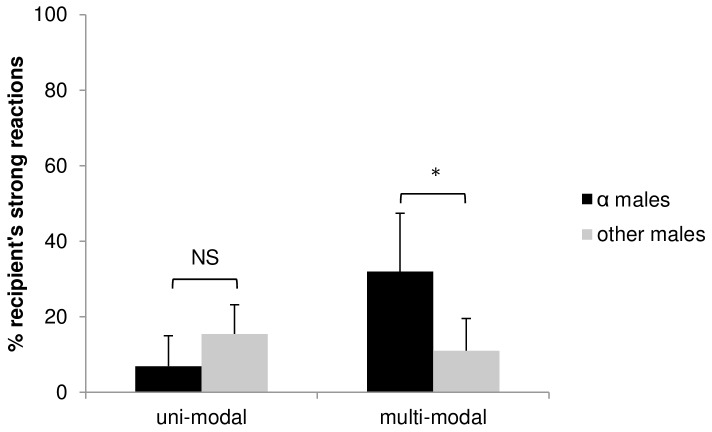
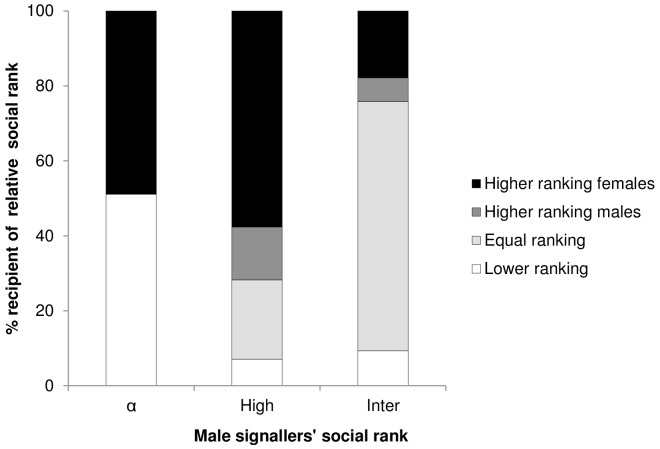
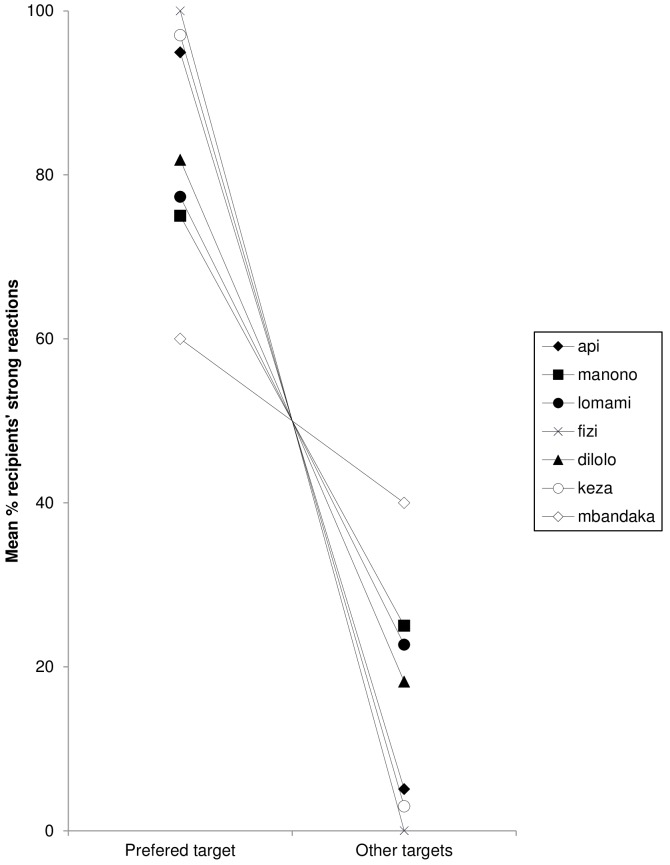
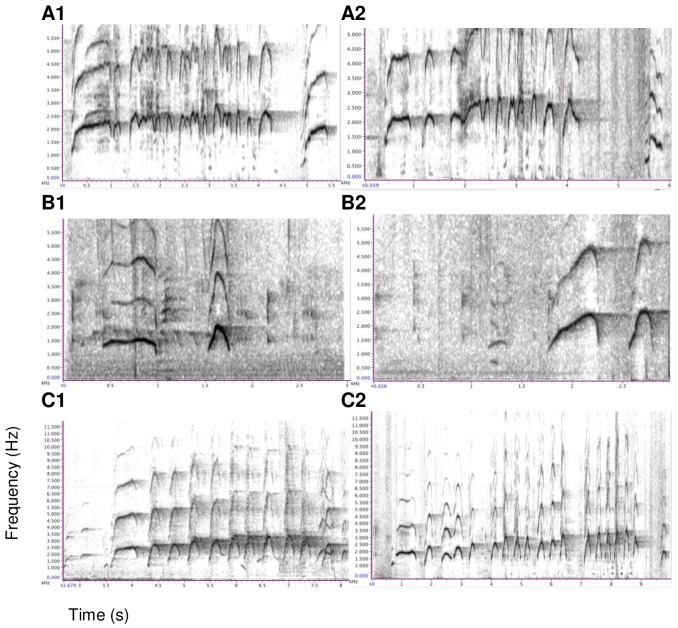
'Contest hoots' are acoustically complex vocalisations produced by adult and subadult male bonobos (Pan paniscus). These calls are often directed at specific individuals and regularly combined with gestures and other body signals. The aim of our study was to describe the multi-modal use of this call type and to clarify its communicative and social function. To this end, we observed two large groups of bonobos, which generated a sample of 585 communicative interactions initiated by 10 different males. We found that contest hooting, with or without other associated signals, was produced to challenge and provoke a social reaction in the targeted individual, usually agonistic chase. Interestingly, 'contest hoots' were sometimes also used during friendly play. In both contexts, males were highly selective in whom they targeted by preferentially choosing individuals of equal or higher social rank, suggesting that the calls functioned to assert social status. Multi-modal sequences were not more successful in eliciting reactions than contest hoots given alone, but we found a significant difference in the choice of associated gestures between playful and agonistic contexts. During friendly play, contest hoots were significantly more often combined with soft than rough gestures compared to agonistic challenges, while the calls' acoustic structure remained the same. We conclude that contest hoots indicate the signaller's intention to interact socially with important group members, while the gestures provide additional cues concerning the nature of the desired interaction.
“竞争呼喊”是成年和亚成年雄性倭黑猩猩(Pan paniscus)发出的声学上复杂的叫声。这些叫声通常针对特定个体,并经常与手势和其他身体信号结合使用。我们研究的目的是描述这种叫声类型的多模态使用,并阐明其交流和社会功能。为此,我们观察了两组大型倭黑猩猩群体,它们产生了由10只不同雄性发起的585次交流互动样本。我们发现,无论有无其他相关信号,竞争呼喊都是为了挑战并引发目标个体的社会反应,通常是激烈的追逐。有趣的是,“竞争呼喊”有时也在友好玩耍时使用。在这两种情况下,雄性在选择目标时都具有高度选择性,他们优先选择社会地位相等或更高的个体,这表明这些叫声起到了维护社会地位的作用。多模态序列在引发反应方面并不比单独发出的竞争呼喊更成功,但我们发现在玩耍和激烈情境中相关手势的选择存在显著差异。在友好玩耍期间,与激烈挑战相比,竞争呼喊与柔和手势结合的频率明显高于与粗暴手势结合的频率,而叫声的声学结构保持不变。我们得出结论,竞争呼喊表明信号发出者有意与重要群体成员进行社交互动,而手势则提供了有关所需互动性质的额外线索。