Vaughan Roger A, Gannon Nicholas P, Garcia-Smith Randi, Licon-Munoz Yamhilette, Barberena Miguel A, Bisoffi Marco, Trujillo Kristina A
Department of Health, Exercise and Sports Science, University of New Mexico, Albuquerque, NM 87131, USA.
Mol Cancer. 2014 Jan 24;13:14. doi: 10.1186/1476-4598-13-14.
Deregulated energetics is a property of most cancer cells. This phenomenon, known as the Warburg Effect or aerobic glycolysis, is characterized by increased glucose uptake, lactate export and extracellular acidification, even in the presence of oxygen. β-alanine is a non-essential amino acid that has previously been shown to be metabolized into carnosine, which functions as an intracellular buffer. Because of this buffering capacity, we investigated the effects of β-alanine on the metabolic cancerous phenotype.
Non-malignant MCF-10a and malignant MCF-7 breast epithelial cells were treated with β-alanine at 100 mM for 24 hours. Aerobic glycolysis was quantified by measuring extracellular acidification rate (ECAR) and oxidative metabolism was quantified by measuring oxygen consumption rate (OCR). mRNA of metabolism-related genes was quantified by qRT-PCR with corresponding protein expression quantified by immunoblotting, or by flow cytometry which was verified by confocal microscopy. Mitochondrial content was quantified using a mitochondria-specific dye and measured by flow cytometry.
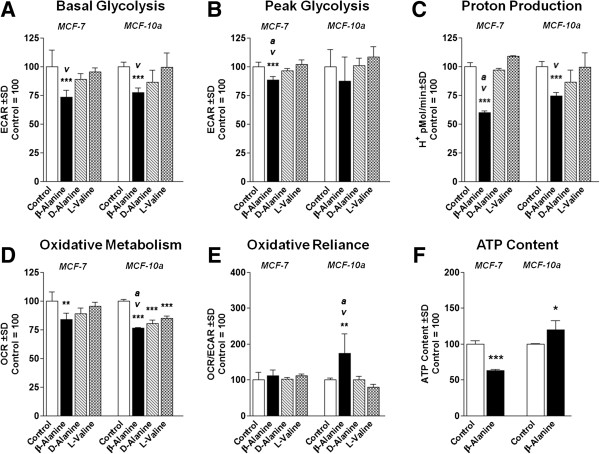
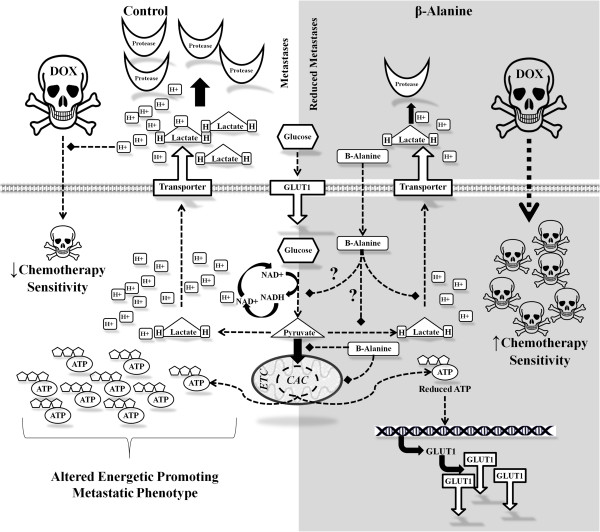
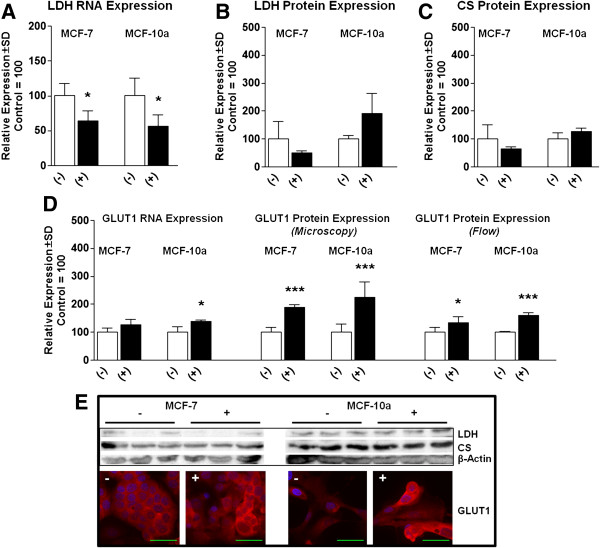
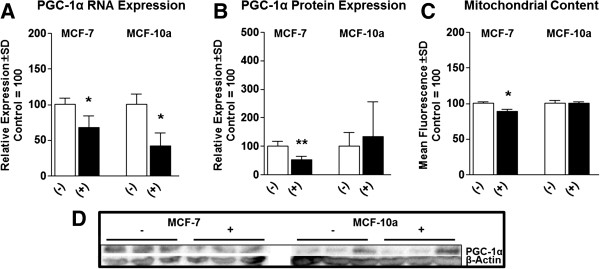
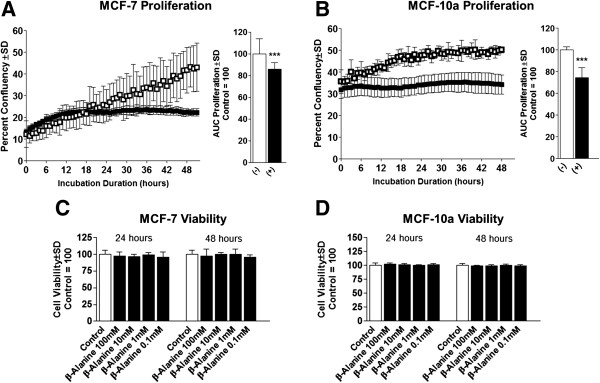
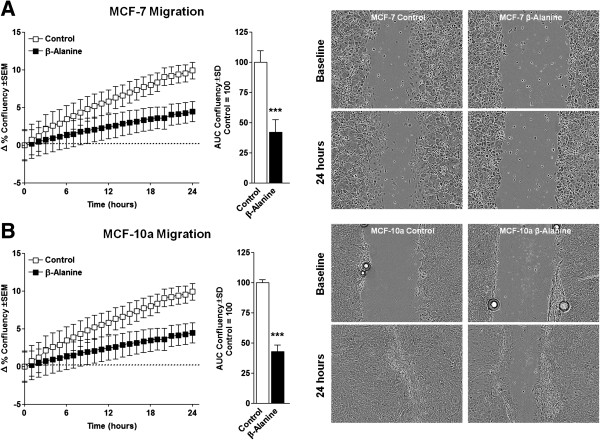
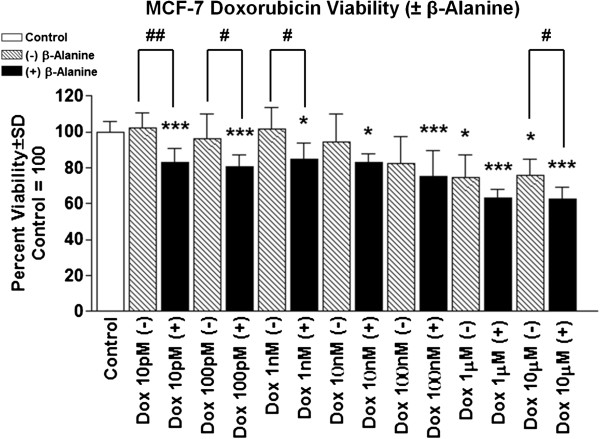
Cells treated with β-alanine displayed significantly suppressed basal and peak ECAR (aerobic glycolysis), with simultaneous increase in glucose transporter 1 (GLUT1). Additionally, cells treated with β-alanine exhibited significantly reduced basal and peak OCR (oxidative metabolism), which was accompanied by reduction in mitochondrial content with subsequent suppression of genes which promote mitochondrial biosynthesis. Suppression of glycolytic and oxidative metabolism by β-alanine resulted in the reduction of total metabolic rate, although cell viability was not affected. Because β-alanine treatment reduces extracellular acidity, a constituent of the invasive microenvironment that promotes progression, we investigated the effect of β-alanine on breast cell viability and migration. β-alanine was shown to reduce both cell migration and proliferation without acting in a cytotoxic fashion. Moreover, β-alanine significantly increased malignant cell sensitivity to doxorubicin, suggesting a potential role as a co-therapeutic agent.
Taken together, our results suggest that β-alanine may elicit several anti-tumor effects. Our observations support the need for further investigation into the mechanism(s) of action and specificity of β-alanine as a co-therapeutic agent in the treatment of breast tumors.
能量代谢失调是大多数癌细胞的一个特性。这种现象被称为瓦伯格效应或有氧糖酵解,其特征是即使在有氧存在的情况下,葡萄糖摄取增加、乳酸输出增加和细胞外酸化增强。β-丙氨酸是一种非必需氨基酸,此前已被证明可代谢为肌肽,肌肽起到细胞内缓冲剂的作用。鉴于这种缓冲能力,我们研究了β-丙氨酸对癌症代谢表型的影响。
用100 mM的β-丙氨酸处理非恶性MCF-10a和恶性MCF-7乳腺上皮细胞24小时。通过测量细胞外酸化率(ECAR)来量化有氧糖酵解,通过测量耗氧率(OCR)来量化氧化代谢。通过qRT-PCR对代谢相关基因的mRNA进行定量,通过免疫印迹对相应的蛋白质表达进行定量,或通过共聚焦显微镜验证的流式细胞术进行定量。使用线粒体特异性染料对线粒体含量进行定量,并通过流式细胞术进行测量。
用β-丙氨酸处理的细胞显示基础和峰值ECAR(有氧糖酵解)显著受到抑制,同时葡萄糖转运蛋白1(GLUT1)增加。此外,用β-丙氨酸处理的细胞基础和峰值OCR(氧化代谢)显著降低,这伴随着线粒体含量的减少以及随后促进线粒体生物合成的基因的抑制。β-丙氨酸对糖酵解和氧化代谢的抑制导致总代谢率降低,尽管细胞活力未受影响。由于β-丙氨酸处理降低了细胞外酸度,而细胞外酸度是促进进展的侵袭性微环境的一个组成部分,我们研究了β-丙氨酸对乳腺细胞活力和迁移的影响。结果表明,β-丙氨酸可降低细胞迁移和增殖,且无细胞毒性作用。此外,β-丙氨酸显著增加了恶性细胞对阿霉素的敏感性,提示其作为辅助治疗药物的潜在作用。
综上所述,我们的结果表明β-丙氨酸可能引发多种抗肿瘤作用。我们的观察结果支持进一步研究β-丙氨酸作为辅助治疗药物在治疗乳腺肿瘤中的作用机制和特异性的必要性。