Tian Li, Li Chuanwei, Liu Yinghui, Chen Yucheng, Fu Mingde
Laboratory of Endocrinology and Metabolism, West China Hospital, Sichuan University, Chengdu, Sichuan, People's Republic of China.
Cardiovascular Department, West China Hospital, Sichuan University, Chengdu, Sichuan, People's Republic of China.
PLoS One. 2014 Jan 23;9(1):e85114. doi: 10.1371/journal.pone.0085114. eCollection 2014.
High-density lipoprotein (HDL) enhances cholesterol efflux from the arterial wall and exhibits potent anti-inflammatory and anti-atherosclerosis (AS) properties. Whether raised HDL levels will clinically benefit patients with acute coronary syndrome (ACS) and the value at which these effects will be apparent, however, is debatable. This study examined the HDL subclass distribution profile in patients with ACS.
Plasma HDL subclasses were measured in 158 patients with established ACS and quantified by two-dimensional gel electrophoresis and immunoblotting. ACS diagnosis was based on symptoms of cardiac ischemia, electrocardiogram (ECG) abnormalities, speciality cardiac enzyme change along with presence of coronary heart disease (CHD) on coronary angiography.
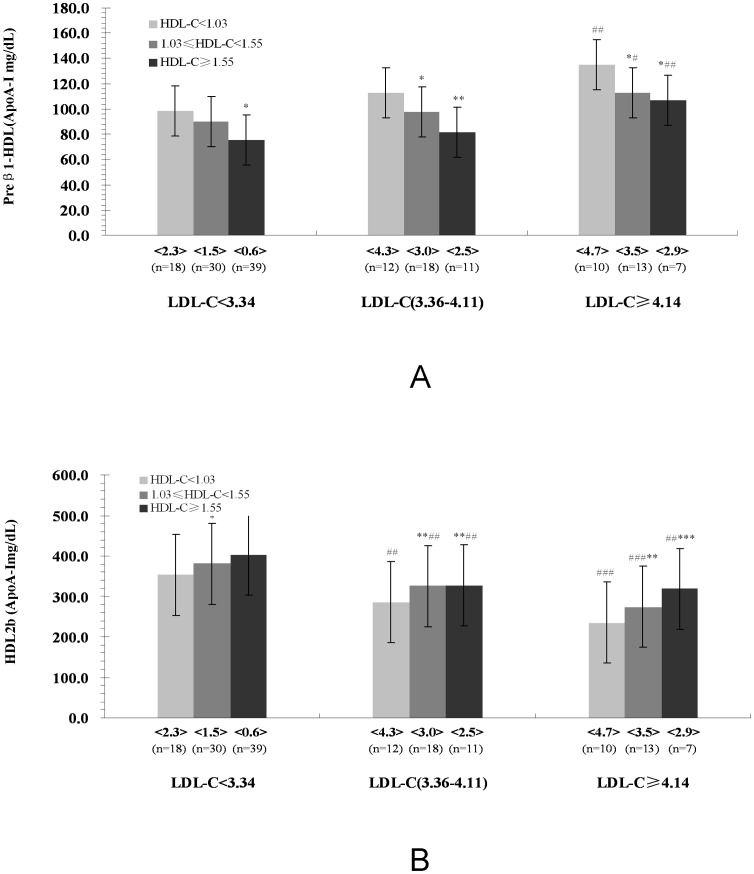
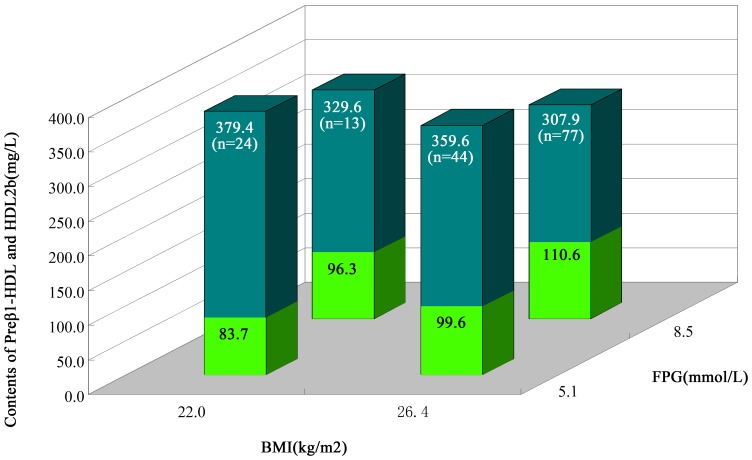
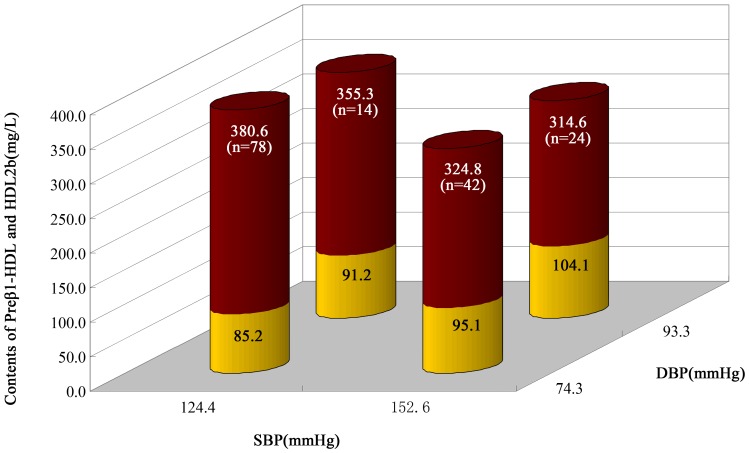
The small-sized preβ1-HDL, HDL3b, and HDL3a levels were significantly higher, and the large-sized HDL2a and HDL2b levels were significantly lower in patients with ACS than in those with stable angina pectoris (SAP) and in normal control subjects. Meanwhile, with an elevation in the low-density lipoprotein cholesterol (LDL-C), fasting plasma glucose (FPG), body mass index (BMI), and blood pressure (BP), and the reduction in the high density lipoprotein cholesterol (HDL-C) levels, the HDL2b contents significantly decreased and the preβ1-HDL contents significantly increased in patients with ACS. The correlation analysis revealed that the apolipoprotein (apo)A-I levels were positively and significantly with all HDL subclasses contents; plasma total cholesterol (TC) and fasting plasma glucose (FPG) levels were inversely associated with HDL2a, and HDL2b. Moreover, the FPG levels were positively related to HDL3c, HDL3b, and HDL3a in ACS patients.
The HDL subclass distribution profile remodeling was noted in the patients with ACS. Plasma lipoprotein and FPG levels, BP, and BMI play an important role in the HDL subclass metabolism disorder for patients with ACS. The HDL subclass distribution phenotype might be useful as a novel biomarker to assist in the risk stratification of patients with ACS.
高密度脂蛋白(HDL)可增强动脉壁的胆固醇外流,并具有强大的抗炎和抗动脉粥样硬化(AS)特性。然而,HDL水平升高是否会对急性冠状动脉综合征(ACS)患者产生临床益处以及在何种水平会出现这些效应仍存在争议。本研究检测了ACS患者的HDL亚类分布情况。
对158例确诊的ACS患者的血浆HDL亚类进行检测,并通过二维凝胶电泳和免疫印迹进行定量分析。ACS的诊断基于心脏缺血症状、心电图(ECG)异常、特异性心脏酶变化以及冠状动脉造影显示的冠心病(CHD)。
与稳定型心绞痛(SAP)患者和正常对照者相比,ACS患者中较小尺寸的前β1-HDL、HDL3b和HDL3a水平显著升高,而较大尺寸的HDL2a和HDL2b水平显著降低。同时,随着低密度脂蛋白胆固醇(LDL-C)、空腹血糖(FPG)、体重指数(BMI)和血压(BP)升高以及高密度脂蛋白胆固醇(HDL-C)水平降低,ACS患者的HDL2b含量显著下降,前β1-HDL含量显著增加。相关性分析显示,载脂蛋白(apo)A-I水平与所有HDL亚类含量呈显著正相关;血浆总胆固醇(TC)和空腹血糖(FPG)水平与HDL2a和HDL2b呈负相关。此外,FPG水平与ACS患者的HDL3c、HDL3b和HDL3a呈正相关。
ACS患者存在HDL亚类分布重塑。血浆脂蛋白、FPG水平、BP和BMI在ACS患者HDL亚类代谢紊乱中起重要作用。HDL亚类分布表型可能作为一种新型生物标志物,有助于ACS患者的危险分层。