Eckel Sandrah P, Linn William S, Berhane Kiros, Rappaport Edward B, Salam Muhammad T, Zhang Yue, Gilliland Frank D
Department of Preventive Medicine, University of Southern California, Los Angeles, California, United States of America.
Department of Internal Medicine, University of Utah, Salt Lake City, Utah, United States of America.
PLoS One. 2014 Jan 17;9(1):e85471. doi: 10.1371/journal.pone.0085471. eCollection 2014.
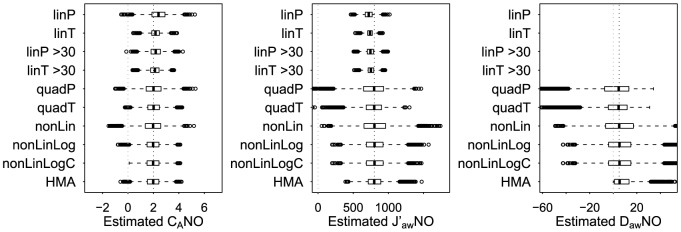
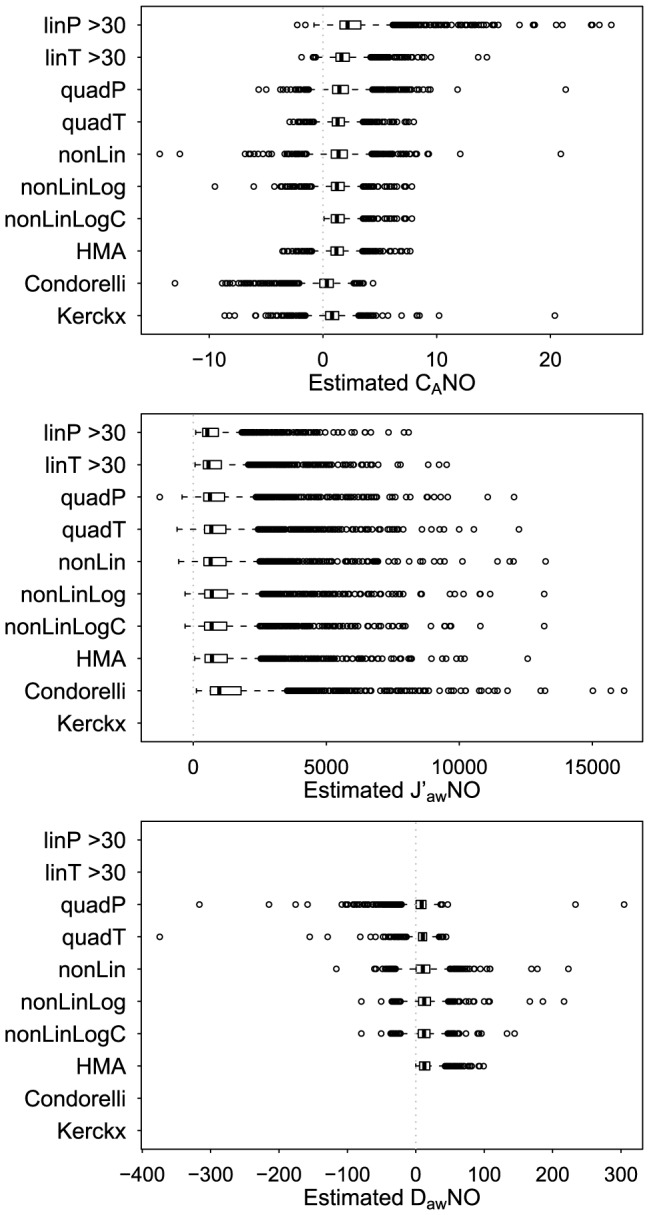
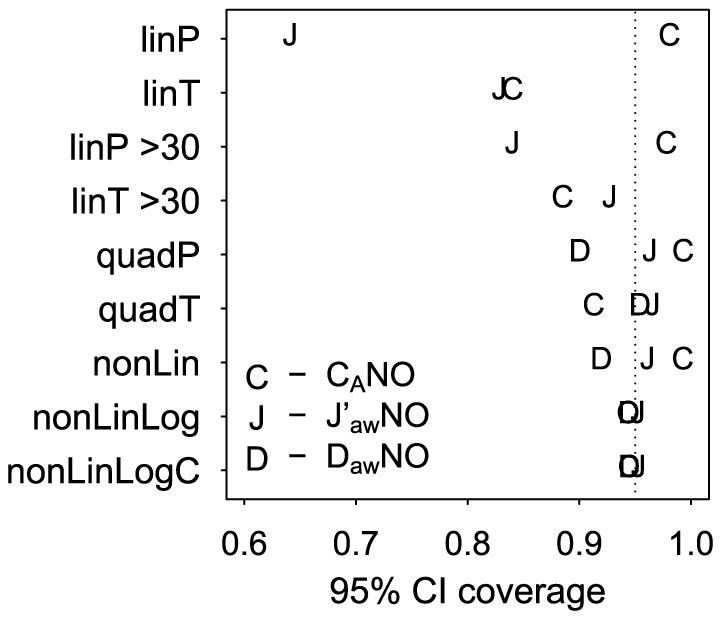
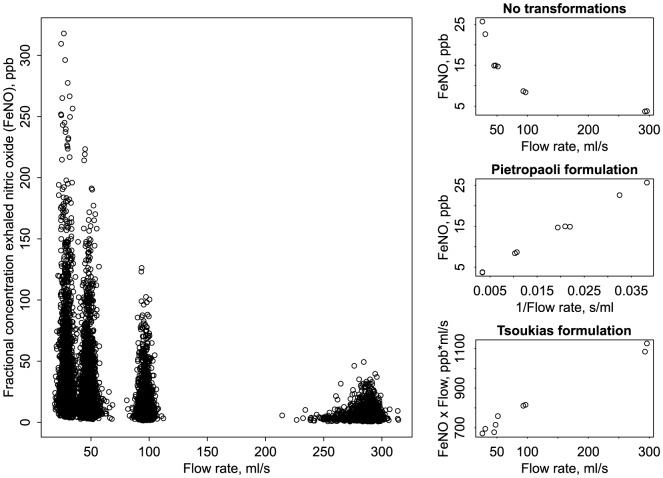
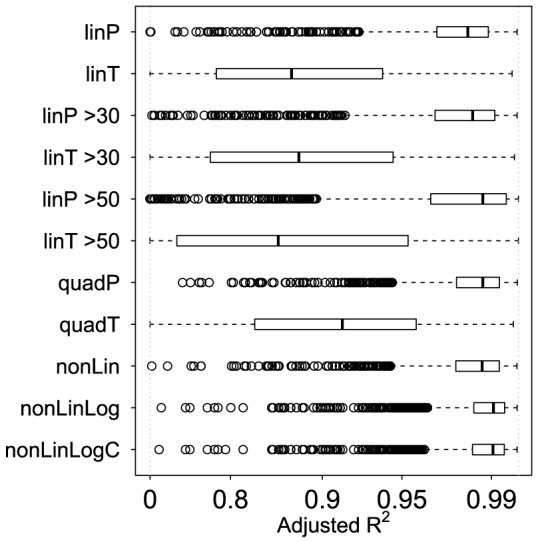
The fractional concentration of exhaled nitric oxide (FeNO) is a biomarker of airway inflammation that is being increasingly considered in clinical, occupational, and epidemiological applications ranging from asthma management to the detection of air pollution health effects. FeNO depends strongly on exhalation flow rate. This dependency has allowed for the development of mathematical models whose parameters quantify airway and alveolar compartment contributions to FeNO. Numerous methods have been proposed to estimate these parameters using FeNO measured at multiple flow rates. These methods--which allow for non-invasive assessment of localized airway inflammation--have the potential to provide important insights on inflammatory mechanisms. However, different estimation methods produce different results and a serious barrier to progress in this field is the lack of a single recommended method. With the goal of resolving this methodological problem, we have developed a unifying framework in which to present a comprehensive set of existing and novel statistical methods for estimating parameters in the simple two-compartment model. We compared statistical properties of the estimators in simulation studies and investigated model fit and parameter estimate sensitivity across methods using data from 1507 schoolchildren from the Southern California Children's Health Study, one of the largest multiple flow FeNO studies to date. We recommend a novel nonlinear least squares model with natural log transformation on both sides that produced estimators with good properties, satisfied model assumptions, and fit the Children's Health Study data well.
呼出一氧化氮分数浓度(FeNO)是气道炎症的生物标志物,在从哮喘管理到空气污染健康影响检测等临床、职业和流行病学应用中越来越受到关注。FeNO强烈依赖于呼气流量。这种依赖性促使了数学模型的发展,其参数可量化气道和肺泡腔对FeNO的贡献。已经提出了许多方法,利用在多个流量下测量的FeNO来估计这些参数。这些方法——能够对局部气道炎症进行无创评估——有可能为炎症机制提供重要见解。然而,不同的估计方法会产生不同的结果,该领域进展的一个严重障碍是缺乏单一推荐方法。为了解决这一方法学问题,我们开发了一个统一框架,用于展示一套全面的现有和新颖统计方法,以估计简单双室模型中的参数。我们在模拟研究中比较了估计器的统计特性,并使用来自南加州儿童健康研究的1507名学童的数据,研究了不同方法的模型拟合和参数估计敏感性,该研究是迄今为止最大的多流量FeNO研究之一。我们推荐一种新颖的非线性最小二乘模型,两边都进行自然对数变换,该模型产生的估计器具有良好的特性,满足模型假设,并且与儿童健康研究数据拟合良好。