Piombino Paola, Genovese Alessandro, Esposito Silvia, Moio Luigi, Cutolo Pier Paolo, Chambery Angela, Severino Valeria, Moneta Elisabetta, Smith Daniel P, Owens Sarah M, Gilbert Jack A, Ercolini Danilo
Department of Agricultural Sciences, University of Naples Federico II, Portici, Italy.
General and Laparoscopic Surgery Unit, S., Giovanni Bosco Hospital, Naples, Italy.
PLoS One. 2014 Jan 22;9(1):e85611. doi: 10.1371/journal.pone.0085611. eCollection 2014.
Recent evidence suggests that a lower extent of the retronasal aroma release correspond to a higher amount of ad libitum food intake. This has been regarded as one of the bases of behavioral choices towards food consumption in obese people. In this pilot study we investigated the hypothesis that saliva from obese individuals could be responsible for an alteration of the retro-nasal aroma release. We tested this hypothesis in vitro, by comparing the release of volatiles from a liquid food matrix (wine) after its interaction with saliva from 28 obese (O) and 28 normal-weight (N) individuals.
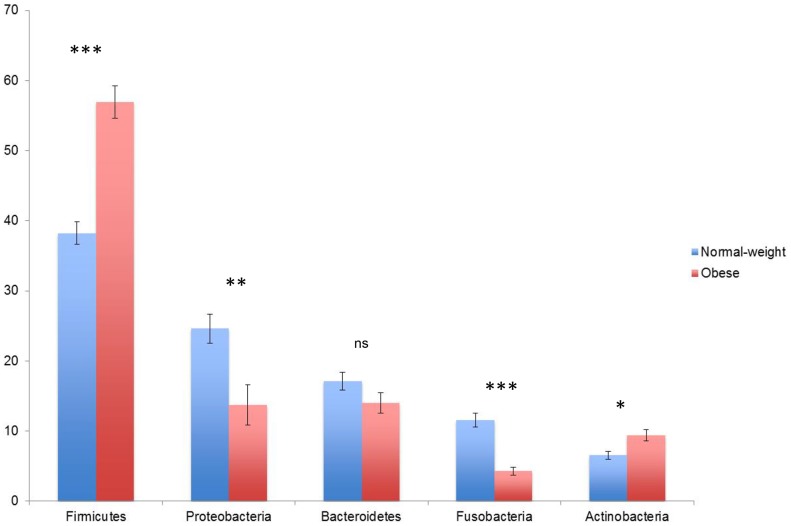
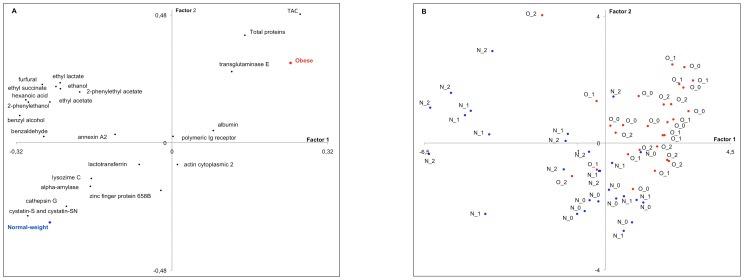
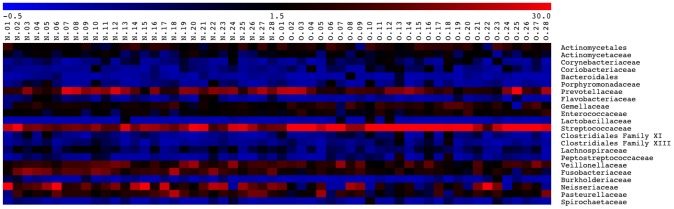
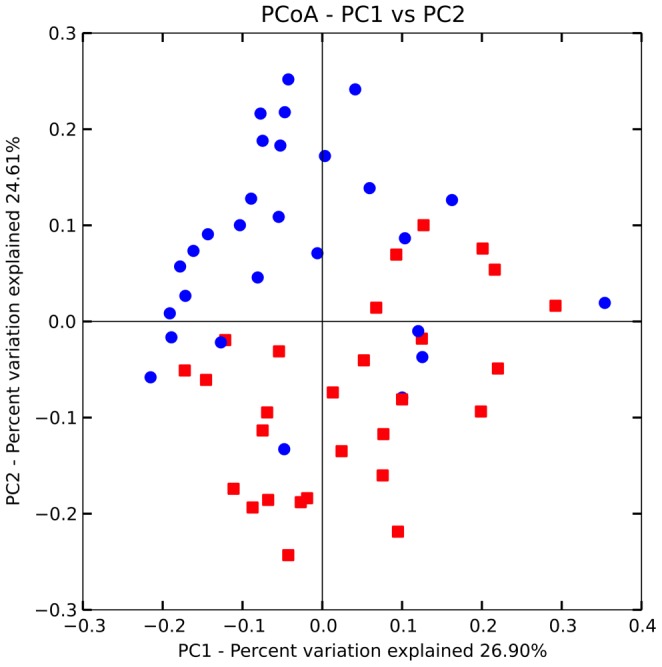
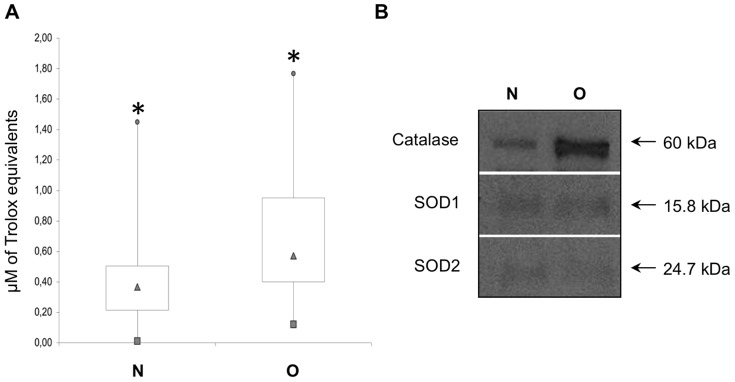
Amplicon sequencing of the 16S rRNA V4 region indicated that Firmicutes and Actinobacteria were more abundant in O, while Proteobacteria and Fusobacteria dominated in N. Streptococcaceae were significantly more abundant in the O subjects and constituted 34% and 19% on average of the saliva microbiota of O and N subjects, respectively. The Total Antioxidant Capacity was higher in O vs N saliva samples. A model mouth system was used to test whether the in-mouth wine aroma release differs after the interaction with O or N saliva. In O samples, a 18% to 60% significant decrease in the mean concentration of wine volatiles was detected as a result of interaction with saliva, compared with N. This suppression was linked to biochemical differences in O and N saliva composition, which include protein content.
Microbiological and biochemical differences were found in O vs N saliva samples. An impaired retronasal aroma release from white wine was detected in vitro and linked to compositional differences between saliva from obese and normal-weight subjects. Additional in vivo investigations on diverse food matrices could contribute to understanding whether a lower olfactory stimulation due to saliva composition can be a co-factor in the development/maintenance of obesity.
最近的证据表明,鼻后香气释放程度较低与随意进食量较高相对应。这被视为肥胖人群食物消费行为选择的基础之一。在这项初步研究中,我们调查了肥胖个体的唾液可能导致鼻后香气释放改变的假设。我们通过比较液体食物基质(葡萄酒)与28名肥胖(O)和28名正常体重(N)个体的唾液相互作用后挥发性物质的释放,在体外测试了这一假设。
16S rRNA V4区域的扩增子测序表明,厚壁菌门和放线菌门在O组中更为丰富,而变形菌门和梭杆菌门在N组中占主导。链球菌科在O组受试者中明显更为丰富,分别平均占O组和N组受试者唾液微生物群的34%和19%。O组唾液样本的总抗氧化能力高于N组。使用模拟口腔系统测试与O组或N组唾液相互作用后口腔内葡萄酒香气释放是否不同。与N组相比,在O组样本中,与唾液相互作用后葡萄酒挥发物的平均浓度显著下降了18%至60%。这种抑制与O组和N组唾液成分的生化差异有关,包括蛋白质含量。
在O组和N组唾液样本中发现了微生物学和生化差异。在体外检测到白葡萄酒鼻后香气释放受损,并与肥胖和正常体重受试者唾液的成分差异有关。对多种食物基质进行额外的体内研究可能有助于了解由于唾液成分导致的嗅觉刺激降低是否可能是肥胖发展/维持的一个辅助因素。