Chuh Antonio, Zawar Vijay, Law Michelle, Sciallis Gabriel
School of Public Health, The Chinese University of Hong Kong and The Prince of Wales Hospital, Hong Kong;
Skin Diseases Centre, Nashik, India;
Infect Dis Rep. 2012 Feb 15;4(1):e12. doi: 10.4081/idr.2012.e12. eCollection 2012 Jan 2.
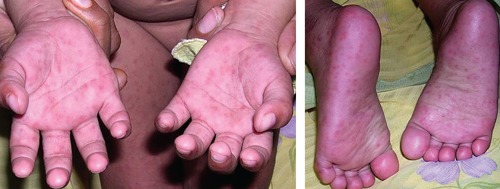
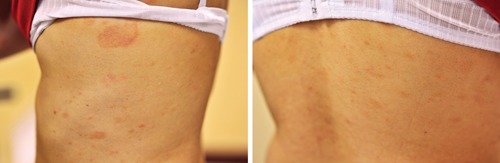
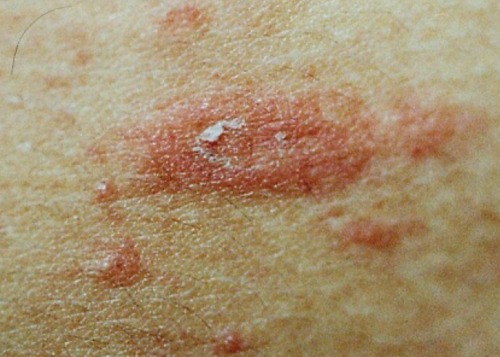
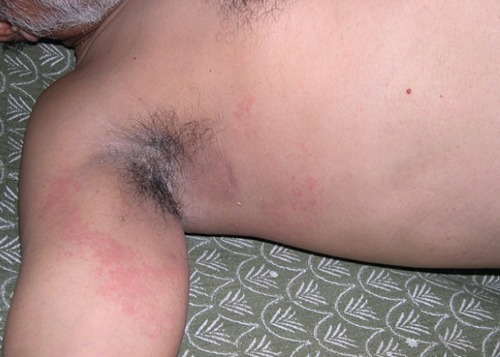
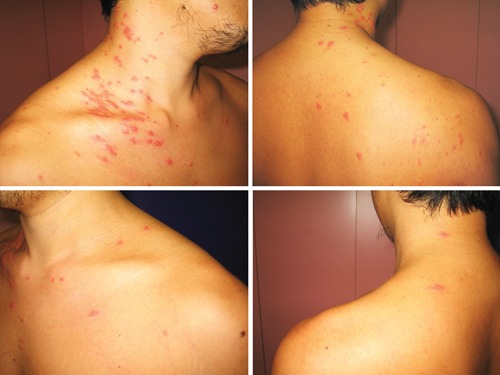
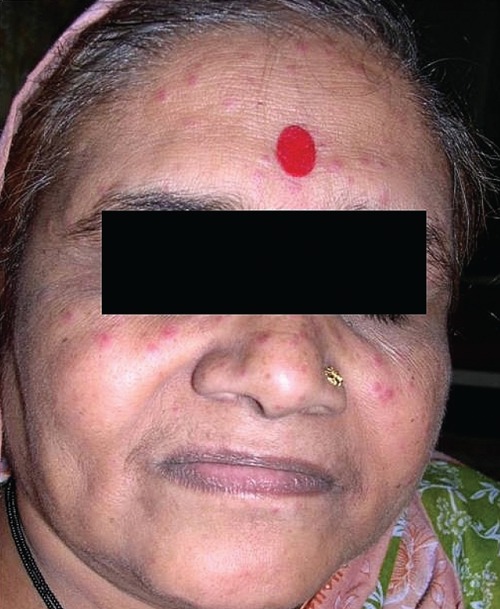
Several exanthems including Gianotti-Crosti syndrome, pityriasis rosea, asymmetrical periflexural exanthem, eruptive pseudoangiomatosis, and papular-purpuric gloves and socks syndrome are suspected to be caused by viruses. These viruses are potentially dangerous. Gianotti-Crosti syndrome is related to hepatitis B virus infection which is the commonest cause of hepatocellular carcinoma, and Epstein-Barr virus infection which is related to nasopharyngeal carcinoma. Pityriasis rosea has been suspected to be related to human herpesvirus 7 and 8 infections, with the significance of the former still largely unknown, and the latter being a known cause of Kaposi's sarcoma. Papular-purpuric gloves and socks syndrome is significantly associated with human B19 erythrovirus infection which can lead to aplastic anemia in individuals with congenital hemoglobinopathies, and when transmitted to pregnant women, can cause spontaneous abortions and congenital anomalies. With viral DNA sequence detection technologies, false positive results are common. We can no longer apply Koch's postulates to establish cause-effect relationships. Biological properties of some viruses including lifelong latent infection, asymptomatic shedding, and endogenous reactivation render virological results on various body tissues difficult to interpret. We might not be able to confirm or refute viral causes for these rashes in the near future. Owing to the relatively small number of patients, virological and epidemiology studies, and treatment trials usually recruit few study and control subjects. This leads to low statistical powers and thus results have little clinical significance. Moreover, studies with few patients are less likely to be accepted by mainstream dermatology journals, leading to publication bias. Aggregation of data by meta-analyses on many studies each with a small number of patients can theoretically elevate the power of the results. Techniques are also in place to compensate for publication bias. However, these are not currently feasible owing to different inclusion and exclusion criteria in clinical studies and treatment trials. The diagnoses of these rashes are based on clinical assessment. Investigations only serve to exclude important differential diagnoses. A wide spectrum of clinical features is seen, and clinical features can vary across different populations. The terminologies used to define these rashes are confusing, and even more so are the atypical forms and variants. Previously reported virological and epidemiological results for these rashes are conflicting in many aspects. The cause of such incongruence is unknown, but low homogeneity during diagnosis and subject recruitment might be one of the factors leading to these incongruent results. The establishment and proper validation of diagnostic criteria will facilitate clinical diagnosis, hasten recruitment into clinical studies, and allow results of different studies to be directly compared with each another. Meta-analyses and systematic reviews would be more valid. Diagnostic criteria also streamline clinical audits and surveillance of these diseases from community perspectives. However, over-dependence on diagnostic criteria in the face of conflicting clinical features is a potential pitfall. Clinical acumen and the experience of the clinicians cannot be replaced by diagnostic criteria. Diagnostic criteria should be validated and re-validated in response to the ever-changing manifestations of these intriguing rashes. We advocate the establishment and validation of diagnostic criteria of these rashes. We also encourage the ongoing conduction of studies with a small number of patients. However, for a wider purpose, these studies should recruit homogenous patient groups with a view towards future data aggregation.
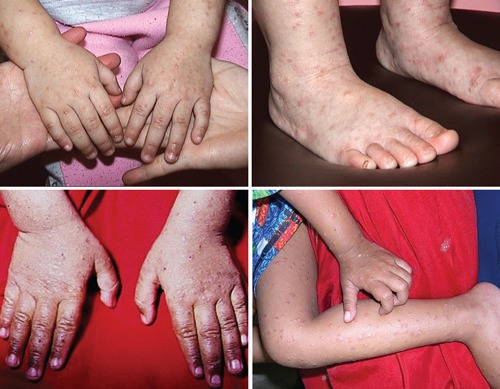
包括 Gianotti-Crosti 综合征、玫瑰糠疹、不对称性屈侧周围性皮疹、发疹性假性血管瘤病以及丘疹紫癜性手套和袜套综合征在内的几种疹病被怀疑由病毒引起。这些病毒具有潜在危险性。Gianotti-Crosti 综合征与乙型肝炎病毒感染有关,而乙型肝炎病毒感染是肝细胞癌最常见的病因,同时还与爱泼斯坦-巴尔病毒感染有关,后者与鼻咽癌相关。玫瑰糠疹一直被怀疑与人类疱疹病毒 7 型和 8 型感染有关,前者的意义在很大程度上仍不明确,而后者是卡波西肉瘤的已知病因。丘疹紫癜性手套和袜套综合征与人类 B19 微小病毒感染显著相关,该病毒可导致先天性血红蛋白病患者发生再生障碍性贫血,若传播给孕妇,则可导致自然流产和先天性畸形。借助病毒 DNA 序列检测技术,假阳性结果很常见。我们已无法再运用科赫法则来确立因果关系。一些病毒的生物学特性,包括终身潜伏感染、无症状排毒以及内源性再激活,使得对各种身体组织的病毒学检测结果难以解读。在不久的将来,我们或许无法证实或排除这些皮疹的病毒病因。由于患者数量相对较少,病毒学和流行病学研究以及治疗试验通常招募的研究对象和对照对象很少。这导致统计效力较低,因此研究结果几乎没有临床意义。此外,患者数量少的研究不太可能被主流皮肤病学期刊接受,从而导致发表偏倚。通过对众多每项研究患者数量都较少的研究进行荟萃分析来汇总数据,理论上可以提高结果的效力。也有技术手段来弥补发表偏倚。然而,由于临床研究和治疗试验中不同的纳入和排除标准,目前这些方法并不可行。这些皮疹的诊断基于临床评估。检查仅用于排除重要的鉴别诊断。可见广泛的临床特征,且不同人群的临床特征可能有所不同。用于定义这些皮疹的术语令人困惑,非典型形式和变体更是如此。此前报道的这些皮疹的病毒学和流行病学结果在许多方面相互矛盾。这种不一致的原因尚不清楚,但诊断和研究对象招募过程中的低同质性可能是导致这些不一致结果的因素之一。建立并恰当验证诊断标准将有助于临床诊断,加快临床研究的招募速度,并使不同研究的结果能够直接相互比较。荟萃分析和系统评价将更具有效性。诊断标准还能从社区角度简化对这些疾病的临床审核和监测。然而,面对相互矛盾的临床特征时过度依赖诊断标准是一个潜在陷阱。临床敏锐度和临床医生的经验是诊断标准无法取代的。应根据这些引人关注的皮疹不断变化的表现对诊断标准进行验证和重新验证。我们主张建立并验证这些皮疹的诊断标准,并鼓励持续开展患者数量较少的研究。然而,为了更广泛的目的,这些研究应招募同质化的患者群体,以便未来进行数据汇总。