Parkinson Rose M, Collins Samuel L, Horton Maureen R, Powell Jonathan D
The Sidney-Kimmel Cancer Research Center, The Johns Hopkins School of Medicine, Baltimore, Maryland, United States of America.
Division of Pulmonary Medicine, Johns Hopkins University School of Medicine, Baltimore, Maryland, United States of America.
PLoS One. 2014 Jan 24;9(1):e87265. doi: 10.1371/journal.pone.0087265. eCollection 2014.
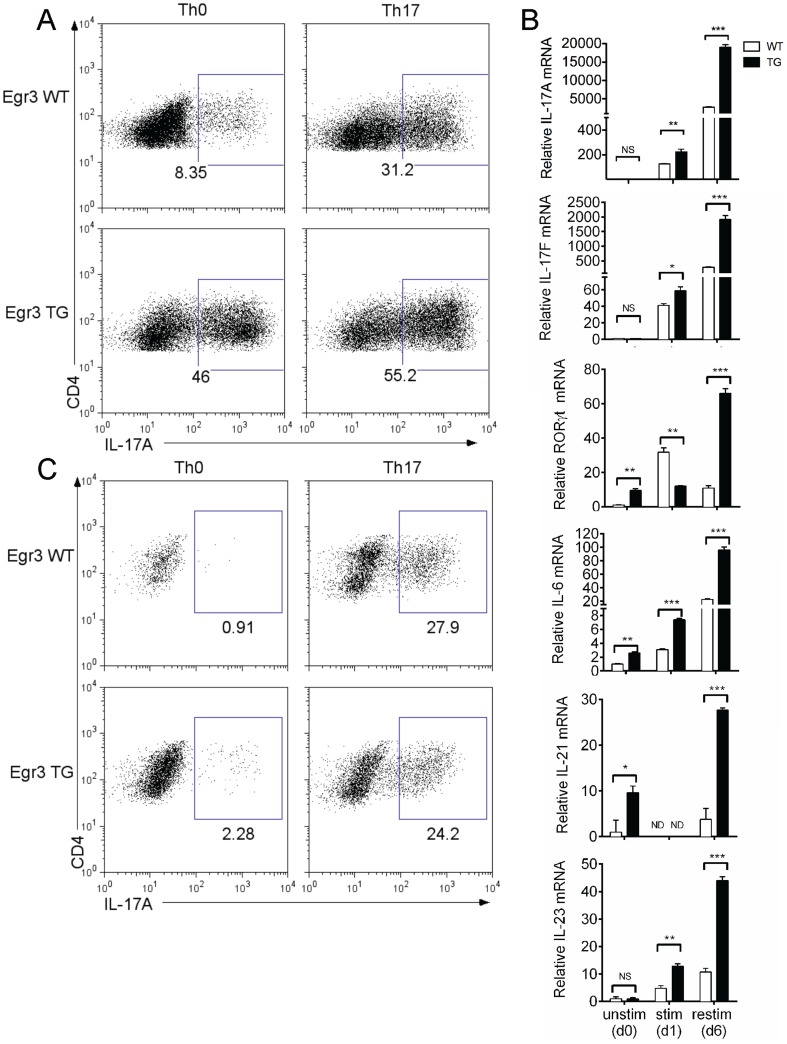
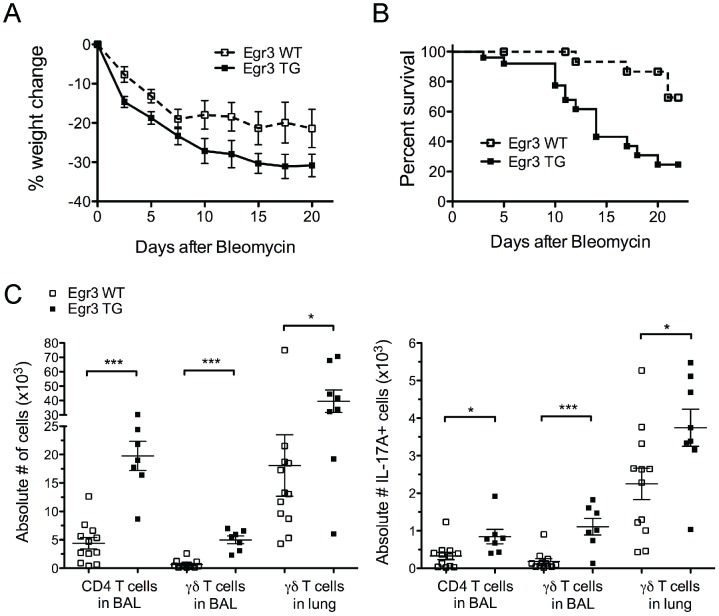
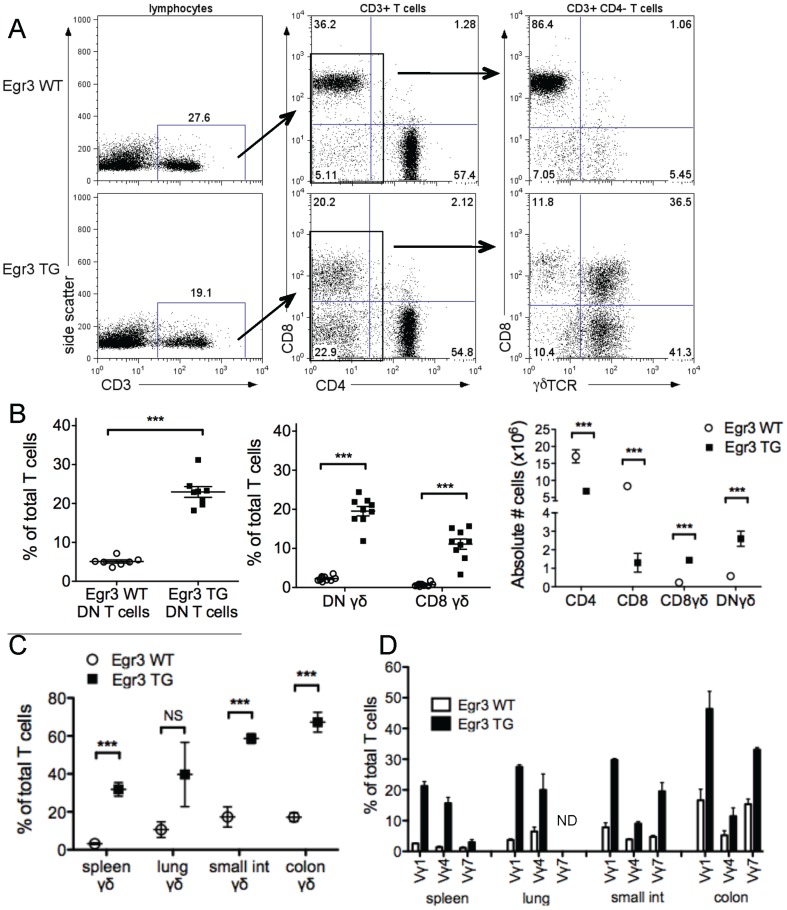
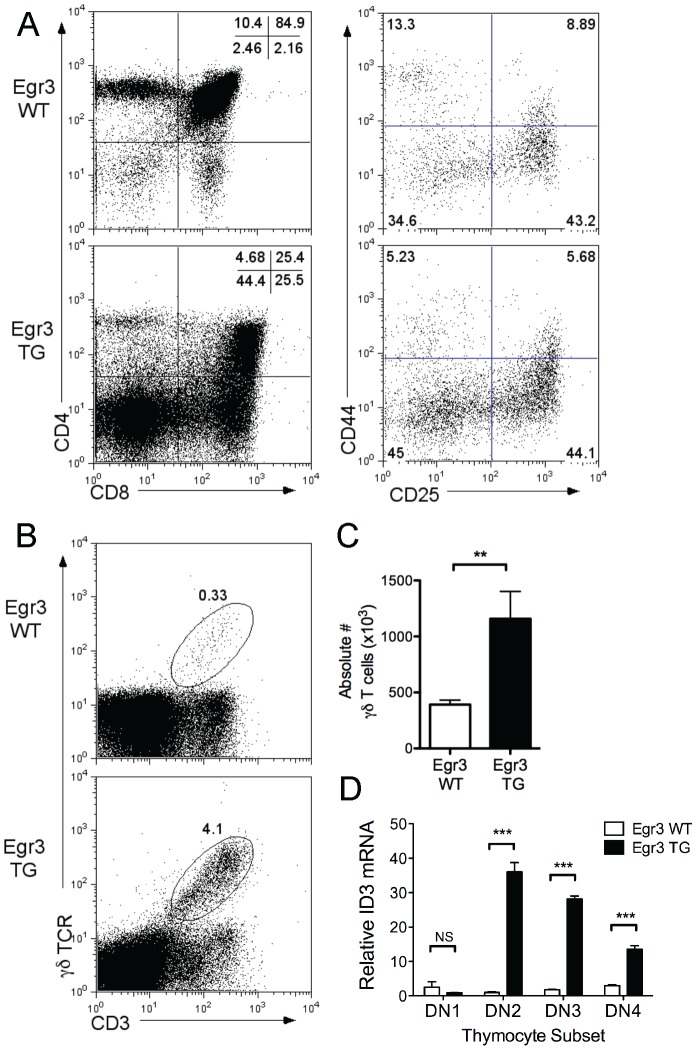
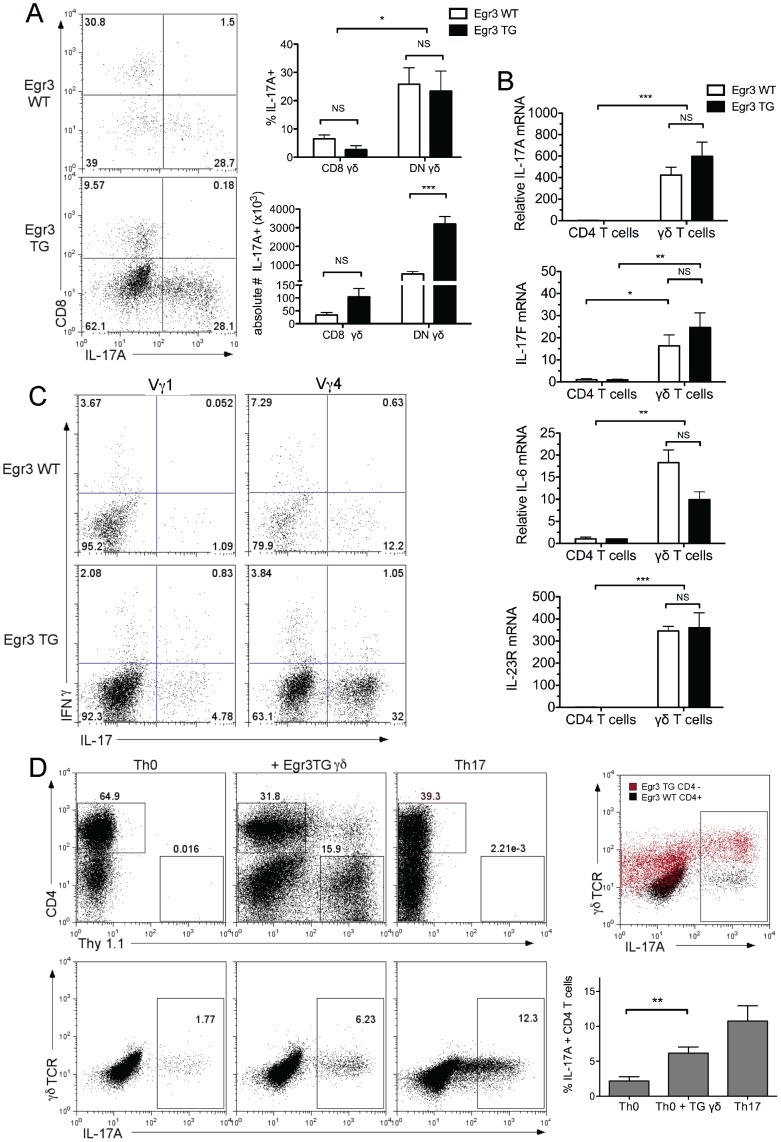
The transcription factor Early Growth Response 3 (Egr3) has been shown to play an important role in negatively regulating T cell activation and promoting T cell anergy in Th1 cells. However, its role in regulating other T helper subsets has yet to be described. We sought to determine the role of Egr3 in a Th17 response using transgenic mice that overexpress Egr3 in T cells (Egr3 TG). Splenocytes from Egr3 TG mice demonstrated more robust generation of Th17 cells even under non-Th17 skewing conditions. We found that while Egr3 TG T cells were not intrinsically more likely to become Th17 cells, the environment encountered by these cells was more conducive to Th17 development. Further analysis revealed a considerable increase in the number of γδ T cells in both the peripheral lymphoid organs and mucosal tissues of Egr3 TG mice, a cell type which normally accounts for only a small fraction of peripheral lymphocytes. Consistent with this marked increase in peripheral γδ T cells, thymocytes from Egr3 TG mice also appear biased toward γδ T cell development. Coculture of these Egr3-induced γδ T cells with wildtype CD4+ T cells increases Th17 differentiation, and Egr3 TG mice are more susceptible to bleomycin-induced lung inflammation. Overall our findings strengthen the role for Egr3 in promoting γδ T cell development and show that Egr3-induced γδ T cells are both functional and capable of altering the adaptive immune response in a Th17-biased manner. Our data also demonstrates that the role played by Egr3 in T cell activation and differentiation is more complex than previously thought.
转录因子早期生长反应3(Egr3)已被证明在负向调节T细胞活化以及促进Th1细胞的T细胞无反应性方面发挥重要作用。然而,其在调节其他T辅助亚群中的作用尚未见报道。我们试图利用在T细胞中过表达Egr3的转基因小鼠(Egr3 TG)来确定Egr3在Th17反应中的作用。即使在非Th17偏向条件下,Egr3 TG小鼠的脾细胞也表现出更强的Th17细胞生成能力。我们发现,虽然Egr3 TG T细胞本身并非更易成为Th17细胞,但这些细胞所处的环境更有利于Th17细胞的发育。进一步分析显示,Egr3 TG小鼠的外周淋巴器官和黏膜组织中γδ T细胞数量显著增加,而γδ T细胞通常仅占外周淋巴细胞的一小部分。与外周γδ T细胞的显著增加一致,Egr3 TG小鼠的胸腺细胞也似乎偏向于γδ T细胞的发育。将这些由Egr3诱导的γδ T细胞与野生型CD4 + T细胞共培养可增加Th17细胞分化,并且Egr3 TG小鼠更易受到博来霉素诱导的肺部炎症影响。总体而言,我们的研究结果强化了Egr3在促进γδ T细胞发育中的作用,并表明Egr3诱导的γδ T细胞具有功能,且能够以Th17偏向的方式改变适应性免疫反应。我们的数据还表明,Egr3在T细胞活化和分化中所起的作用比之前认为的更为复杂。