Turner Helen C, Sharma P, Perrier J R, Bertucci A, Smilenov L, Johnson G, Taveras M, Brenner D J, Garty G
Department of Radiation Oncology, Center for Radiological Research, Columbia University Medical Center, 630 W. 168th St. VC11-240, New York, NY, 10032, USA,
Radiat Environ Biophys. 2014 May;53(2):265-72. doi: 10.1007/s00411-014-0514-0. Epub 2014 Jan 30.
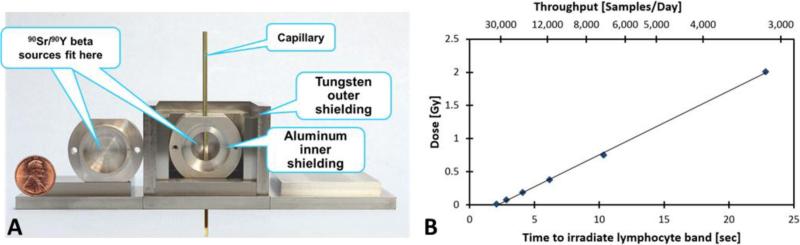
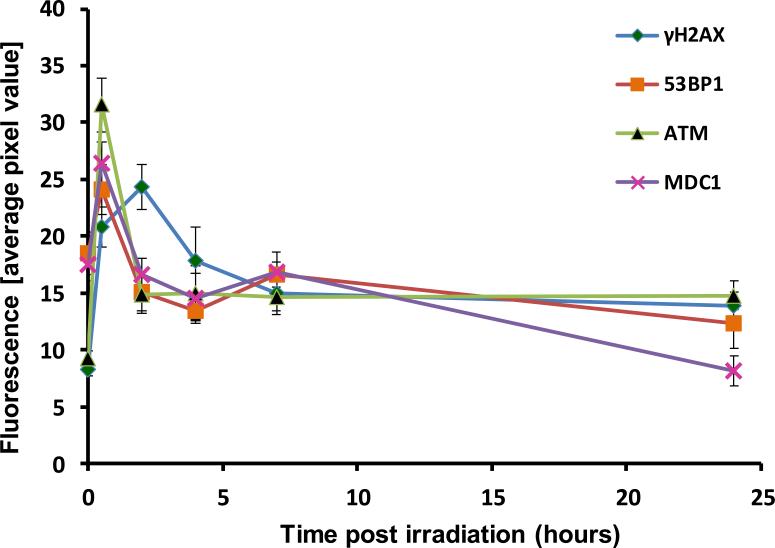
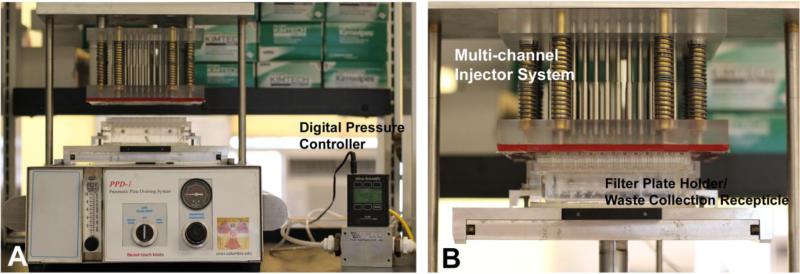
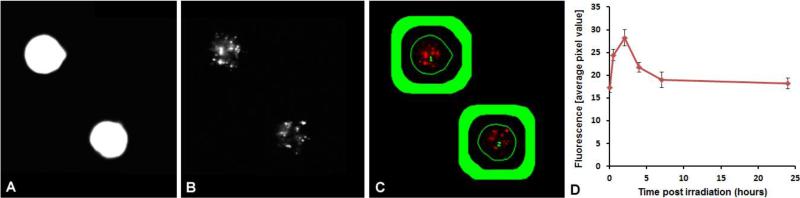
At the Center for High-Throughput Minimally Invasive Radiation Biodosimetry, we have developed a rapid automated biodosimetry tool (RABiT); this is a completely automated, ultra-high-throughput robotically based biodosimetry workstation designed for use following a large-scale radiological event, to perform radiation biodosimetry measurements based on a fingerstick blood sample. High throughput is achieved through purpose built robotics, sample handling in filter-bottomed multi-well plates and innovations in high-speed imaging and analysis. Currently, we are adapting the RABiT technologies for use in laboratory settings, for applications in epidemiological and clinical studies. Our overall goal is to extend the RABiT system to directly measure the kinetics of DNA repair proteins. The design of the kinetic/time-dependent studies is based on repeated, automated sampling of lymphocytes from a central reservoir of cells housed in the RABiT incubator as a function of time after the irradiation challenge. In the present study, we have characterized the DNA repair kinetics of the following repair proteins: γ-H2AX, 53-BP1, ATM kinase, MDC1 at multiple times (0.5, 2, 4, 7 and 24 h) after irradiation with 4 Gy γ rays. In order to provide a consistent dose exposure at time zero, we have developed an automated capillary irradiator to introduce DNA DSBs into fingerstick-size blood samples within the RABiT. To demonstrate the scalability of the laboratory-based RABiT system, we have initiated a population study using γ-H2AX as a biomarker.
在高通量微创辐射生物剂量测定中心,我们开发了一种快速自动化生物剂量测定工具(RABiT);这是一个完全自动化的、基于机器人的超高通量生物剂量测定工作站,设计用于在大规模放射事件后使用,根据手指采血样本进行辐射生物剂量测定。高通量是通过专门构建的机器人技术、在滤底多孔板中进行样本处理以及高速成像和分析方面的创新来实现的。目前,我们正在使RABiT技术适用于实验室环境,用于流行病学和临床研究。我们的总体目标是扩展RABiT系统以直接测量DNA修复蛋白的动力学。动力学/时间依赖性研究的设计基于在受到照射挑战后的不同时间,从RABiT培养箱中细胞的中央储存库中对淋巴细胞进行重复的自动采样。在本研究中,我们已经对以下修复蛋白在受到4 Gy γ射线照射后的多个时间点(0.5、2、4、7和24小时)的DNA修复动力学进行了表征:γ-H2AX、53-BP1、ATM激酶、MDC1。为了在时间零点提供一致的剂量暴露,我们开发了一种自动毛细管辐照器,用于将DNA双链断裂引入RABiT内手指采血大小的血样中。为了证明基于实验室的RABiT系统的可扩展性,我们已经启动了一项以γ-H2AX作为生物标志物的人群研究。