Graduate School of Medicine, Korea University, Seoul, Republic of Korea.
Department of East-West Integrated Medicine, College of Oriental Medicine, Gachon University, Incheon, Republic of Korea.
PLoS One. 2014 Feb 3;9(2):e87901. doi: 10.1371/journal.pone.0087901. eCollection 2014.
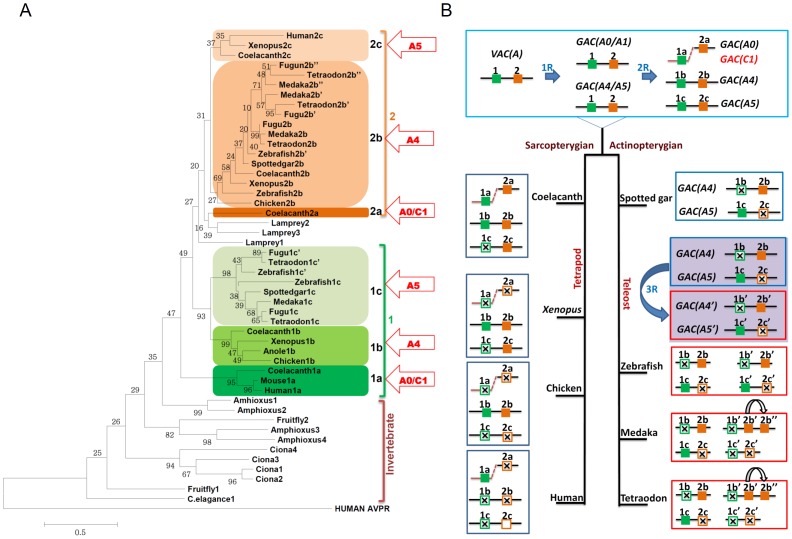
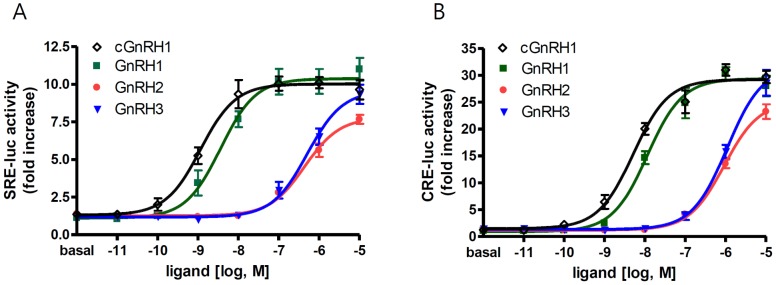
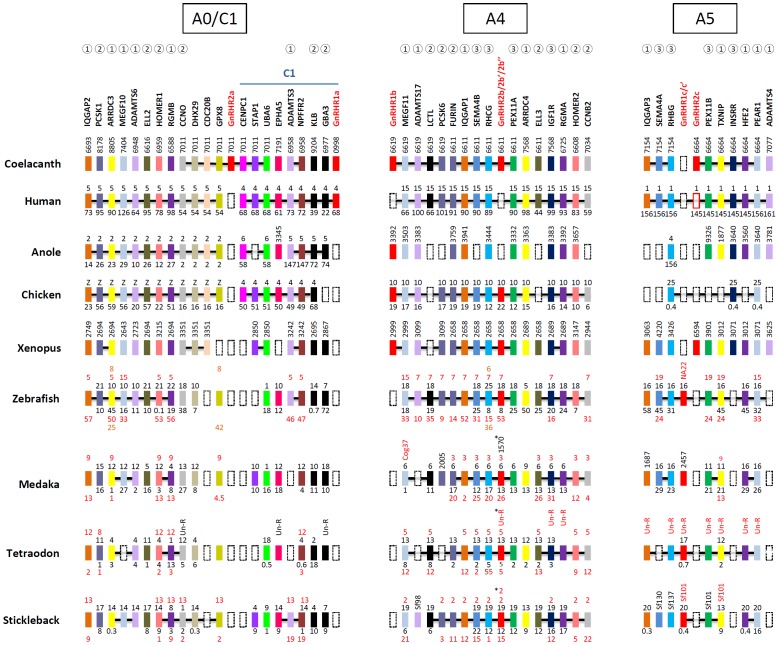
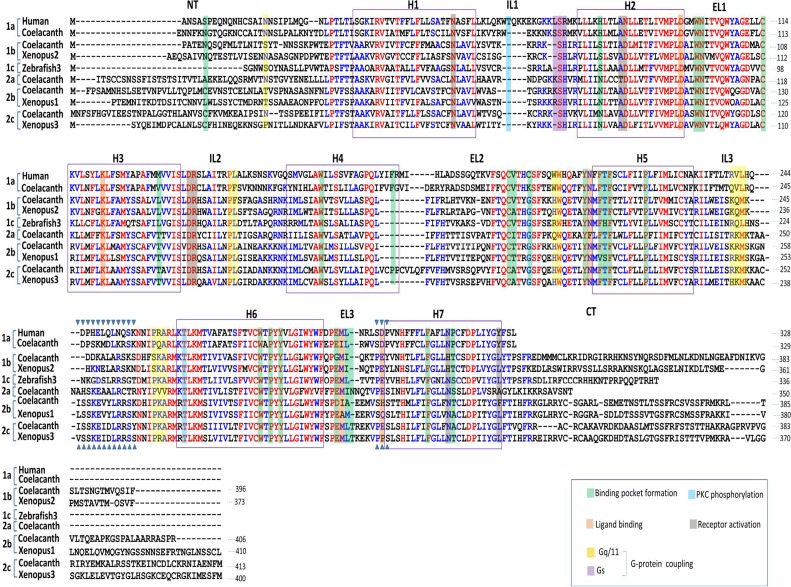
Gonadotropin-releasing hormone (GnRH) and the GnRH receptor (GnRHR) play an important role in vertebrate reproduction. Although many GnRHR genes have been identified in a large variety of vertebrate species, the evolutionary history of GnRHR in vertebrates is unclear. To trace the evolutionary origin of GnRHR we examined the conserved synteny of chromosomes harboring GnRHR genes and matched the genes to linkage groups of reconstructed vertebrate ancestor chromosomes. Consistent with the phylogenetic tree, three pairs of GnRHR subtypes were identified in three paralogous linkage groups, indicating that an ancestral pair emerged through local duplication before two rounds of whole genome duplication (2R). The 2R then led to the generation of six subtypes of GnRHR. Some subtypes were lost during vertebrate evolution after the divergence of teleosts and tetrapods. One subtype includes mammalian GnRHR and a coelacanth GnRHR that showed the greatest response to GnRH1 among the three types of GnRH. This study provides new insight into the evolutionary relationship of vertebrate GnRHRs.
促性腺激素释放激素(GnRH)及其受体(GnRHR)在脊椎动物的生殖中起着重要作用。尽管在许多脊椎动物物种中已经鉴定出许多 GnRHR 基因,但 GnRHR 在脊椎动物中的进化历史尚不清楚。为了追踪 GnRHR 的进化起源,我们检查了含有 GnRHR 基因的染色体的保守连锁群,并将这些基因与重建的脊椎动物祖先染色体的连锁群进行匹配。与系统发育树一致,在三个同源连锁群中鉴定出了三对 GnRHR 亚型,这表明在两轮全基因组复制(2R)之前,通过局部复制出现了一个祖先对。然后,2R 产生了六种 GnRHR 亚型。在硬骨鱼和四足动物分化后,一些亚型在脊椎动物进化过程中丢失了。一种亚型包括哺乳动物 GnRHR 和一种腔棘鱼 GnRHR,这两种 GnRHR 在三种 GnRH 中对 GnRH1 的反应最大。本研究为脊椎动物 GnRHR 的进化关系提供了新的见解。