Jones Laundette P, Buelto Destiney, Tago Elaine, Owusu-Boaitey Kwadwo E
Department of Pharmacology and Experimental Therapeutics, University of Maryland, Baltimore, School of Medicine, Baltimore, MD 21201.
Department of Biology, University of North Carolina, Chapel Hill, Chapel Hill, NC 27599.
J Cancer Sci Ther. 2011 Dec 8(Suppl 2). doi: 10.4172/1948-5956.s2-004.
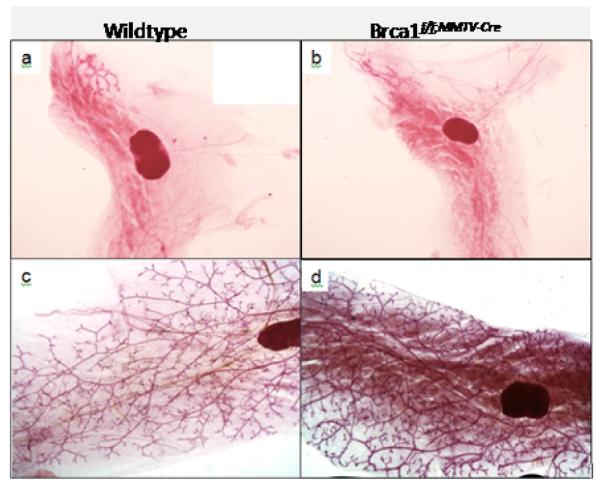
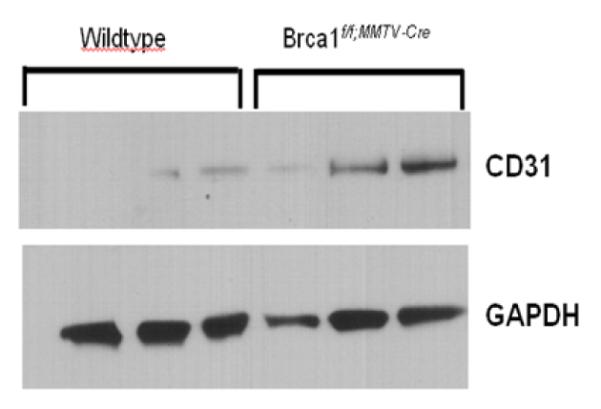
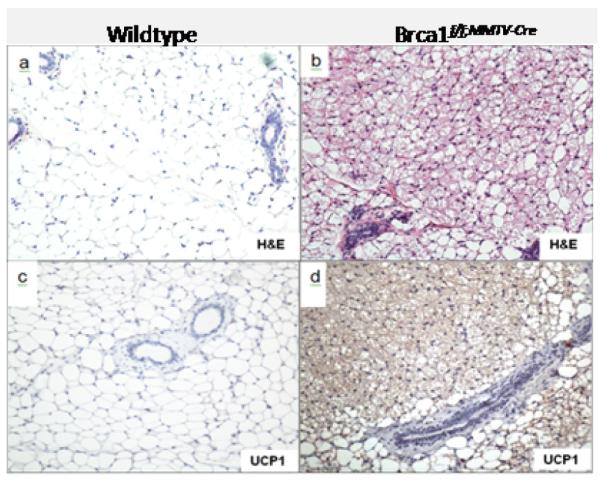
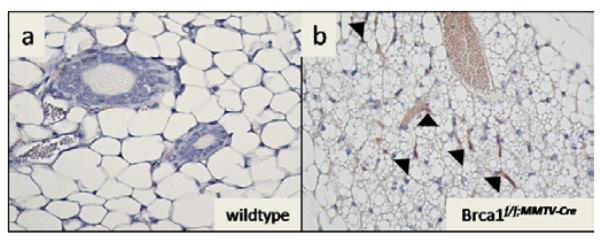
A major challenge to breast cancer research is the identification of alterations in the architecture and composition of the breast that are associated with breast cancer progression. The aim of the present investigation was to characterize the mammary adipose phenotype from Brca1 mutant mice in the expectation that this would shed light on the role of the mammary tissue environment in the early stages of breast tumorigenesis. We observed that histological sections of mammary tissue from adult Brca1 mutant mice abnormally display small, multilocular adipocytes that are reminiscent of brown adipose tissue (BAT) as compared to wildtype mice. Using a marker for BAT, the uncoupling protein 1 (UCP1), we demonstrated that these multilocular adipose regions in Brca1 mutant mice stain positive for UCP1. Transcriptionally, UCP1 mRNA levels in the Brca1 mutant mice were elevated greater than 50-fold compared to age-matched mammary glands from wildtype mice. Indeed, BAT has characteristics that are favorable for tumor growth, including high vascularity. Therefore, we also demonstrated that the multilocular brown adipose phenotype in the mammary fat pad of Brca1 mutant mice displayed regions of increased vascularity as evidenced by a significant increase in the protein expression of CD31, a marker for angiogenesis. This Brca1 mutant mouse model should provide a physiologically relevant context to determine whether brown adipose tissue can play a role in breast cancer development.
乳腺癌研究面临的一个主要挑战是识别与乳腺癌进展相关的乳腺结构和组成的改变。本研究的目的是表征Brca1突变小鼠的乳腺脂肪表型,期望这能揭示乳腺组织环境在乳腺癌发生早期阶段的作用。我们观察到,与野生型小鼠相比,成年Brca1突变小鼠乳腺组织的组织学切片异常显示出小的、多房性脂肪细胞,类似于棕色脂肪组织(BAT)。使用棕色脂肪组织标志物解偶联蛋白1(UCP1),我们证明Brca1突变小鼠中的这些多房性脂肪区域对UCP1染色呈阳性。在转录水平上,与野生型小鼠年龄匹配的乳腺相比,Brca1突变小鼠中UCP1 mRNA水平升高了50倍以上。事实上,棕色脂肪组织具有有利于肿瘤生长的特征,包括高血管化。因此,我们还证明,Brca1突变小鼠乳腺脂肪垫中的多房性棕色脂肪表型显示出血管化增加的区域,这通过血管生成标志物CD31蛋白表达的显著增加得到证明。这个Brca1突变小鼠模型应该提供一个生理相关的背景来确定棕色脂肪组织是否能在乳腺癌发展中发挥作用。