State Key Laboratory of Biotherapy, Department of Gastrointestinal Surgery, West China Hospital, Sichuan University, Chengdu 610041, China.
College of Life Sciences, Sichuan University, Chengdu 610064, China.
Cell Death Dis. 2014 Feb 6;5(2):e1047. doi: 10.1038/cddis.2014.14.
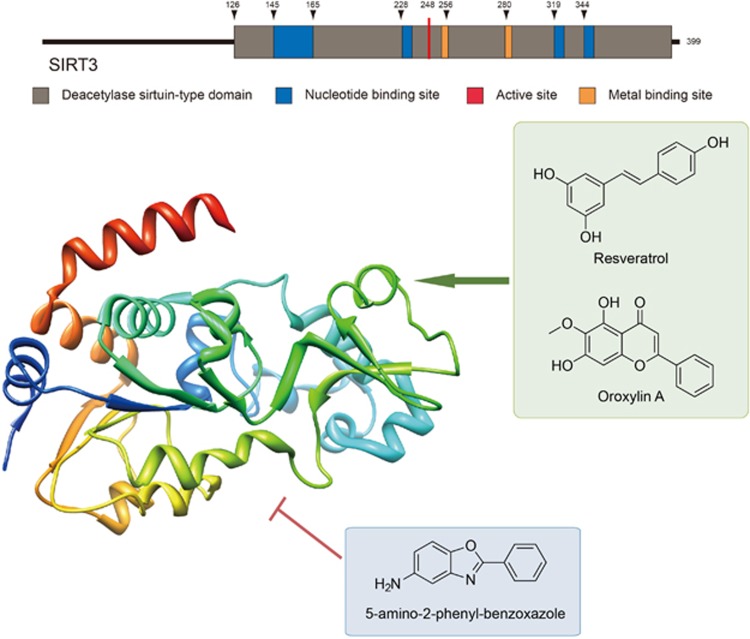
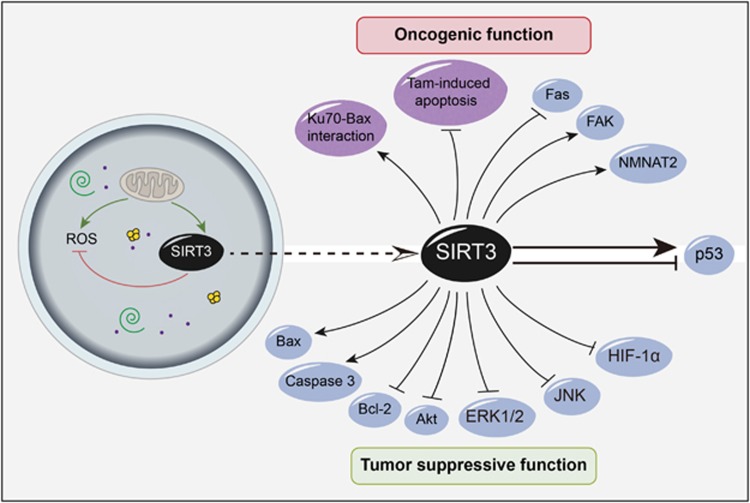
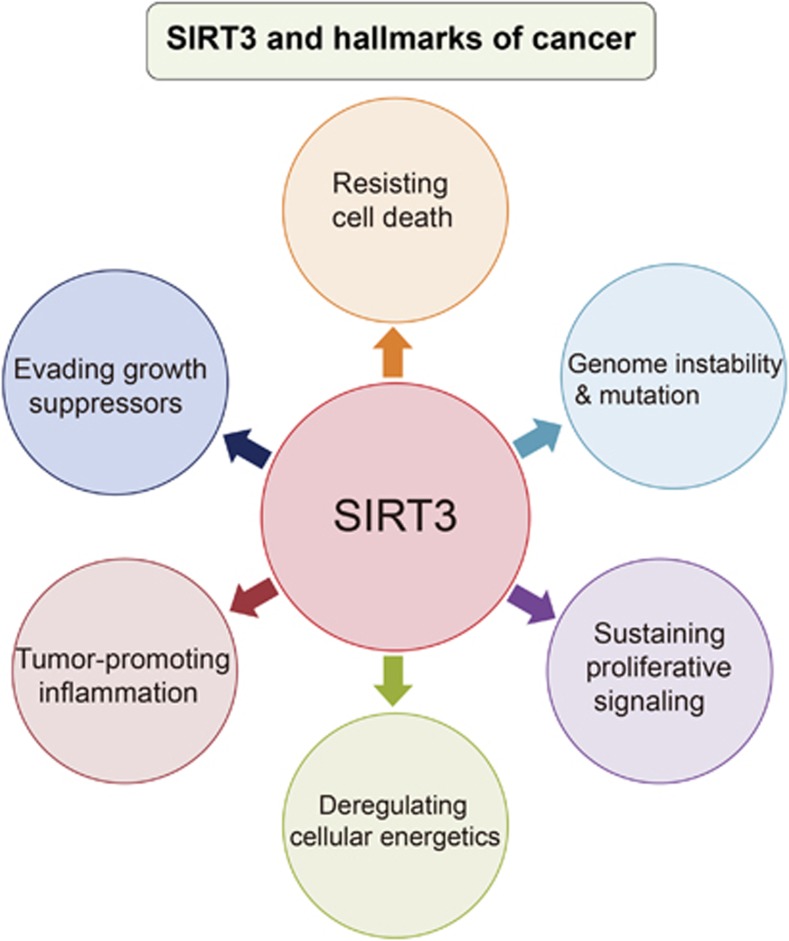
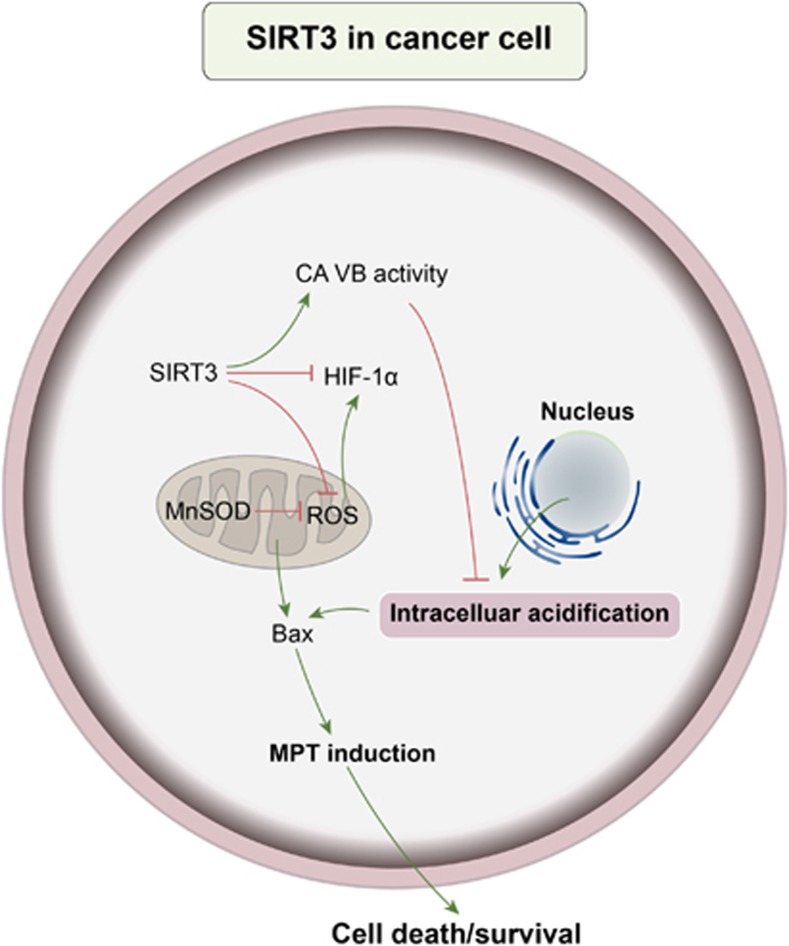
Sirtuin-3 (SIRT3), a major mitochondria NAD+-dependent deacetylase, may target mitochondrial proteins for lysine deacetylation and also regulate cellular functions. And, SIRT3 is an emerging instrumental regulator of the mitochondrial adaptive response to stress, such as metabolic reprogramming and antioxidant defense mechanisms. Accumulating evidence has recently demonstrated that SIRT3 may function as either oncogene or tumor suppressor on influencing cell death by targeting a series of key modulators and their relevant pathways in cancer. Thus, in this review, we present the structure, transcriptional regulation, and posttranslational modifications of SIRT3. Subsequently, we focus on highlighting the Janus role of SIRT3 with oncogenic or tumor-suppressive function in cancer, which may provide more new clues for exploring SIRT3 as a therapeutic target for drug discovery.
Sirtuin-3(SIRT3)是一种主要的线粒体 NAD+-依赖性去乙酰化酶,可能靶向线粒体蛋白进行赖氨酸去乙酰化,并调节细胞功能。此外,SIRT3 是线粒体对应激的适应性反应的新兴调节因子,例如代谢重编程和抗氧化防御机制。最近的大量证据表明,SIRT3 可以通过靶向一系列关键调节剂及其相关途径在癌症中影响细胞死亡,从而作为癌基因或肿瘤抑制因子发挥作用。因此,在本综述中,我们介绍了 SIRT3 的结构、转录调节和翻译后修饰。随后,我们重点强调了 SIRT3 的双面作用,即在癌症中具有致癌或肿瘤抑制功能,这可能为将 SIRT3 作为药物发现的治疗靶点提供更多新线索。