Pakrashi Sunandan, Jain Nitin, Dalai Swayamprava, Jayakumar Jerobin, Chandrasekaran Prathna Thanjavur, Raichur Ashok M, Chandrasekaran Natarajan, Mukherjee Amitava
Centre for Nanobiotechnology, VIT University, Vellore, Tamilnadu, India.
Department of Materials Engineering, Indian Institute of Science, Bangalore, Karnataka, India.
PLoS One. 2014 Feb 4;9(2):e87789. doi: 10.1371/journal.pone.0087789. eCollection 2014.
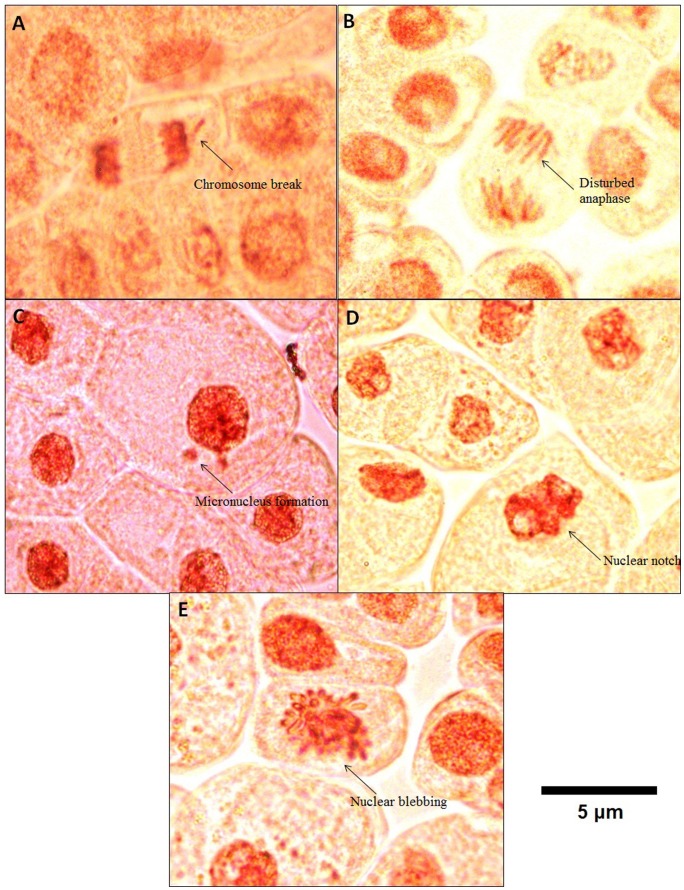
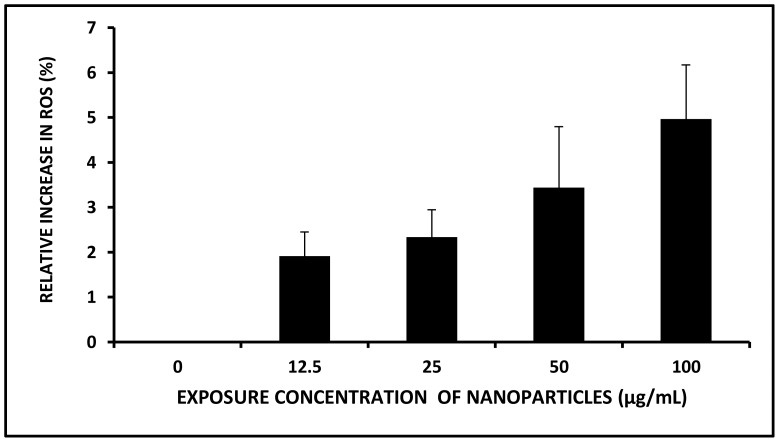
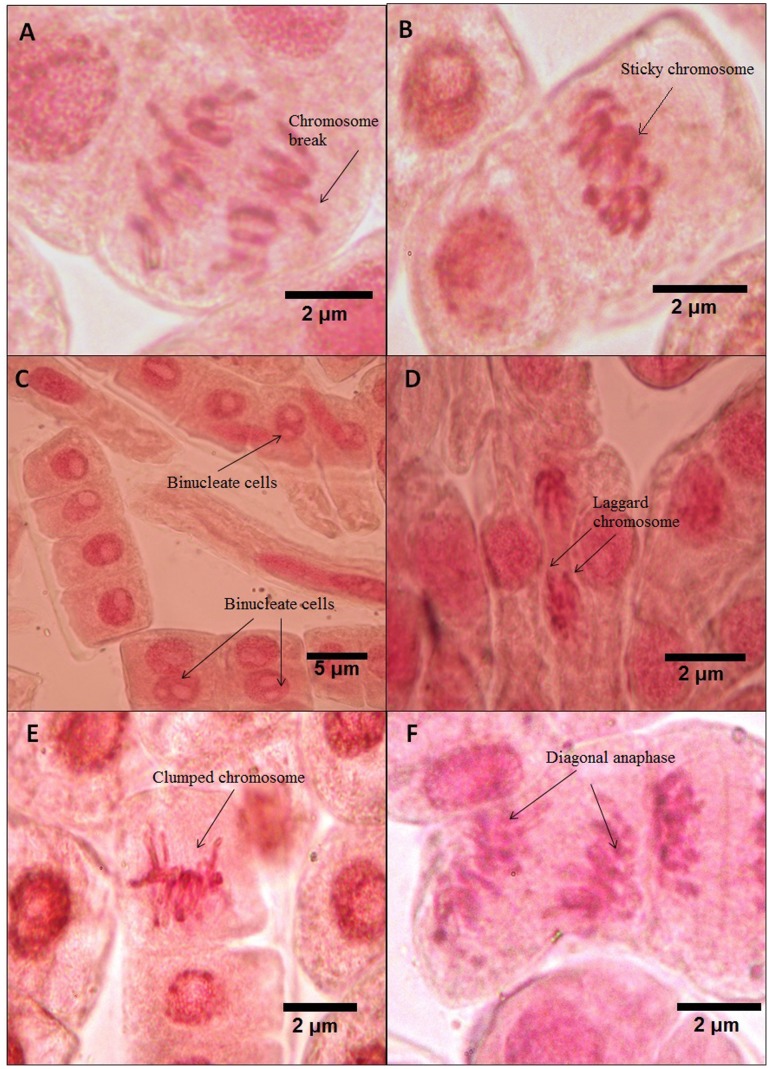
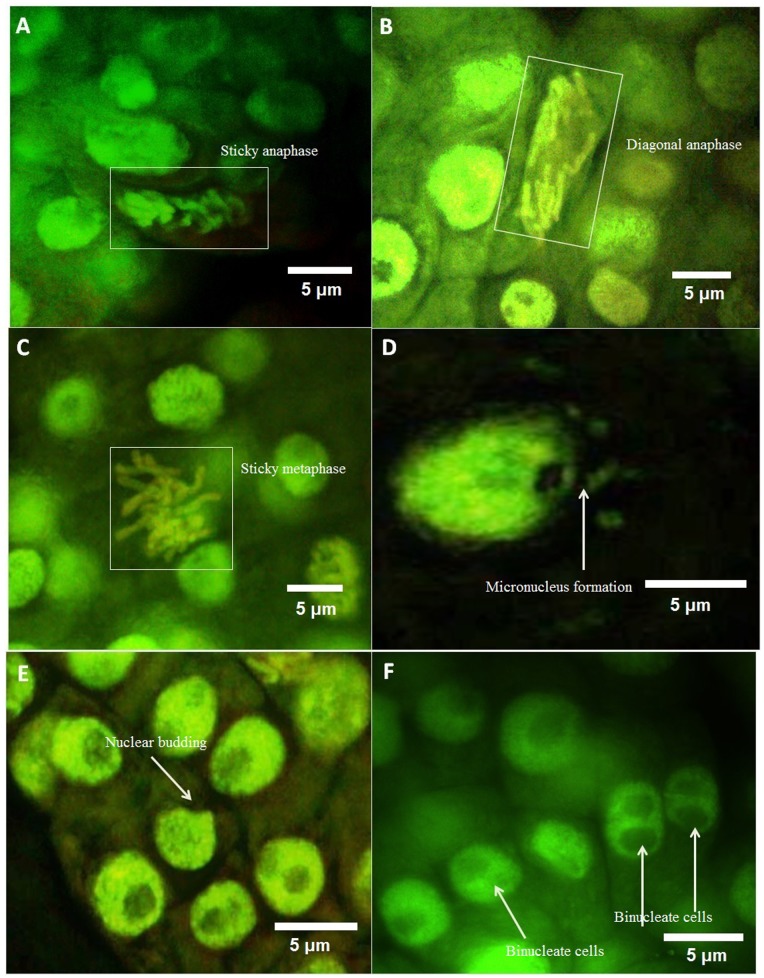
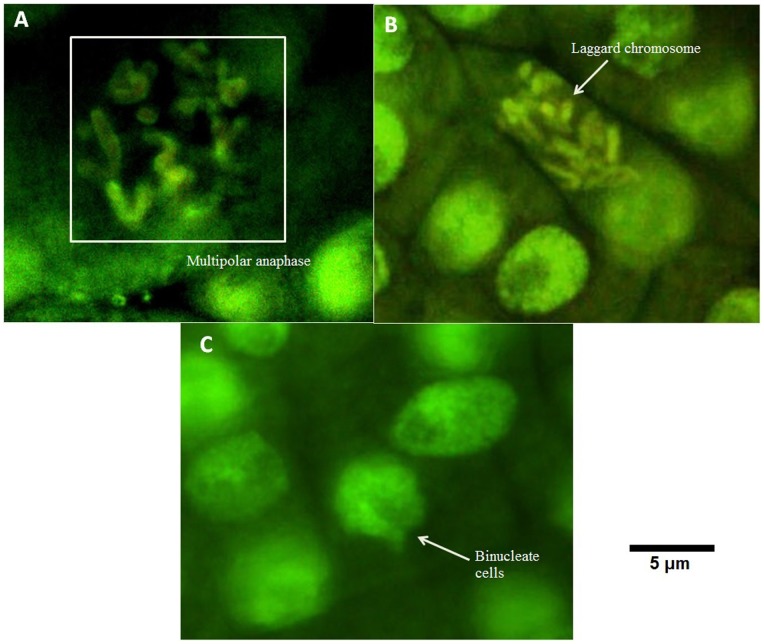
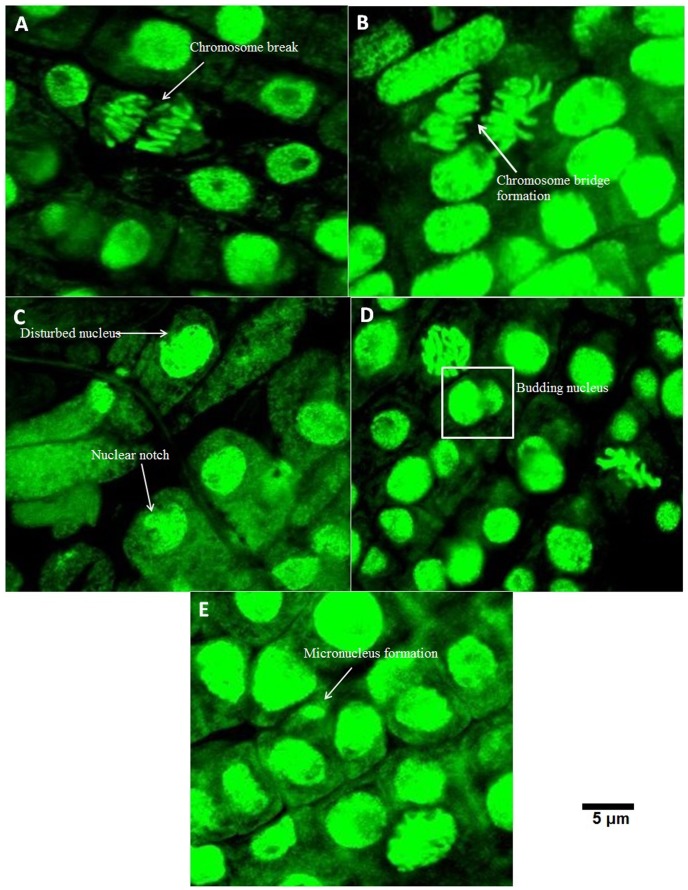
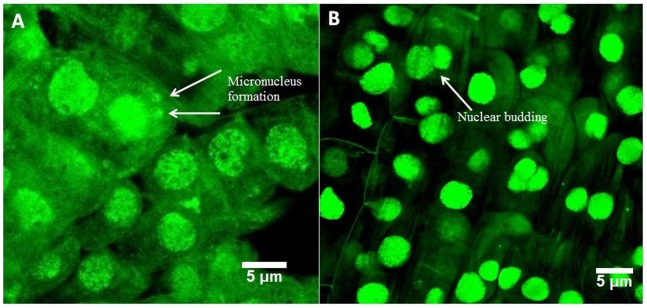
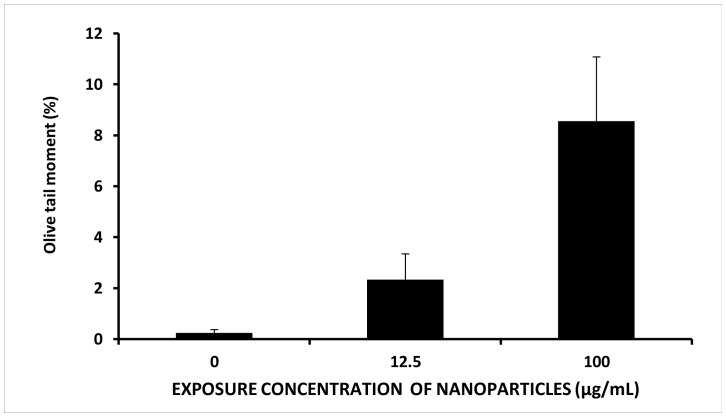
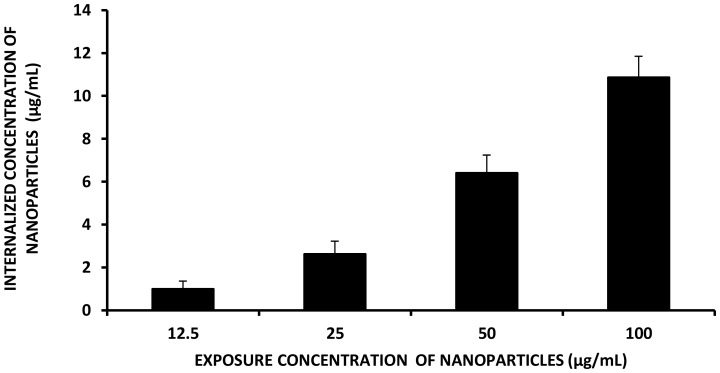
The industrial production and commercial applications of titanium dioxide nanoparticles have increased considerably in recent times, which has increased the probability of environmental contamination with these agents and their adverse effects on living systems. This study was designed to assess the genotoxicity potential of TiO2 NPs at high exposure concentrations, its bio-uptake, and the oxidative stress it generated, a recognised cause of genotoxicity. Allium cepa root tips were treated with TiO2 NP dispersions at four different concentrations (12.5, 25, 50, 100 µg/mL). A dose dependant decrease in the mitotic index (69 to 21) and an increase in the number of distinctive chromosomal aberrations were observed. Optical, fluorescence and confocal laser scanning microscopy revealed chromosomal aberrations, including chromosomal breaks and sticky, multipolar, and laggard chromosomes, and micronucleus formation. The chromosomal aberrations and DNA damage were also validated by the comet assay. The bio-uptake of TiO2 in particulate form was the key cause of reactive oxygen species generation, which in turn was probably the cause of the DNA aberrations and genotoxicity observed in this study.
近年来,二氧化钛纳米颗粒的工业生产和商业应用显著增加,这增加了这些物质对环境污染的可能性及其对生物系统的不利影响。本研究旨在评估高暴露浓度下二氧化钛纳米颗粒的遗传毒性潜力、其生物摄取以及所产生的氧化应激,氧化应激是公认的遗传毒性原因。用四种不同浓度(12.5、25、50、100 µg/mL)的二氧化钛纳米颗粒分散液处理洋葱根尖。观察到有丝分裂指数呈剂量依赖性下降(从69降至21),独特染色体畸变数量增加。光学显微镜、荧光显微镜和共聚焦激光扫描显微镜显示出染色体畸变,包括染色体断裂以及粘性、多极和落后染色体,还有微核形成。彗星试验也验证了染色体畸变和DNA损伤。颗粒形式的二氧化钛的生物摄取是产生活性氧的关键原因,而活性氧反过来可能是本研究中观察到的DNA畸变和遗传毒性的原因。